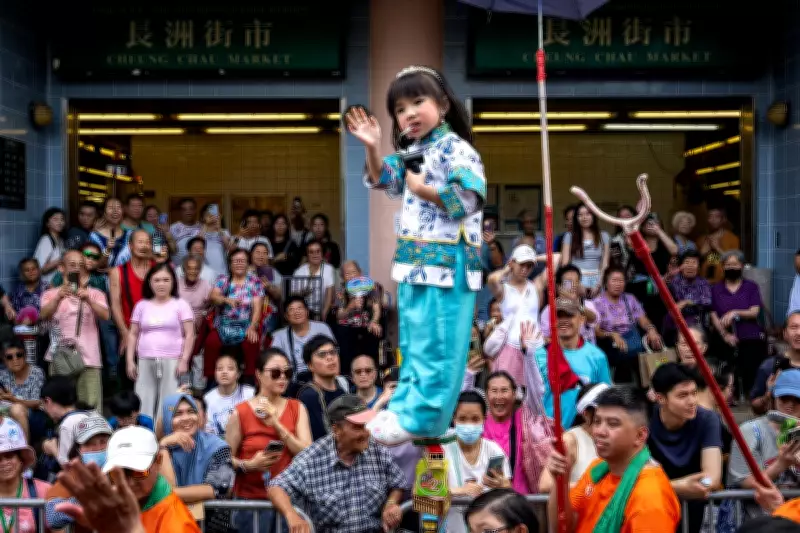
Hong Kong's iconic bun festival drew throngs of revelers to the densely populated city's outlying island, Cheung Chau, to celebrate a century-old tradition rooted in prayers for peace and blessings.
Parade and Celebrations
Residents and tourists braved the heat to watch children in costumes take part in a parade, called "Piu Sik," which translates as "floating colors." Children dressed as legendary deities, historic characters, or local politicians were carried on stands above the crowds, moving through the island's narrow lanes.
The Bun-Scrambling Competition
The festival highlight is the "bun-scrambling" competition around midnight, where participants climb a tower covered with plastic buns. They must collect buns, which carry different scores depending on their locations, within a time limit. The participant with the highest total score wins, while the one who gathers the most buns receives the "Full Pockets of Lucky Buns" award.

The race was suspended for decades after bun towers collapsed in 1978, injuring dozens of people. The tradition resumed in 2005.
Historical Significance
According to Hong Kong's Intangible Cultural Heritage Office, legends say Cheung Chau was once devastated by a plague. Some residents invited monks and Taoist priests to set up a sacrificial altar near a temple to pray to deities. They also paraded deity statues along village lanes. After the ritual, the plague ceased, and Cheung Chau residents have since organized the event, also known as the Cheung Chau Jiao Festival, to dispel disaster and pray for blessings for peace and safety.
The festival has become one of the most popular events for tourists in Hong Kong in recent years. Many people like to buy steamed buns carrying the Chinese characters for "peace" and "safety" or souvenirs modeled on the buns.