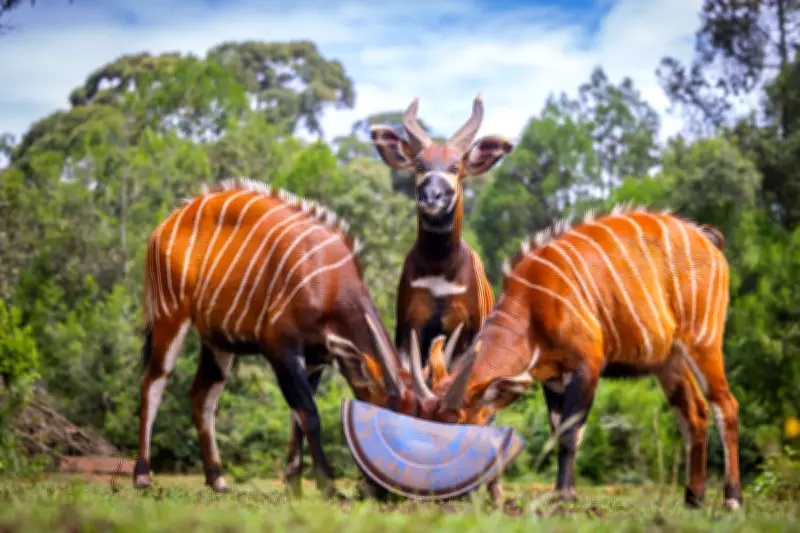
Staff at the Mount Kenya Wildlife Conservancy are overseeing the repatriation of four critically endangered mountain bongos from zoos in Czechia to their native Kenya, in a bid to boost the species' gene pool. The operation, led by wildlife officer Ngenoh Erick Kibet and animal keeper Christine Gichohi, involved two weeks of quarantine in Czechia and a tense flight back to Nairobi.
Personalities of the Bongos
Each of the four males has a distinct personality. Maue is gentle and calm, even licking Kibet's arm. Fitz is aggressive and must be handled with care. Kudu has trust issues, requiring relationship-building. Bon64, the youngest, is curious but easily spooked. Understanding these traits is crucial for their adaptation to new surroundings.
The Journey Home
The transfer was supported by Chester Zoo, Kenya Wildlife Service, and the European Association of Zoos and Aquariums. On the day of departure, the bongos were moved into transport crates, showing curiosity and unease. During the flight, Kibet and Gichohi monitored the animals' breathing and movement, ready to alert vets if needed. Kibet described the landing as an emotional moment of excitement.

Conservation Milestones
The repatriation effort began in 2004 with 18 bongos from North America. Now, with these four males, the captive herd at the conservancy has grown to 97 animals, up from 54 in 2021. A 100th bongo calf was recently born, symbolising hope for the species. In the wild, only about 100 mountain bongos remain, but the total in Kenya has risen to 179 from 150 in 2021.
Dedicated Care
Gichohi and Kibet spend daily hours caring for the bongos, feeding them fresh vegetables and ensuring biosecurity. Their work is driven by a desire to see the species thrive in the wild. Kibet, who joined the conservancy after witnessing a bongo rescue as a student, says, 'What keeps me here is that I want to see these animals in the wild. Not my grandchildren seeing them in books.'
The four males are now settling in, with Kudu and Maue showing signs of comfort by digging and marking their territory. After 21 days, they will be gradually introduced to females for mating, continuing the rewilding programme.