Over the course of the past year, I've noticed a creeping phenomenon in the busy north London GP practice where I work. Each morning, I arrive to a growing pile of rejected scans, referrals and treatments from hospital departments that until recently would have been routinely rubber-stamped. An ultrasound declined, a referral bounced back, a steroid injection deemed 'not needed': increasingly, it's felt like the response from the NHS to GP requests is not 'How else can we help?', but simply, 'No'.
Behind Every Rejection Sits a Patient
Behind every rejection, of course, sits a patient. Like the 73-year-old otherwise fit and healthy guitar teacher I saw recently, still working full-time, but battling increasingly debilitating arthritis. I'd referred him for an ultrasound scan and possible steroid injection, only to be told he must undergo physiotherapy before either can be considered. Well, in my area of north London, the waiting list for NHS physiotherapy can stretch to a year – a year in which a man who wants to remain economically active, who wants to keep contributing and paying taxes, would slowly be pushed out of the workforce.
Then there is the young woman suffering with painful gynaecological problems that could be treated with a relatively straightforward laser procedure. That referral, too, was rejected and she was discharged back to me with instructions to 'manage in GP surgery'. But I have reached the limit of what primary care can realistically do for her. A couple of years ago, she would have been treated in hospital – not anymore. This is happening day in, day out.

Scepticism Over Streeting's Claims
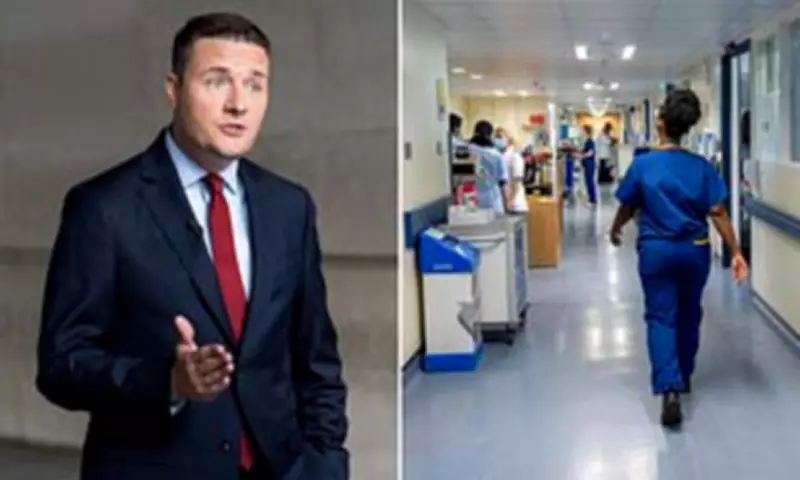
So forgive me if I was entirely sceptical when, in one of his last acts as Health Secretary, Wes Streeting proclaimed with great fanfare that NHS waiting lists are falling and that ministers are 'on track' to deliver one of the fastest reductions in history. Really? Because from where I am standing on the front line, it simply does not chime with the reality. Behind that apparently falling number is a far less triumphant story. As someone recently described it to me on X: 'It's easy to say waiting lists are down if you're denying care.'
Of course, there are genuine reasons why waiting list numbers drop: some patients come off because they have finally received treatment, while many give up and go private if they can afford to. Some move abroad, while others sadly die while waiting. But there is another phenomenon increasingly visible to those of us working inside the system: patients being quietly – and, in my view, deliberately – lost from the figures altogether by an administrative sleight of hand.
Patients Removed from Lists
I have seen patients removed from lists because they tried to rearrange an appointment that was impossible for them to attend. Others have been discharged back to their GP after supposedly 'failing to engage' when letters never arrived in the first place. One elderly patient of mine awaiting a hip replacement was recently removed from the list because she had apparently failed to confirm an appointment, despite not understanding that confirmation was required. I can only imagine how many bewildered older patients this is happening to across the country.
Patients are not magically disappearing because Britain has suddenly become healthier or the system more efficient. Many are disappearing because the NHS has become increasingly adept at filtering them out. This isn't just my experience. Last year, the Nuffield Trust think-tank also reported that a proclaimed drop in waiting times wasn't from treating more people, but from deleting them off the list. One of the cases cited was not atypical: a woman who was removed from a gastroenterology list after failing to attend an appointment, because its letter giving notice had arrived by post the day after it was meant to have taken place.

Target-Driven Culture
Now, am I suggesting ministers are personally instructing hospitals to massage figures? No. It should also be acknowledged that there have been some positive, active efforts to address waiting lists, including deploying 'crack teams' of top clinicians to support NHS Trusts in the direst need, with some success. But the bottom line is that the NHS is a target-driven organisation, and when political careers become attached to headline numbers, pressure inevitably trickles down the chain – particularly when the man who was Health Secretary until just a fortnight ago wants to be Prime Minister.
What better achievement for Wes Streeting to hang his leadership ambitions on than a significantly reduced waiting list? Perhaps I am being cynical. But it is hard to be otherwise when we have a system which seems more focused on protecting statistics rather than treating patients. And that is the deeper issue here: the NHS has become obsessed with managerial optics, arbitrary targets and bureaucratic processes while losing sight of its central purpose, which is delivering effective care to patients.
Overstretched System
Worse still, we are trying to make an overstretched system do everything. The NHS was founded to provide healthcare free at the point of need, but over decades its remit has expanded far beyond what is realistically sustainable. Today it is expected not only to provide cancer care, emergency surgery and life-saving medicine, but also an ever-expanding range of treatments, procedures and lifestyle services – all while serving an ageing population living longer and often in poorer health. And yet politicians continue to pretend that difficult choices can somehow be avoided.
The NHS is not a bottomless pit of money, and every pound spent in one area is a pound unavailable somewhere else. These are uncomfortable conversations, but they are conversations we desperately need to start having honestly. Should taxpayers fund prescriptions for medications that can be bought over the counter for pennies? Should the NHS continue funding procedures with limited medical necessity while patients with severe pain wait months or years for treatment? In my view, it should not.
Reform Suggestions
Were I to oversee NHS reform, the first thing I would do is remove IVF treatment, which costs an annual £68 million, and elective procedures such as vasectomies from the 'menu'. People may disagree with me on this, and on where the line should be drawn. But at least let us admit that a line must exist. What we have now is the worst of all worlds. Politicians promising everything to everyone while rationing by stealth – all hidden beneath triumphant press releases about falling waiting lists.
Meanwhile, GPs are left trying to hold the system together at the front line, apologising to distressed patients for decisions we often neither agree with nor control. The truth is that the NHS is facing pressures no amount of political spin can conceal forever. An ageing population, rising chronic illness, finite resources and growing demand. None of this is easy. But honesty would be a start because right now, what ministers are celebrating as progress often feels, from inside the consulting room, like 'paper progress', which is contemptuous of actual patient care at best, and downright dangerous at worst.