Starmer's Leadership Teeters as Rayner Orchestrates Dramatic Labour Rebellion
Sir Keir Starmer's premiership was plunged into profound jeopardy on Wednesday following a seismic Labour revolt, masterminded by Angela Rayner, over his catastrophic handling of the escalating Peter Mandelson scandal. In a stunning parliamentary manoeuvre, the former deputy prime minister compelled Sir Keir into a deeply humiliating retreat regarding the disclosure of documents related to the disastrous appointment of the disgraced Labour peer as US ambassador.
A Leadership Challenge Gathers Momentum
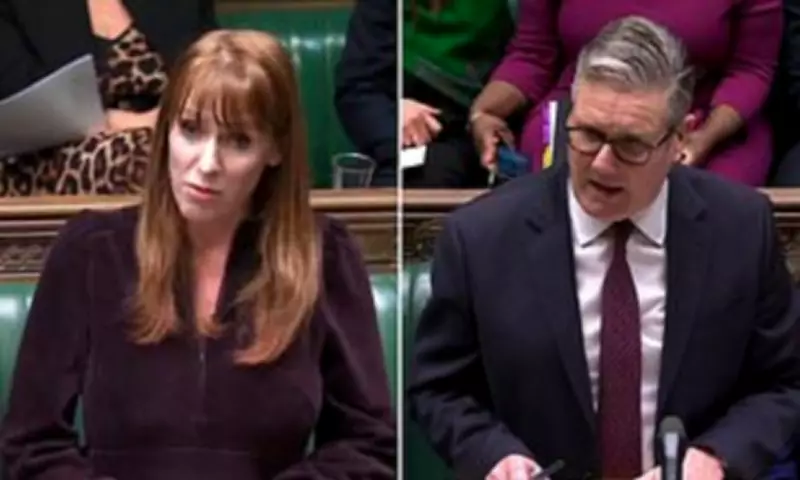
Ms Rayner, widely perceived as a prime contender to succeed Sir Keir, took the decisive step to intervene, a move interpreted across Westminster as a clear signal she believes his tenure as Prime Minister is crumbling. The atmosphere in Parliament grew increasingly febrile, with rumours circulating that certain ministers were contemplating resignation to hasten Starmer's political demise.
The Prime Minister's position was further weakened when Tory leader Kemi Badenoch forced him to publicly admit, for the very first time, that he proceeded with Lord Mandelson's appointment despite being aware the peer had maintained a friendship with Jeffrey Epstein after his conviction for child sex offences. Addressing a shocked House of Commons, Badenoch labelled the admission "absolutely shocking," raising severe questions about Starmer's judgement and that of his chief of staff, Morgan McSweeney, whom Mandelson mentored.
Mounting Pressure and Calls for Resignation
Amid the turmoil, reports surfaced that some Labour MPs had urged Starmer to dismiss McSweeney—a key architect of Mandelson's appointment—in a desperate bid to salvage his own position. The fallout intensified as Labour's former shadow chancellor, John McDonnell, suggested Sir Keir should resign over the burgeoning scandal, stating he had "lost confidence" in the Prime Minister. SNP Westminster leader Stephen Flynn described the admission as a "dark day" for Britain, pressing Starmer to apologise to Epstein's victims.
While the Prime Minister insisted he was "as angry as the public" about Mandelson's conduct, Downing Street faced intense scrutiny for its inability to explain why Starmer advanced the appointment after learning Mandelson had stood by Epstein, even staying at his New York mansion post-conviction.
A Day of Dramatic Developments
The scandal unfolded through a series of dramatic revelations and procedural clashes:
- Lord Mandelson was stripped of his membership of the King's Privy Council.
- The Metropolitan Police risked a constitutional clash by urging the government to withhold key details, citing an ongoing criminal investigation.
- Documents revealed Mandelson visited Epstein in 2013—a year later than previously known and five years after Epstein's conviction.
- Further files suggested the peer secured a £1.7 million loan for a luxury Rio de Janeiro flat, contradicting his claims of never owning property there.
- It emerged Mandelson used Ghislaine Maxwell, Epstein's convicted accomplice, to broker Bill Clinton's appearance at Labour's 2002 conference.
Parliamentary Showdown and Humiliating Retreat
Kemi Badenoch, in a coordinated pincer movement with rebellious Labour MPs, forced a Commons vote demanding the release of hundreds of documents related to Mandelson's appointment, including private messages with Starmer and McSweeney. Sir Keir's attempt to mitigate the disclosure by proposing Cabinet Secretary vetting for national security reasons backfired spectacularly. Badenoch accused him of a "cover-up," while simultaneously inflaming Labour backbenchers.
Angela Rayner, in a rare and powerful intervention since her resignation as deputy PM, argued that parliamentary oversight, specifically by the Intelligence and Security Committee, was essential to maintain public confidence. Citing widespread "public disgust" at Mandelson's "sickening behaviour," her stance triggered panic among Labour leadership. Within an hour of Starmer rejecting the idea, Chief Whip Sir Alan Campbell capitulated, agreeing to Rayner's proposal—a stark demonstration of her rising influence.
Ongoing Investigations and Further Revelations
Following the Prime Minister's climbdown, MPs passed the motion to release the files without a vote, handing scrutiny to the parliamentary committee. However, doubts lingered about the extent of disclosure due to Metropolitan Police concerns over compromising their investigation into whether Mandelson committed misconduct in public office—a crime carrying a potential life sentence—by allegedly sharing market-sensitive information with Epstein.
Commons Speaker Sir Lindsay Hoyle asserted Parliament's supremacy, stating the police "cannot dictate to this House." Meanwhile, Labour MPs across the spectrum rallied behind Rayner, with figures like Dame Meg Hillier and Andy McDonald criticising the government's judgement and handling of the affair.
New Evidence from the Epstein Files
Further damning evidence emerged from the Epstein files, including:
- An email from April 2013 confirming Mandelson's dinner plans at "Jeffrey's home," indicating more recent contact than admitted.
- A bank statement showing a $25,000 transfer from Epstein to Mandelson, which the peer claims is fake and he cannot recall.
- Correspondence detailing Mandelson's discussions with Epstein about purchasing the Rio apartment via an offshore company, supported by a £1.68 million HSBC loan secured against his London home.
Lord Mandelson has consistently denied any wrongdoing in relation to Jeffrey Epstein. Nevertheless, the cascade of revelations and the internal Labour revolt have left Keir Starmer's authority critically damaged, with his political survival now hanging in the balance.