Prime Minister Confirms Prior Knowledge of Mandelson-Epstein Relationship
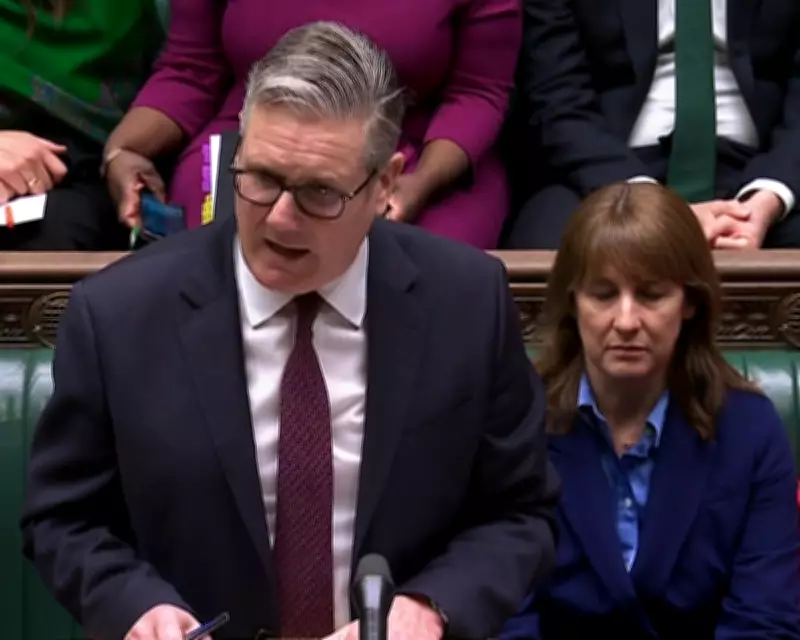
Prime Minister Keir Starmer has publicly confirmed for the first time that he was aware of Peter Mandelson's continued relationship with convicted child sex offender Jeffrey Epstein before appointing him as US ambassador. The revelation came during a tense session of Prime Minister's Questions on Wednesday, where Starmer faced sustained questioning from Conservative leader Kemi Badenoch.
Mandelson Accused of Repeated Deception
Starmer stated unequivocally that Mandelson had "lied repeatedly" about the depth and nature of his contact with Epstein, both before and during his tenure as ambassador. The Prime Minister expressed clear regret about the appointment, stating: "I regret appointing him. If I knew then what I know now, he would never been anywhere near government."
In a dramatic development, Starmer announced that Mandelson has been removed from the list of privy councillors following agreement with the King, on grounds that he "brought the reputation of the privy council into disrepute." This represents a significant fall from grace for the former business secretary, with moves reportedly underway to strip him of his peerage as well.
Security Vetting and Ongoing Investigations
When pressed by Badenoch about whether official security vetting had mentioned Mandelson's ongoing relationship with Epstein, Starmer confirmed: "Yes, it did. As a result, various questions were put to him." According to the Prime Minister, Mandelson responded to these questions with false information, fundamentally misleading the appointment process.
The Metropolitan Police have now formally launched a criminal investigation into claims that Mandelson leaked market-sensitive information and Downing Street emails to Epstein while serving in Gordon Brown's government during the 2008 financial crisis. Starmer expressed particular anger about this aspect, stating: "To learn that there was a cabinet minister leaking sensitive information at the height of the response to the 2008 crash is beyond infuriating."
Political Fallout and Document Dispute
The Conservatives are seeking to force the release of official documents relating to Mandelson's appointment through an opposition-day debate, while the government has offered a more limited disclosure. Starmer emphasised his commitment to transparency, saying: "I want to make sure this house sees the full documentation, so it will see for itself the extent to which, time and time again, Mandelson completely misrepresented the extent of his relationship with Epstein."
However, the Prime Minister stressed the need to first remove documents that could compromise national security or international relations. Badenoch countered this position, accusing Starmer of using national security as "a red herring" and arguing that "the national security issue was appointing Mandelson."
Support for Senior Staff and Wider Implications
Badenoch also questioned Starmer's confidence in his chief of staff, Morgan McSweeney, who was reportedly instrumental in pushing for Mandelson's Washington appointment. Starmer defended his senior aide, stating: "Morgan McSweeney is an essential part of my team. He helped me change the Labour party and win an election. Of course, I have confidence."
The revelations have sparked widespread condemnation across the political spectrum, including from former Prime Minister Gordon Brown. Starmer concluded his remarks by expressing solidarity with Epstein's victims and those affected by the 2008 financial crisis, describing Mandelson's actions as a betrayal of "our country, our parliament and my party."