President Donald Trump is reportedly preparing to install a statue of Christopher Columbus on the White House grounds, marking another significant alteration to the executive mansion's landscape. This move represents the latest in a series of controversial changes implemented by the Trump administration since his return to office last January.
The Columbus Statue Restoration
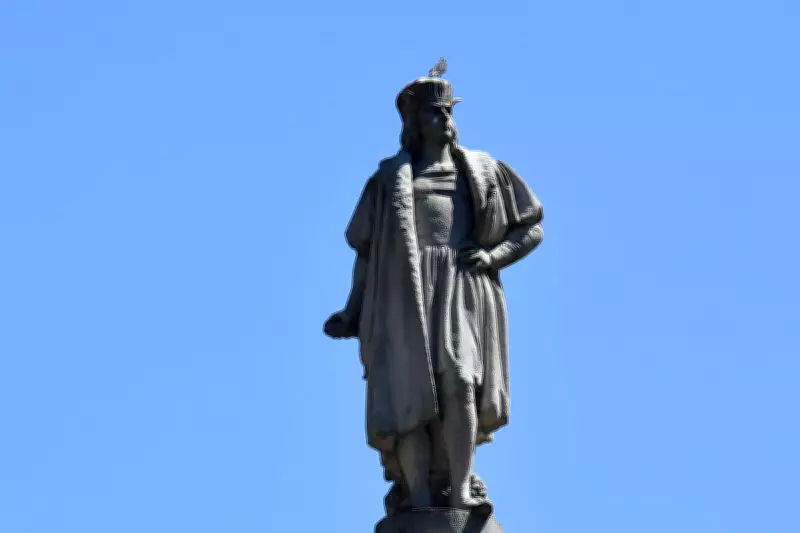
According to The Washington Post, which cited multiple unnamed sources familiar with the matter, the statue will be erected near the Ellipse on the south side of the White House. The artwork is actually a reconstruction of a Baltimore statue that was toppled by protesters and thrown into the city's harbour during the 2020 nationwide racial justice demonstrations.
The original statue was initially unveiled by former President Ronald Reagan. Maryland sculptors have since restored it in collaboration with Italian-American politicians and businessmen. The restored monument could be transferred from Maryland to Washington, D.C. within a matter of weeks, though the administration has not officially confirmed these plans.
Trump's Historical Revisionism
Trump has long championed Columbus, whose voyages to the New World paved the way for European colonisation but whose legacy has become increasingly controversial due to his brutal treatment of indigenous peoples. The president has consistently defended the 15th century explorer against what he perceives as attacks from political opponents.
"In this White House, Christopher Columbus is a hero. And he will continue to be honored as such by President Trump," Trump spokesman Davis Ingle told The Washington Post.
On the 2024 campaign trail, Trump promised to celebrate Columbus Day, which falls on October 12th, the anniversary of the Genoese explorer setting foot in the Americas. In October, he signed an order recognising Columbus as "the original American hero."
The president wrote on Truth Social in April: "I'm bringing Columbus Day back from the ashes. The Democrats did everything possible to destroy Christopher Columbus, his reputation, and all of the Italians that love him so much. They tore down his Statues, and put up nothing but 'WOKE,' or even worse, nothing at all! Well, you'll be happy to know, Christopher is going to make a major comeback."
Broader White House Transformations
If erected, the Columbus statue will be just one of many changes Trump has made to the White House since returning to office. His administration has undertaken substantial renovations that have dramatically altered the historic property's appearance and character.
Notable alterations include:
- Paving over the Rose Garden
- Installing towering flag poles on the lawn
- Affixing golden adornments to the Oval Office
- Tearing down the East Wing to make room for a massive $400 million ballroom project
Executive Orders and Wider Plans
In March, Trump signed an executive order seeking to eliminate what he described as "corrosive ideology" from the federal government and curb "a widespread effort to rewrite our Nation's history." This order appears to align with his broader approach to historical monuments and national symbols.
The administration also has broader transformations planned for Washington, D.C., including a victory arch near the Potomac River and renovations to the city's golf courses. These projects suggest a comprehensive reimagining of the nation's capital under Trump's vision.
Additional Monument Projects
Beyond the Columbus statue, another significant monument is in development—this time featuring Trump himself. A 22-foot bronze piece dubbed "Don Colossus" is scheduled to be erected in Miami, Florida later this year.
Funded by a group of cryptocurrency investors, this monumental statue will greet world leaders attending the upcoming Group of 20 summit. The artwork was created by artist Alan Cottrill and represents another example of how Trump's administration is reshaping public spaces and historical narratives through physical monuments.
These developments highlight the Trump administration's continued focus on altering both the physical landscape of Washington and the nation's historical consciousness through symbolic gestures and architectural changes.