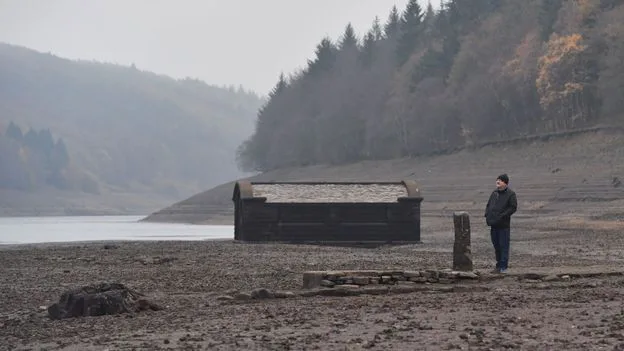
In 2018, a hot, dry summer caused the waters of Ladybower Reservoir in the Peak District to fall, revealing the remains of the lost village of Derwent. The village had been flooded in 1945 to create the reservoir, which supplies water to cities in the English Midlands.
The village of Derwent, along with nearby Ashopton, was sacrificed to meet the growing demand for water from industrial cities such as Sheffield and Leicester. Despite protests, the Derwent Valley Water Board proceeded with the construction of Ladybower Reservoir, which began in 1935. By 1945, the village was submerged, leaving only a ghostly church spire visible during dry periods.
Before the flooding, the area had been home to centuries-old stone buildings and established communities. The creation of earlier reservoirs, Howden and Upper Derwent, had already displaced some residents, but the flooding of Derwent and Ashopton marked a final loss. A temporary village called Birchinlee, nicknamed 'Tin Town' for its corrugated metal buildings, housed workers during the construction of the earlier reservoirs. It was dismantled after completion.

Today, remnants of the lost villages can still be found. A packhorse bridge from the area was moved stone by stone to Slippery Stones, where it now spans the river. One of the Tin Town huts was reassembled in the nearby village of Hope and now serves as a hairdresser's shop. Information boards along the reservoir's edge display photographs of the temporary residents who lived and worked there.