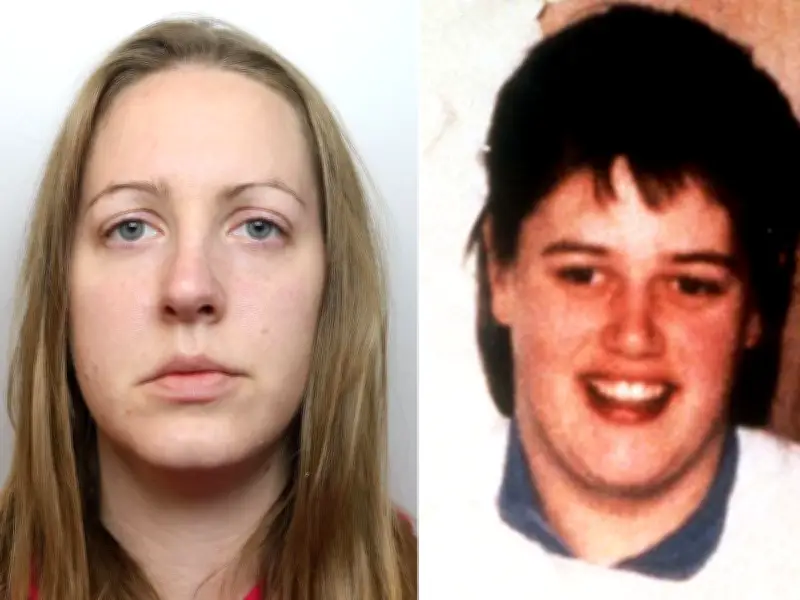
Vanessa Frake Harris, who served 27 years in the prison service, has drawn haunting parallels between serial killer nurses Beverley Allitt and Lucy Letby. She describes Allitt, known as the 'Angel of Death,' as the 'mirror image' of Letby, with an appearance that bore no relation to her crimes. Harris explains: 'Beverley Allitt was one of the quietest, mouse-like people. She didn't look like she would say boo to a goose. She was very subdued: the kind of person you would instantly put onto suicide watch.'
Another former governor, Suzy Dymond-White, recalls finding Letby 'doe eyed.' She says: 'She looks quite sweet and innocent. All the pictures you see of Lucy Letby, she's this angelic-looking young woman. You'd be happy to sit next to her on the bus.'
Insights from New Book
The revelations come from the new book Inside: Women Behind Bars, which sheds light on life within women's prisons and the notorious offenders they house. BAFTA-nominated documentary filmmaker Jonathan Levi co-wrote the book with his wife, bestselling author Dr Emma French, gaining unprecedented access to former staff, governors, and prisoners.

Lucy Letby was found guilty of murdering seven babies and attempting to kill seven others on a neonatal unit. Allitt attacked 13 children on the children's ward at Grantham and Kesteven Hospital, with four dying. She received 13 life sentences for crimes committed over 59 days in 1991. Letby is serving 15 whole-life orders for murders and attempted murders between June 2015 and June 2016 at the Countess of Chester Hospital. She is currently an inmate at HMP Bronzefield in Surrey.
Emma says: 'The parallels are striking and disturbing in equal measure. Like Letby, Allitt was a carer in whom parents had placed absolute trust. Like Letby, she used insulin and the injection of air into the bloodstream as weapons. Like Letby, her crimes came to light through a pattern that simply could not be explained by coincidence.'
Allitt's Behavior in Prison
According to the book, Allitt, believed to have Munchausen's syndrome by proxy, stopped eating and drinking within days of arriving at HMP New Hall. She was eventually transferred to Rampton Secure Hospital. Bev Butler, who joined the prison service in 1987, recalls: 'She went on hunger strike; she was in a cell with the door open and we watched her 24/7. She was intimidating. Very smarmy, wanting to be liked. Everyone was told, don't accept anything from her, don't take sweets from her, don't take anything she offers, because you just never knew what she was capable of. She wasn't allowed to mix with anybody, she was that dangerous. And she professed her innocence.'
Letby's character and her refusal to attend her sentencing hearing are also examined. Jo Taylor, an officer with 15 years in the prison service, recalls: 'Apparently she's very cocky, and pretty controlling. Lucy Letby says what she wants. She was on a hospital ward for her own protection. In the olden days you never refused a judge. Why not get her in a body belt and then put duct tape over her mouth? I would have Lucy Letby in there kicking and screaming.'
Safety Concerns
The safety of both women is under constant threat. Vanessa explains: 'Particularly with women, child killers are seen as the lowest of the low. A lot of women have had their children taken away from them because of their prison sentence, or may have lost babies or miscarried. When put in with a child killer, it can be very provocative. There are a lot of lifers who would absolutely delight in having the scalp of Lucy Letby.'
Inside: Women Behind Bars is the fourth book in a series examining prison life. Emma says: 'Women make up about four per cent of the prison population, so it's a very different experience from that of men. Most women are inside for non-violent offences and are serving short sentences. You'd think the fact they're in there for less time would be a good thing, but it doesn't give them enough time to break the cycle, to get away from an abusive partner, for instance. They just go back into the same situation and then come back in again. One of our contributors described women arriving in prison and asking whether their old room was free.'

Female felons also seem to be of greater interest to the public. Emma explains: 'Women who kill and who violate the role society thinks they play - that's lastingly haunting.'
Ordinary Women's Stories
While the book includes accounts of notorious prisoners, Jonathan says the stories of ordinary women are just as compelling. He explains: 'One of the recurring themes was that violence is treated differently when it comes to women. We've written about male prisons and prisoners where violence is really integral to what they've done. But we met Neah Tuohy. Her brothers brought her up and they taught her to defend herself if she was attacked. When she did, she got sent to prison.'
Hairdresser Neah was 24 in May 2016 when she was jailed for 12 years for glassing a man in the face as he lay unconscious in the street on St Patrick's Day in 2015. Jonathan adds: 'I think judges come down more harshly on women in sentencing when it comes to violence. There's a societal expectation that women shouldn't be violent.'
The author's work has brought him into contact with high-profile male killers, including Yorkshire Ripper Peter Sutcliffe and Robert Napper. But he notes the number of convicted female paedophiles in the UK, such as former nursery nurse Vanessa George, jailed in 2009 for sexual abuse. Jonathan says: 'It's presented as a crime mainly perpetrated by men, but there are a lot more female offenders than we like to think. I'm not sure if we are ready to confront that reality.' According to Suzy Dymond-White, female sexual predators are motivated by control. She says: 'Women who sexually offend tend to be in a position of care or authority. And the victims are almost always people over whom they have control – children in their care, vulnerable adults.'
While Letby and Allitt's crimes were not sexual, their victims were children in their care. Emma and Jonathan believe women's prisons need change. Jonathan explains: 'They're not being treated in the correct way. This isn't a story about monsters. It's about a system that was designed primarily for men that has never been adequately remade for the women it also holds.'
Inside: Women Behind Bars - Behind Closed Doors of Notorious Women's Prisons by Emma French and Jonathan Levi is published by Blink Publishing (Out 18th June 2026, £10.99).