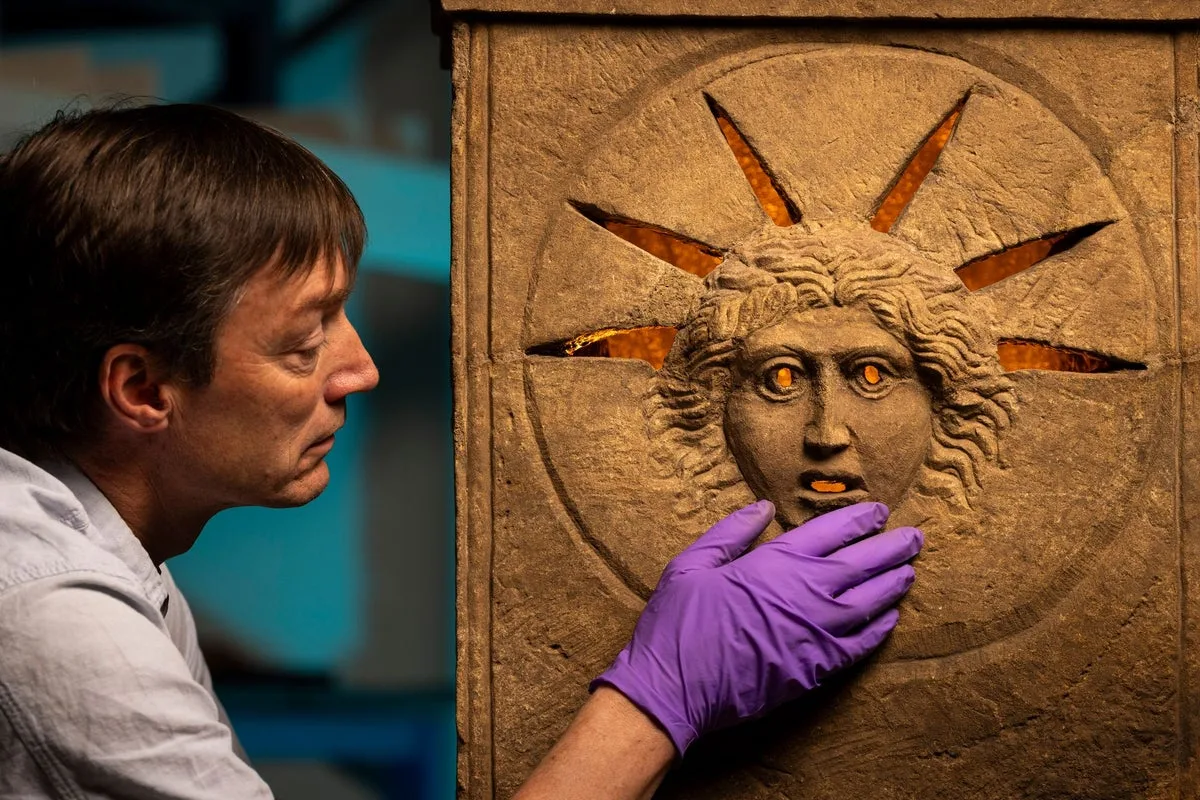
Two stone altars discovered at a Roman fort near Edinburgh, now acquired for the nation, will be displayed for the first time in a new exhibition. The artefacts, dating to around 140 AD, once formed the heart of the Roman Empire's most northerly known temple to the god Mithras.
Excavated at Inveresk in East Lothian, the altars offer fresh insights into the beliefs and lives of soldiers on the frontier. The cult of Mithras was a secretive, male-only religion that celebrated the triumph of good over evil and light over darkness, according to experts.
One altar depicts the sun god Sol and features carvings of the four seasons as female deities. Curators say it would have been illuminated from behind, making Sol's eyes and solar crown glow in the low light of the temple. The other altar honours Mithras with carvings linked to Apollo, including a lyre, a griffin, a plectrum, and two ravens.

Both altars were dedicated by a legionary centurion believed to be Gaius Cassius Flavianus. During conservation, traces of paint were found, revealing they were originally vibrant colours. The altars will be on show from November 2026 in the exhibition Roman Scotland: Life On The Edge Of Empire at the National Museum of Scotland.