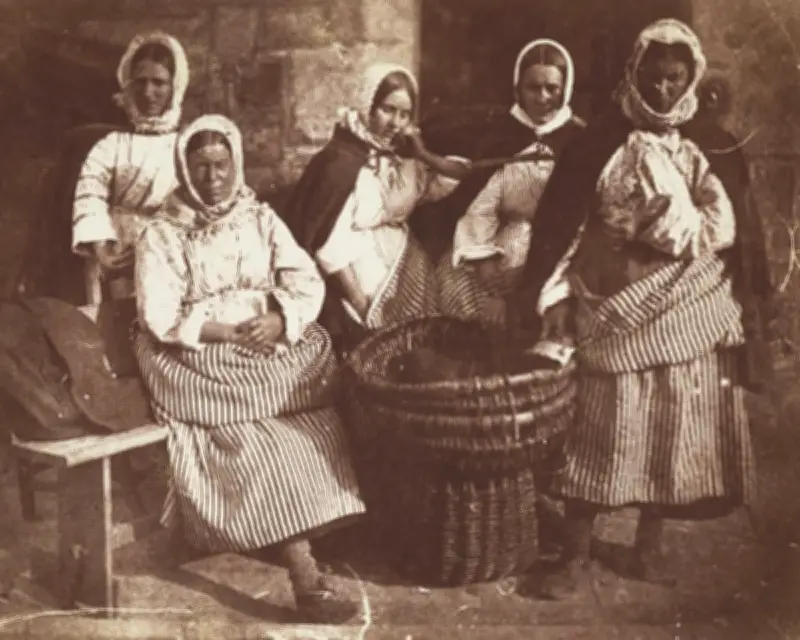
In the 1840s, David Hill and Robert Adamson collaborated to produce some of the earliest photographs of everyday life, focusing on the fishing community of Newhaven, near Edinburgh. Their work is celebrated for its artistic quality and historical significance.
The Collaboration
Hill, a painter, and Adamson, a photographer, formed a partnership that lasted only a few years but produced a remarkable body of work. Using the calotype process, they captured portraits and scenes of the Newhaven fishers, a community known for its distinct culture and traditions.
Artistic and Technical Innovation
The calotype process allowed for multiple prints from a single negative, making it a precursor to modern photography. Hill and Adamson's images are noted for their composition and the way they captured the dignity of their subjects.

Historical Context
Newhaven was a thriving fishing village, and the photographs provide a rare glimpse into the lives of its inhabitants. The images show fishermen, fishwives, and everyday activities, preserving a way of life that has since changed.
- Portraits: Many photographs are posed portraits, showing individuals in their working clothes.
- Group Scenes: Some images capture groups of fishers, highlighting community bonds.
- Harbor and Boats: The harbor and fishing boats are also featured, emphasizing the importance of the sea.
Legacy
Today, Hill and Adamson are recognized as pioneers of photography. Their Newhaven series is considered a masterpiece of early documentary photography. The images are held in collections such as the Scottish National Photography Collection.
This exhibition showcases a selection of these historic photographs, allowing modern audiences to appreciate the artistry and historical value of Hill and Adamson's work.