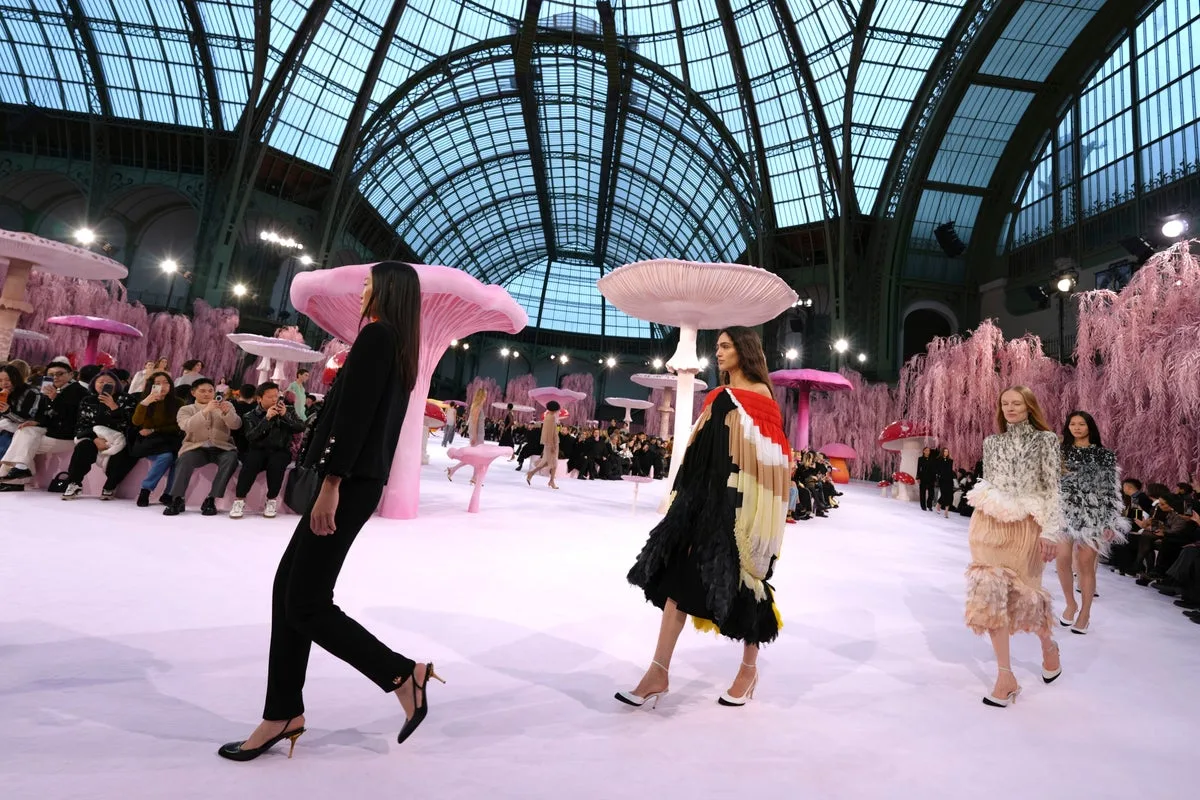
Paris couture this season did something unexpected: it got lighter and down to earth. Even with major debuts at Chanel, Dior and Armani Privé, the strongest message on the runways was restraint with impact. Clothes looked miraculous up close but less like museum pieces and more like something a woman could actually move in.
Transparency was the season's easiest headline, but the point wasn't nakedness: it was craft made to float. Chanel opened Matthieu Blazy's first couture collection with the house's classic skirt suit rendered in blush organza: familiar but ghosted. At rival Dior, Jonathan Anderson pushed the same idea through contrast, pairing nearly sheer ribbed tanks with painstakingly embroidered evening skirts. Armani Privé, under Silvana Armani, made lightness look expensive with organza shirts and 'mille-feuille' gowns shimmering through layers of micro-crystals.
A second shift ran through the week: couture moving toward the daily wardrobe. Blazy framed Chanel as 'real-life couture', with pieces that felt more relatable without losing polish. Anderson argued that couture doesn't require a corset to count, using knit as couture structure. Armani Privé led with relaxed suiting and a more edited lineup, while Elie Saab nodded to wearability with tank-top-and-skirt silhouettes.

Motifs leaned hard into nature, treated less as decoration and more as code: freedom, escape, transformation. Chanel's birds fluttered across seams, Dior's starting point was cyclamen, and Schiaparelli went full animal with wings, spikes and scorpion tails. Dutch duo Viktor & Rolf built their collection around flight with removable, kite-inspired elements. For all the softness, couture also snapped back into structure: Anderson opened Dior with hourglass volume built by hand, Stéphane Rolland took geometry as gospel, and Zuhair Murad doubled down on control with ribbed, architectural gowns.