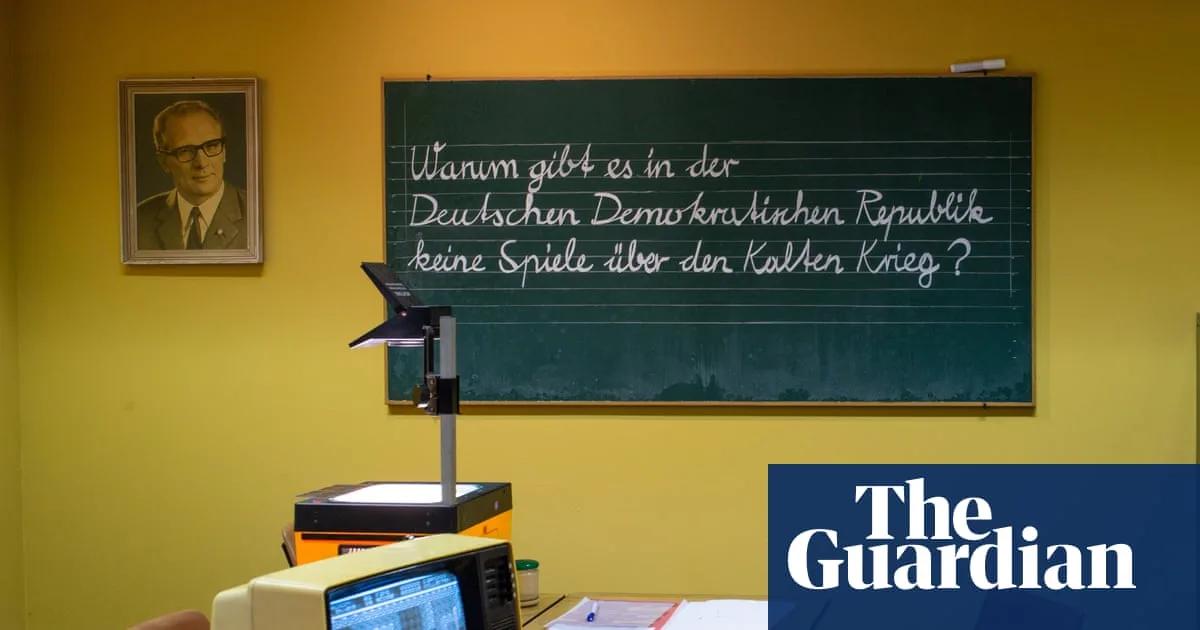
A new exhibition in Berlin reveals that East Germany's notorious secret police, the Stasi, actively supported the development of computer games as a propaganda tool. Researchers at the Computer Games Museum recently discovered a homemade Pong console, dubbed 'Seifendosen-Pong' (soap-box Pong), along with schematics from a state magazine, challenging the assumption that gaming was suppressed under socialism.
The exhibition, a joint effort by the Allied Museum and the Computer Games Museum, showcases cold war gaming curios from both sides of the Iron Curtain. Among them is East Germany's only arcade cabinet, the Poly-Play, of which only 2,000 were made. The machine featured cloned versions of western games, such as 'Hase und Wolf' instead of Pac-Man, and 'Hirschjagd' instead of Robotron: 2084.
According to Veit Lehmann of the Allied Museum, the Poly-Play was only possible with help from the Stasi, as the manufacturer lacked programming expertise. The Stasi provided experts and computing capability to code the games. The machine was designed to be family-friendly, with all violence removed, reflecting the GDR's self-image as a peace-loving state.

Despite official support, western technology remained scarce due to the CoCom trade embargo. Smugglers brought in ZX Spectrums hidden in car seats or chocolate boxes. State-produced machines like the Bildschirmspiel 01 and VEB Robotron microcomputers were expensive and rare. However, the state saw potential in young enthusiasts, hoping their interest in games could lead to innovations in microelectronics.
The exhibition runs until April 2025, offering visitors a chance to play the Poly-Play and explore other cold war gaming artifacts.