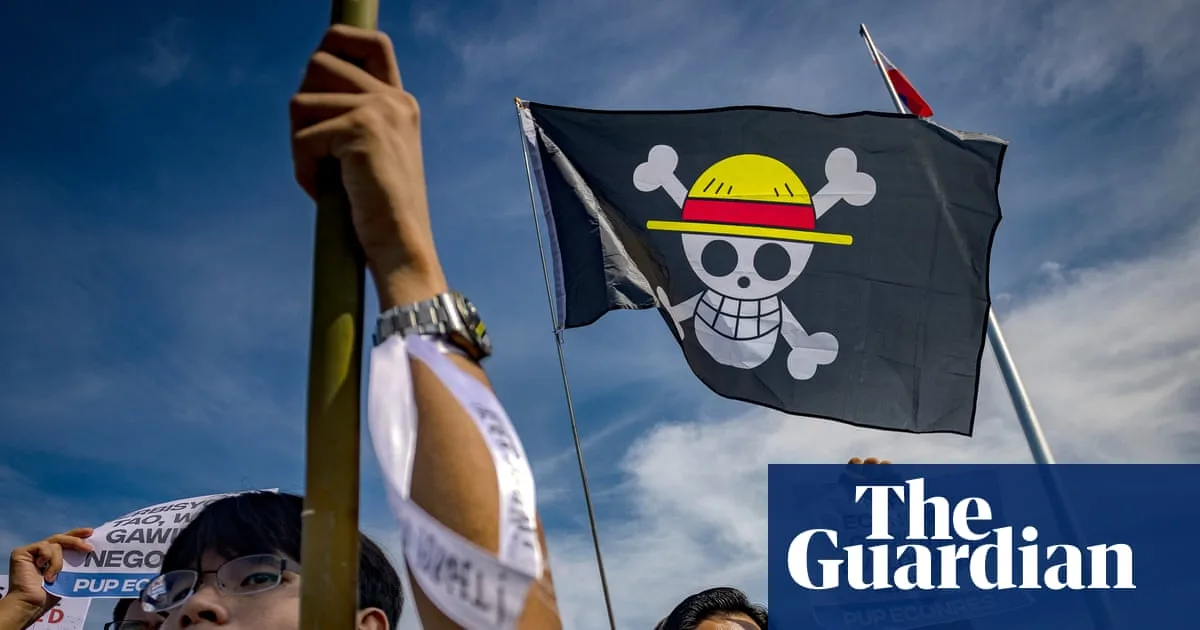
The iconic skull-and-straw-hat flag from the Japanese anime One Piece has emerged as a symbol of defiance for young protesters across Asia, appearing at demonstrations in Indonesia, Nepal, and the Philippines. The flag, flown by the Straw Hat pirates in the series who oppose corrupt rulers, has resonated with Gen Z activists facing similar issues in their own countries.
In Indonesia, the flag was displayed on homes and vehicles during protests against government corruption and lavish politician perks, which turned deadly. In Nepal, it was draped on the palace gates as young people toppled the government. In the Philippines, tens of thousands rallied under the flag on Sunday to protest alleged corruption in flood relief projects.
“Even though we have different languages and cultures, we speak the same language of oppression,” said Eugero Vincent Liberato, a 23-year-old graduate who helped organize the Manila protests. “We see the flag as a symbol of liberation against oppression … that we should always fight for the future we deserve.”

The use of pop culture in protests is not new in the region. The three-finger Hunger Games salute has been used in Thailand and Myanmar, while Thai protesters referenced Harry Potter in 2020. Anime, particularly One Piece—which holds the record for most copies published by a single author—has proven a powerful and accessible symbol, spreading via social media.
Indonesian officials reacted defensively to the flag’s use, with one lawmaker calling it an attempt to divide national unity and another suggesting it could be treason. Amnesty International warned that targeting individuals for displaying the flag violated freedom of expression. Analysts note that such responses risk amplifying the symbol’s power.
Despite differing specific demands, activists see a common thread. “We all share the same struggle, that is to have a livable future,” said Liberato. The flag’s organic spread online and its familiarity make it a potent emblem for a generation seeking change.