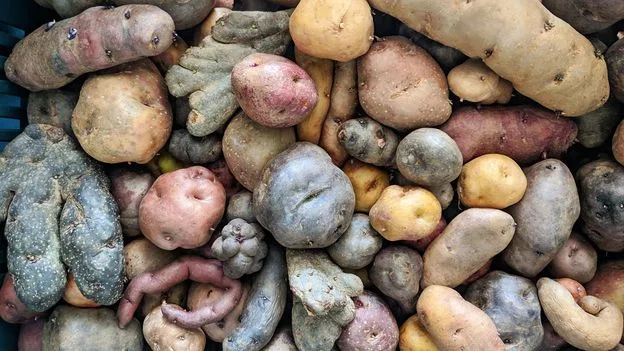
The humble potato, a staple food for cultures across the globe, has emerged as a nutritional giant and the friend of peasants, rulers and sages. Even today, its possibilities are endless, according to food historian Rebecca Earle, who is tracing the potato’s planetary journey in a forthcoming book called Feeding the People: The Politics of the Potato.
Despite its origins in the South American Andes some 8,000 years ago, the potato was only brought to Europe in the mid-1500s, from where it spread west and northwards, back to the Americas, and beyond. Earle calls it the “world's most successful immigrant”, as its origin has become unrecognisable for producers and consumers everywhere.
The potato is the world’s fourth-most important crop after rice, wheat and maize, and the first among non-grains. What made the potato so irresistible was its unrivalled nutritional value, its relative easiness to cultivate as compared to some major cereals, its ability to easily navigate wars and tax censuses due to its knack for hiding underground from collectors, and in particular, its camaraderie with working men and women in the fields.

A good place to understand its origins is the Centro Internacional de la Papa (CIP), or International Potato Center, a research-for-development centre that researches and promotes all things potato-related. It harbours a collection of thousands of potato samples from across the continent. “The Andes is where the biggest genetic diversity lies, but you can find potatoes from Chile to the United States,” René Gómez, senior curator at the CIP genebank, said.
Potatoes were domesticated high in the Andes, near Lake Titicaca, nearly 1,000km south-east of Lima. Following domestication, these early potatoes spread through the cordillera and became a crucial food supply for indigenous communities, including the Inca, particularly as a staple foodstuff called chuño, a freeze-dried potato product that can last years or even decades.