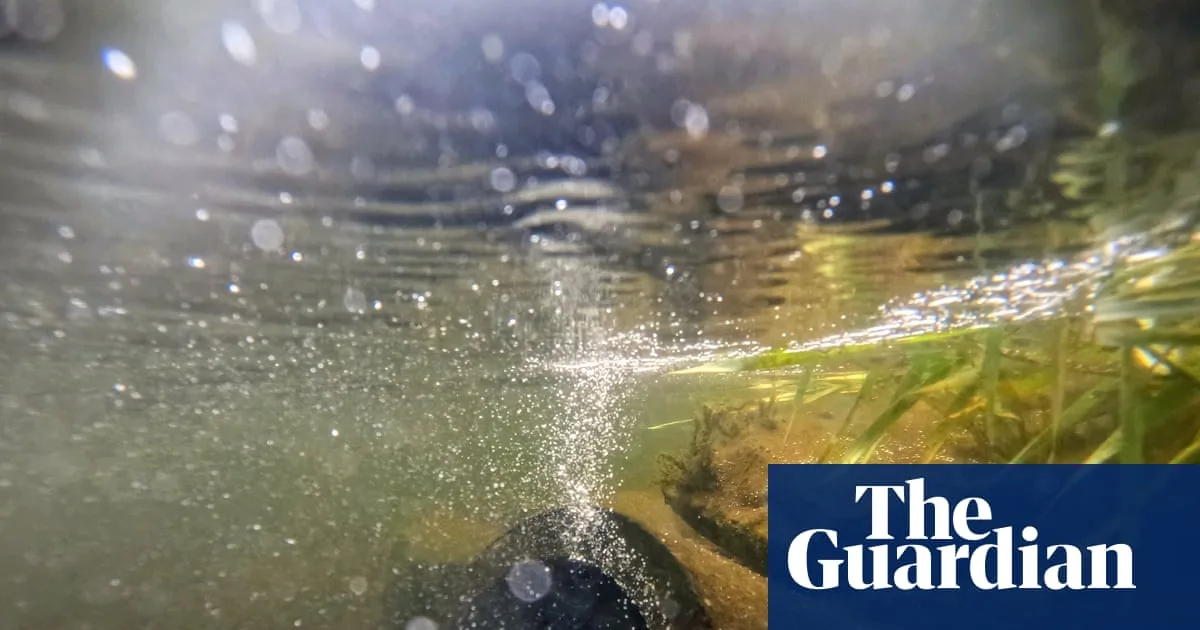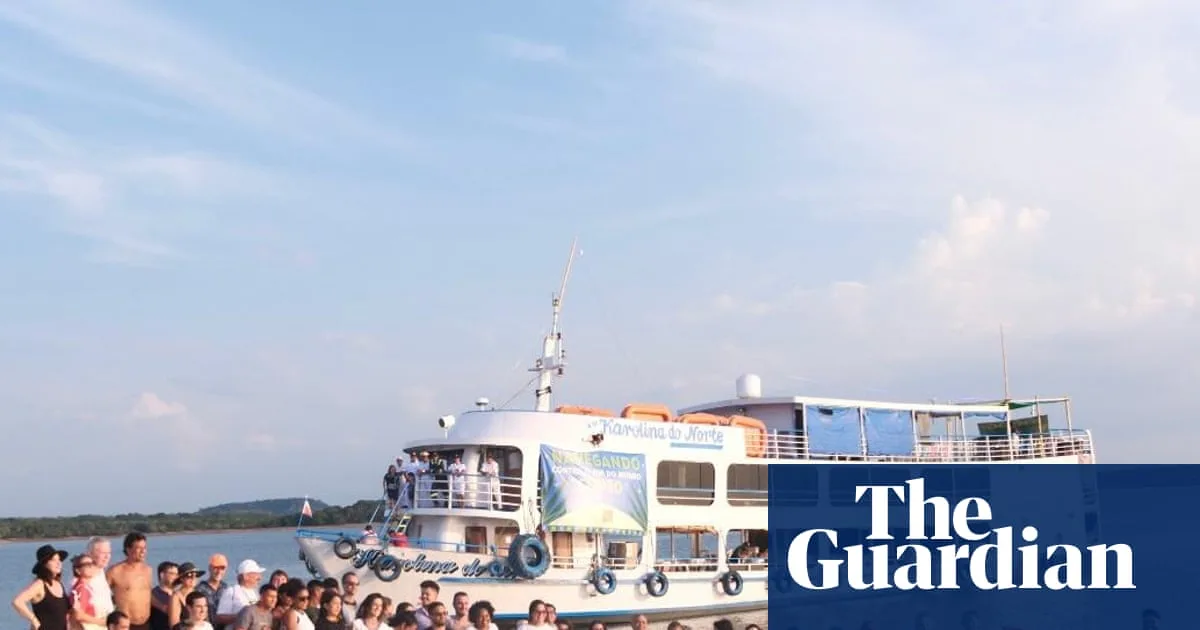
Indigenous leaders, environmental activists and forest defenders are determined to make this a summit like no other. A day into a river voyage between Santarém and Belém, a dozen or so passengers on the Karolina do Norte move excitedly to the port side of the boat to see the cafe au lait-coloured waters of the Amazon river mix with the darker, clearer currents of the Xingu.
“That confluence is like the people on this boat,” said Thais Santi. “All from different river basins, but coming together for this journey.” Santi, a public prosecutor from the frontier municipality of Altamira, is one of more than 100 participants, along with Indigenous leaders, climate scientists, artists, youth activists, doctors and other forest defenders.
The Voyage to Resist the End of the World was arranged by the Amazon news organisation Sumaúma and the Santarem-based NGO, Health and Happiness. It is one of several fluvial civil society activities that aim to make the colour, flavour and sound of Cop30 unlike anything seen in the history of climate summits.

Recent conferences have been dominated by corporate lobbyists and billionaires who fly in on private jets. In the authoritarian petrostates of Dubai and Azerbaijian, protest has either been forbidden or strictly limited. Brazil, on the other hand, has said civil society must play a fundamental role in pushing negotiators to be more ambitious.
This conference desperately needs a helping hand. Last week, the secretary-general of the United Nations, António Guterres, acknowledged that it was now inevitable that the world will miss the target of limiting global heating to 1.5C above preindustrial levels because national plans to cut emissions have fallen far short of what was needed. He urged delegates to “change course” to prevent the Amazon rainforest from becoming a savannah.
A shortage of accommodation and highly inflated prices for the rooms have led many official delegations to bring fewer people or not come at all, but many nongovernmental groups are finding alternatives by travelling on boats that can then double as lodgings when they arrive in Belém. With music, workshops and campaigns along the route, they are coming from all points of the compass.