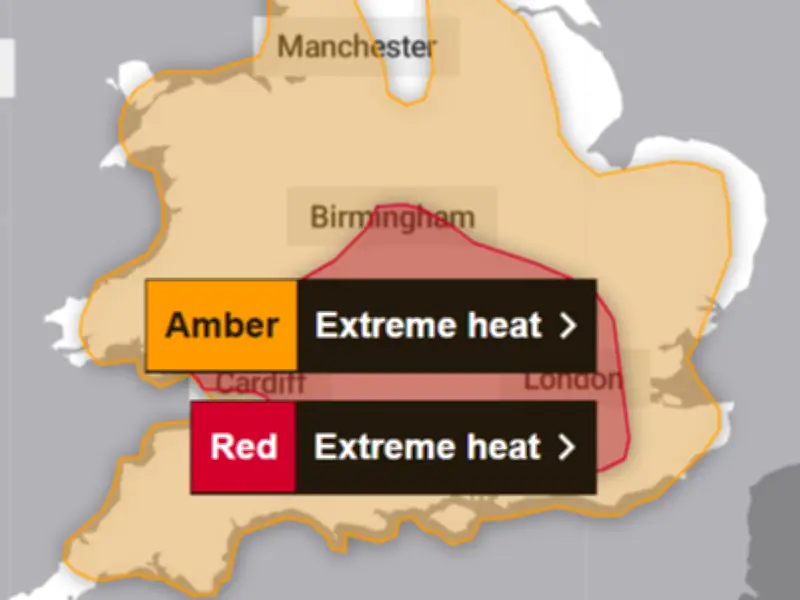
The Met Office has issued a rare red weather warning for extreme heat in central and southern England and Wales on Wednesday and Thursday. The UK is set to experience record-breaking temperatures that could exceed 38°C, triggering extreme heat warnings and health alerts.
What a Red Warning Means
A Met Office Red Weather Warning for Extreme Heat is the highest level of alert. It signals a severe, potentially historic heatwave that poses a widespread threat to health, daily life, and infrastructure. The core message is 'Take Action'. Unlike lower-level alerts focusing on vulnerable groups, a red warning means even fit, healthy people are at risk of severe heat-related illnesses like heatstroke. The heat can cause tarmac to soften, rail tracks to buckle, and power grids to fail. Significant travel disruption is likely, and overnight temperatures may remain above 20°C, preventing the body from cooling down.
Health Impacts and Advice
The UK Health Security Agency (UKHSA) warned of significant impacts across health and social care services, along with a rise in deaths, particularly among those aged 65 and over or with health conditions. The Met Office advises: drink plenty of fluids, keep out of the sun, avoid exercise between 11am and 3pm, close curtains in sun-facing rooms, and take water if going out. Stay in the shade, wear sunscreen and a wide-brimmed hat. Know the signs of heat exhaustion: heavy sweating, dizziness, rapid pulse, headache, nausea. If symptoms don't improve within 30 minutes or become confused, call 999.

Infrastructure and Travel Disruptions
The extreme heat could disrupt rail, road, and air travel, with the possibility of tarmac melting. The Met Office advises against non-essential travel. If driving, ensure plenty of water, coolant, and a fully charged phone. Expect severe delays on trains and roads. At home, keep the house cool by closing blinds and curtains during the day and opening windows at night when cooler. Check on isolated neighbours, the elderly, infants, and pets.
Water Safety
If going to rivers, lakes, or the coast to cool down, be wary of cold-water shock. Open water in the UK remains deceptively cold; jumping in can cause uncontrollable gasping and drowning. Enter water slowly, and if in trouble, 'Float to Live' by leaning back and spreading arms and legs.