When Mark Cocker moved to his home in Hogshaw, Derbyshire, he didn't need the encouragement of No Mow May. His old lawnmower was designed for a handkerchief-sized patch, and leaving nine-tenths of the new garden uncut was a matter of necessity as much as self-control.
The highlight of last year's non-labouring efforts came when a slender pink flower among the green swathe turned out to be a spotted orchid, the commonest of the UK's 54 orchid species. Using this as a search image, Cocker eventually found 16 spikes last year, which felt like a triumph.
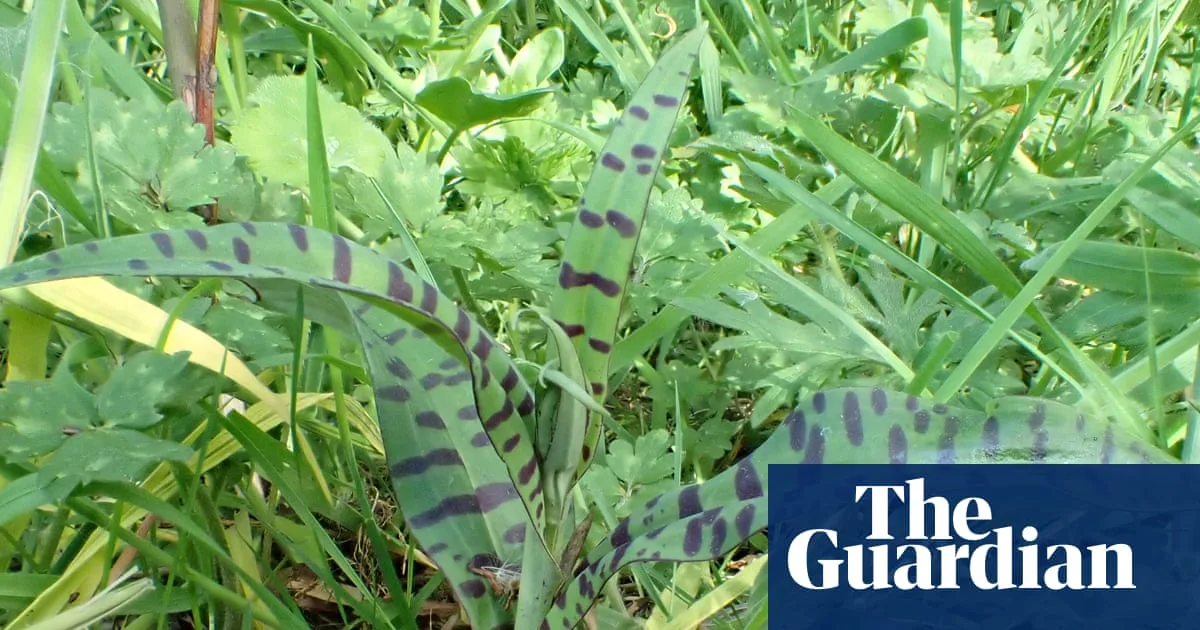
This year, he scoured the lawn with a system of sticks to mark locations, and is now up to 27 plants. He describes the lance-like, black-blotched leaves as a revelation, as if finding something animate, even feline, in the lawn.

Orchids have a secret life underground. Most species have mutualistic relationships with mycorrhizal fungi. Orchid seeds are microscopically small and lack food reserves, requiring a fungus to infect the embryo and provide nutrients. The structure expands into a globular root (órchis is Greek for 'testicle'), which may take years to gather enough energy for a shoot to erupt above ground. This prolonged hidden existence contributes to the orchids' reputation for mystery.