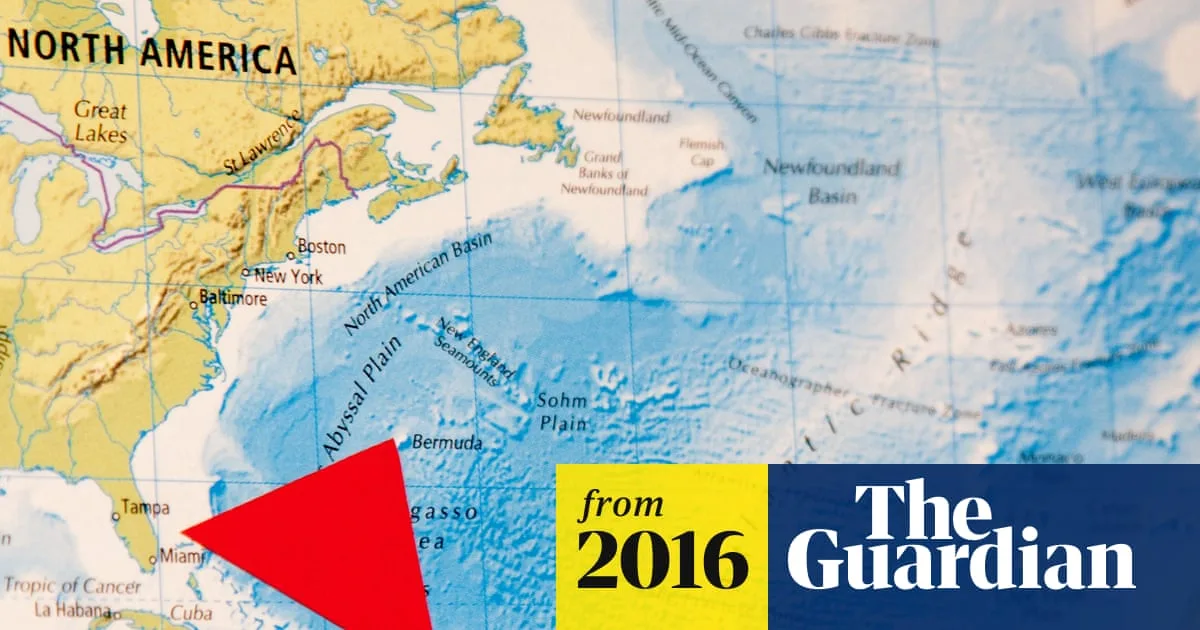
Scientists have proposed that giant methane bubbles rising from the ocean floor could account for the mysterious disappearances of ships in the Bermuda Triangle. Researchers at the Arctic University of Norway discovered massive underwater craters off the coast of Norway, measuring up to 45 metres deep and 800 metres wide, which they believe were caused by enormous gas blowouts.
The theory suggests that when methane gas erupts from the seabed, it can turn the water above into foam, reducing its density and causing ships to sink suddenly. However, experts caution that it remains unclear whether such gas blowouts occur in the Bermuda Triangle region itself.
Critics also note that the methane theory fails to explain the disappearance of aircraft, which have also been reported missing in the area. Furthermore, many incidents attributed to the Bermuda Triangle involve people vanishing from ships rather than entire vessels, and some supposedly lost boats were later found.

The term 'Bermuda Triangle' was coined by writer Vincent Gaddis in a 1964 magazine article, but subsequent investigations have shown that ships and planes disappear there no more frequently than in other parts of the ocean. The 1945 disappearance of five training planes, Flight 19, is often cited as a key mystery, but is simply explained by the pilots getting lost and running out of fuel.
Despite popular theories involving aliens, the lost city of Atlantis, or magnetic anomalies, the Bermuda Triangle may be more of a phantom mystery than a genuine paranormal phenomenon.