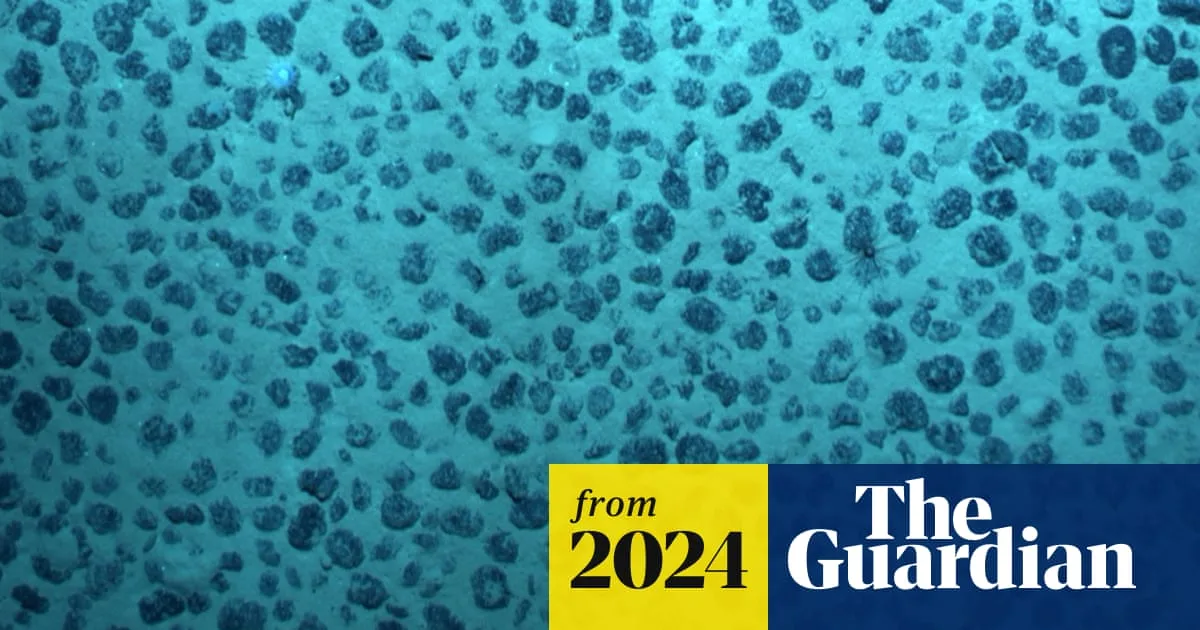
In a groundbreaking study, scientists have discovered that metallic lumps on the Pacific Ocean floor produce oxygen in total darkness, a process previously thought impossible without sunlight. The findings, published in Nature Geoscience, challenge long-held beliefs about the origins of life on Earth.
The potato-shaped nodules, known as polymetallic nodules, are found at depths of four kilometres in the Clarion-Clipperton Zone (CCZ) between Hawaii and Mexico. Rich in metals like cobalt, nickel, copper and manganese, these nodules generate an electric charge almost as high as an AA battery, enabling seawater electrolysis that splits water into hydrogen and oxygen.
Lead author Andrew Sweetman of the Scottish Association for Marine Science (SAMS) said the discovery was unexpected. His team initially thought their sensors were faulty when oxygen levels increased in sealed chambers on the seafloor. Tests on the ship confirmed the nodules were producing 'dark oxygen'.

The finding has significant implications for understanding early life on Earth. Nicholas Owens, SAMS director, called it 'one of the most exciting findings in ocean science in recent times', noting it could force a rethink of how complex life evolved. Traditionally, oxygen was thought to have been produced by photosynthetic cyanobacteria around three billion years ago.
Sweetman suggested the process could also occur on other ocean worlds, such as Enceladus and Europa, potentially creating oxygenated habitats for life. The study was partly funded by The Metals Company, which plans to start mining the nodules in the CCZ next year, raising concerns about the impact on this newly discovered process.