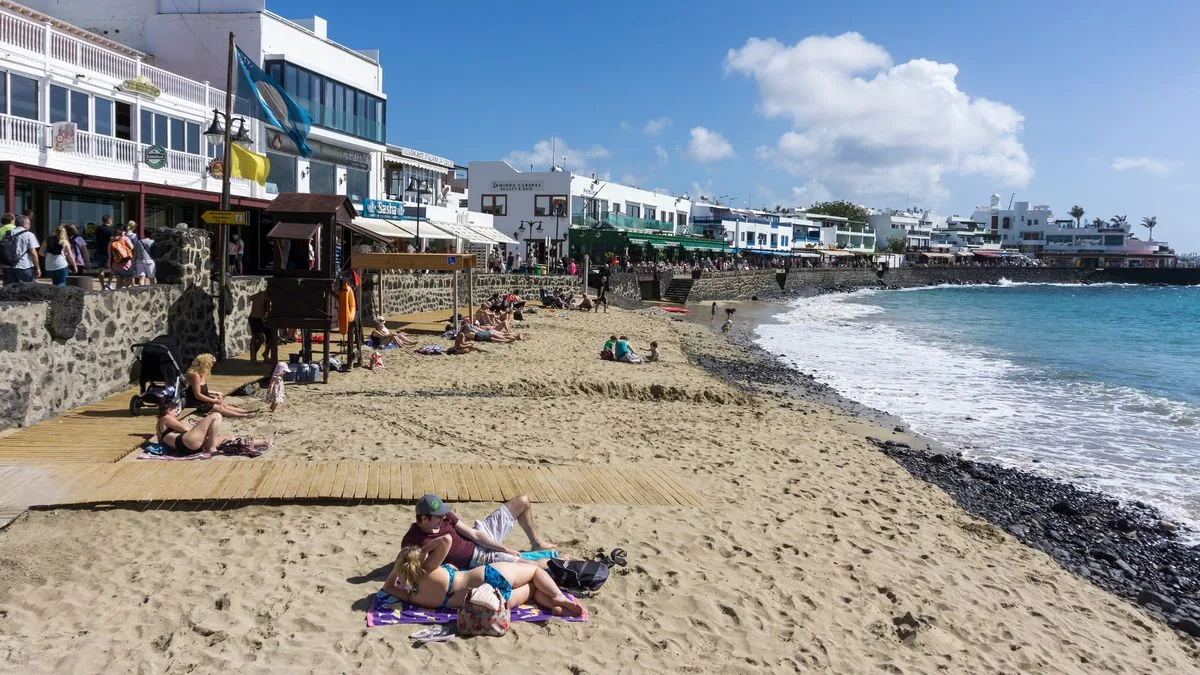
A beach in Lanzarote has been temporarily closed after public health officials detected elevated levels of faecal bacteria. Swimming and bathing are now prohibited at the small beach in Playa Blanca, the southernmost town of the island.
Tests revealed high concentrations of intestinal enterococci, bacteria used as indicators of faecal pollution. According to local reports, the levels pose a “risk to people’s health.” The Ayuntamiento de Yaiza announced the immediate ban on Tuesday, which will remain in place until test results are available within 48 hours.
Local authorities are urging residents and visitors to respect the closure while municipal technicians investigate the cause. Public Health teams continue to take water samples and conduct further analysis. Alternative beaches, including Playa Dorada and Playa Flamingo, remain open.

This incident adds to ongoing concerns about sewage contamination in the Canary Islands. In 2025, Playa Jardin in Tenerife was closed for nearly a year due to high E. coli levels, linked to cracks in discharge pipes and sanitation deficiencies. Last month, environmental campaigners in Tenerife called for a halt to tourism expansion and urgent investment in sewage treatment.
The issue follows a December 2025 ruling by the European Union Court of Justice, which condemned Spain for failing to control urban wastewater discharges. The court identified 29 critical problem areas across the country, 12 of them in Tenerife, for breaching the EU Urban Wastewater Treatment Directive.