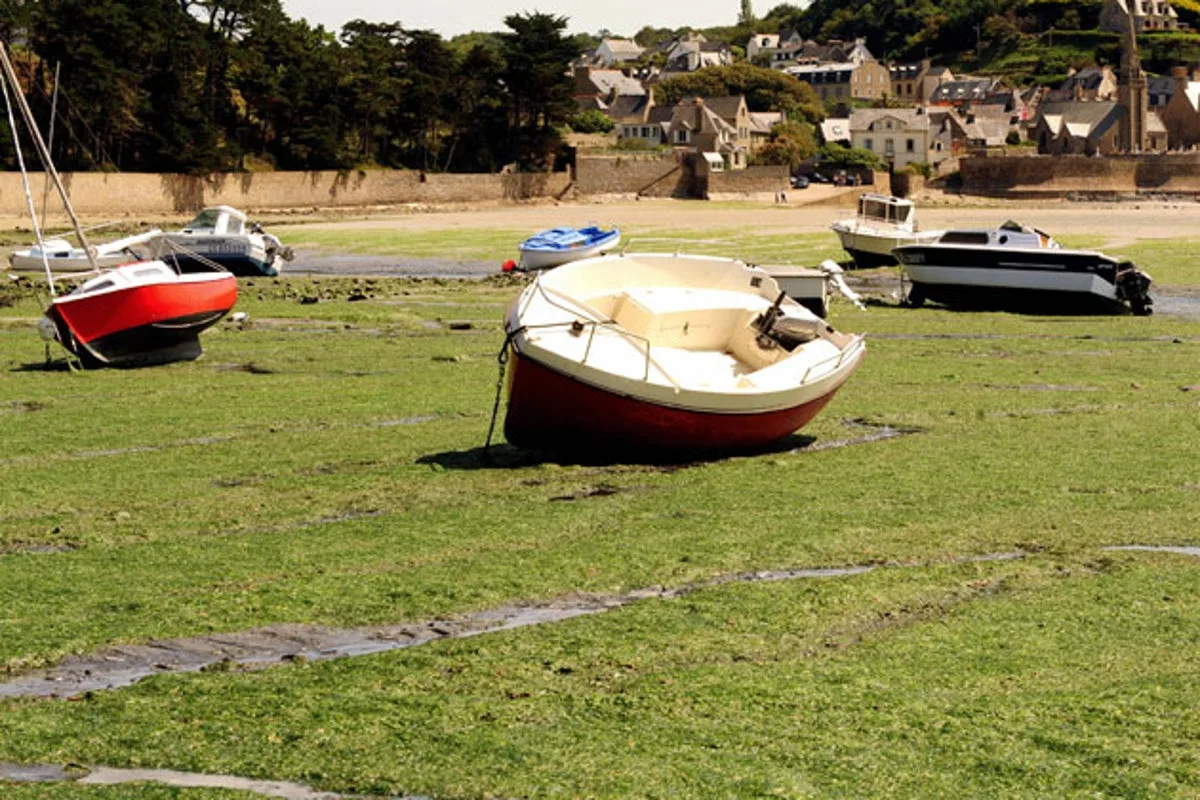
A beach in northern Brittany has become a symbol of an ecological crisis decades in the making. The Plage de Saint-Maurice, once a picturesque inlet, is now cordoned off by police after toxic seaweed washed ashore, emitting dangerous levels of hydrogen sulphide gas. The rotting algae, known as 'sea lettuce' or ulva, has killed 38 wild animals since mid-July, including 36 wild boar, a badger, and a coypu.
French government autopsies confirmed the animals died from inhaling hydrogen sulphide, a toxic gas released by decomposing seaweed. The weed has been accumulating along the Breton coast since the 1970s, but only recently has the link to agricultural pollution been officially acknowledged. Nitrogen runoff from intensive pig, cattle, and maize farms flows into rivers and then the sea, fueling the algae's explosive growth.
Despite scientific evidence, the farming industry and agri-pharmaceutical lobby deny responsibility, blaming global warming or phosphates. President Nicolas Sarkozy recently mocked 'ecological fundamentalists' who attribute the problem to intensive farming. Meanwhile, local campaigners accuse the government of inaction. Yves-Marie Le Lay, an environmental activist, used a gas detector on the beach, which screeched as it approached toxic levels. 'It is as if they are waiting for a child to die,' he said.

The European Union has fined France for breaching clean water standards. Some progress has been made: the area covered by seaweed has dropped from over 2,000 acres in 2008 to about 1,000 acres this summer. However, evidence mounts that the algae pose a serious health risk. In previous years, dogs, a horse, and a man employed to clear the weed have died in similar circumstances, with autopsies linking deaths to toxic gas inhalation.
The beach remains closed, with no large-scale cleanup underway. Campaigners demand stronger measures to limit nitrogen fertilisers and animal waste, but the political and economic power of the agricultural sector has stymied action. As the seaweed continues to rot, the stench and danger persist, leaving locals and environmentalists frustrated.