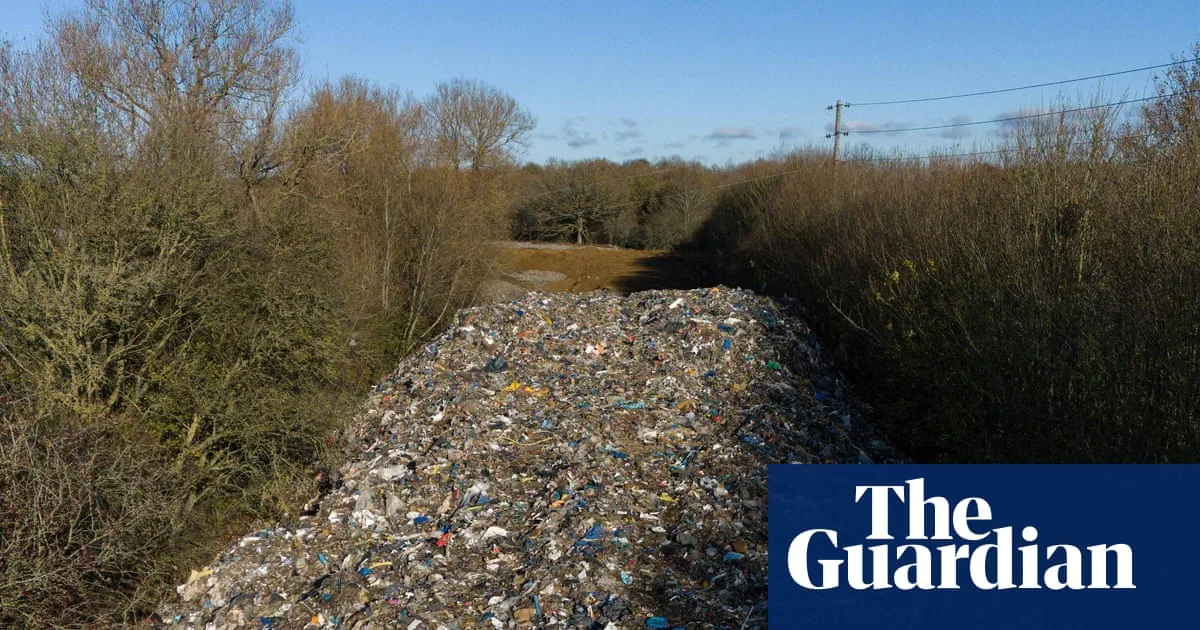
At least 8,000 illegal waste sites are estimated to exist across the UK, containing approximately 13 million tonnes of rubbish, according to new research. The analysis, based on satellite data from Air & Space Evidence and shared with the Guardian and Watershed Investigations, suggests that criminals have avoided at least £1.63bn in landfill taxes.
Professor Kate Spencer, a landfill expert at Queen Mary University of London, warned that these sites bypass regulations designed to protect people and the environment. “There’s nothing to stop any pollutants being washed into nearby rivers or soils,” she said. “We have illegal waste sites in Essex that regularly catch fire with the potential to harm local air quality and human health.”
Despite the scale of the problem, the Environment Agency (EA) closed only 743 illegal waste sites in England during 2024-2025, with 1,143 ongoing cases. Air & Space Evidence claimed the EA showed no interest in using its satellite detection tool, which has been successfully trialled in New Zealand, where 58% of suspected landfill sites were previously unknown to authorities. Professor Ray Harris, the company’s director, said: “From the outside, this looks like a fear of finding out.”

A House of Lords report in October highlighted widespread failings within the EA, including slow responses and a lack of successful convictions. Lady Sheehan, chair of the Lords’ environment and climate change committee, described the system as “fundamentally broken”. Notable cases include Hoad’s Wood in Kent, where 35,000 tonnes of rubbish were dumped, costing taxpayers £15m to clean up, and a site in Kidlington, Oxfordshire, holding several hundred tonnes of waste.
EA data shows ongoing waste crime cases have been open for an average of four years, with 13 cases lasting 11 years, some involving the burning of hundreds of tonnes of asbestos. Professor Spencer questioned who pays for clean-ups when culprits cannot be found, while Paul Brindley, a senior lecturer at the University of Sheffield, suggested the landfill tax may be creating loopholes, with falling revenues and rising cleanup costs.