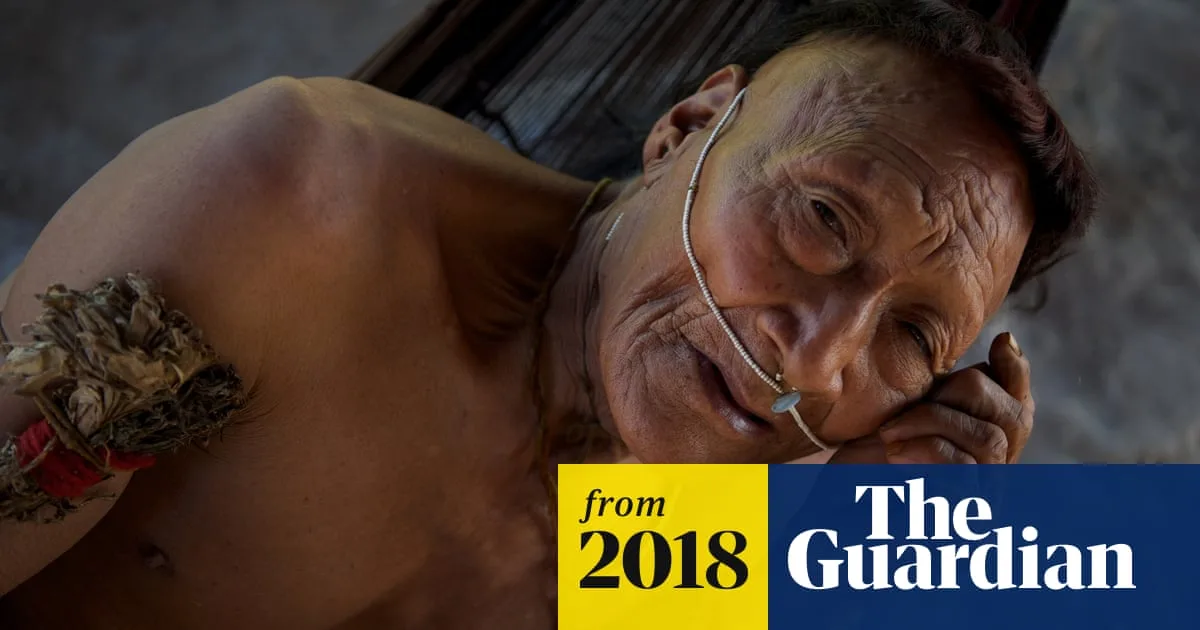
Peru's Health Ministry has uncovered alarming levels of mercury contamination among the Nahua, an indigenous people living in a remote part of the Peruvian Amazon, according to a leaked report dated 2015 and 2017 seen by the Guardian. The report, which has not been published, details how the Nahua, who number fewer than 500, have been struck by a mystery mercury epidemic.
The Nahua first came into sustained contact with outsiders in the mid-1980s, leading to nearly half the population dying from respiratory and infectious diseases. Today, most live in the village of Santa Rosa de Serjali within the Kugapakori, Nahua, Nanti and Others Reserve. Health authorities were alerted to the crisis in November 2014 when a six-month-old baby and his mother were diagnosed with mercury intoxication after being admitted to a clinic in Lima.
Between then and September 2015, health officials collected over 150 urine samples from 41% of the Nahua population. Results showed that 78% contained high levels of mercury, with no significant differences across age groups or genders. The highest level, 96.57 micrograms per litre, was found in a 14-year-old girl, and evidence indicated that lactating mothers were passing mercury to their babies.

The report states: 'The results are extremely concerning and mean serious risk for the people living in Santa Rosa.' It notes that the source of the mercury is unknown but suggests two possibilities: fish consumption, deemed unlikely as the main source, and the Camisea gas extraction project, which it recommends investigating. The report says: 'Without adequate and sufficient information about gas operations in the Camisea project, it is not possible to rule it out as the source of the mercury contamination.'
The report cites UN Environment Programme research that mercury is present in almost all fossil fuels, including gas, and that extraction or burning contributes to mercury release. It confirms mercury presence in Camisea gas and notes a mercury removal tower at the Las Malvinas processing plant, but states the Health Ministry has been unable to access reports on its effectiveness. Other potential sources, such as artisanal gold-mining, were ruled out due to lack of evidence.