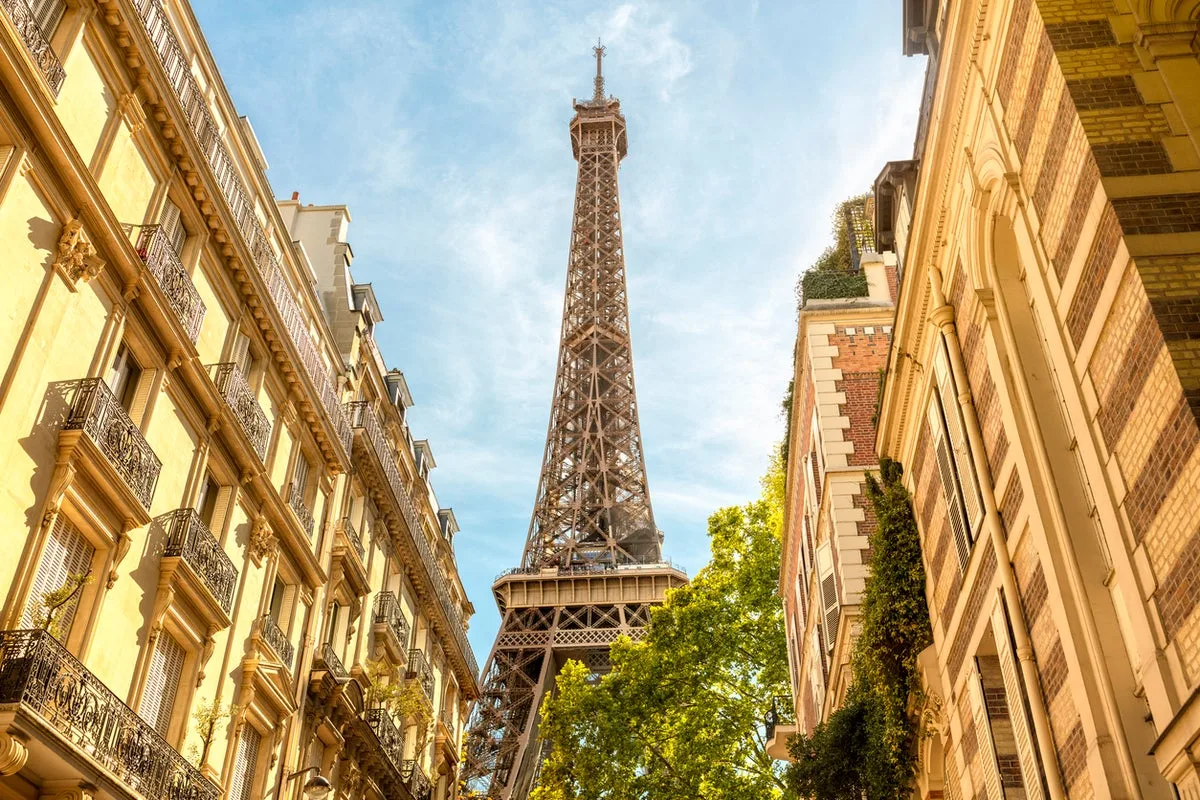
The Eiffel Tower, originally designed to stand 300 metres tall, can grow even taller during the summer months due to thermal expansion. The phenomenon occurs because the puddled iron and steel components of the tower expand when temperatures rise, causing the structure to increase in height.
Thermal expansion is a physical property where solids expand when heated and contract when cooled. For metals like those used in the Eiffel Tower, the coefficient of expansion is around 12x10⁻⁶ per degree Celsius. This means that for every one-degree rise in temperature, a one-metre length of iron expands by 12 microns.
Given the tower's height of 300 metres and temperature fluctuations that can reach up to 100°C between winter and summer, the Eiffel Tower can expand by approximately 36 centimetres. This growth is most noticeable during heatwaves when direct sunlight can heat the metal to over 60°C.

The Eiffel Tower is not the only structure affected by thermal expansion. Similar effects are observed in other large metal structures like the Garabit Viaduct and the Forth Bridge, which also experience length changes due to temperature variations.