
Learning to Live With Water: The Dutch Revolution
For centuries, the Netherlands has waged an epic battle against the sea. Roman scholar Pliny the Elder described this landscape as "a pitiful land, flooded twice a day," while Greek geographer Pytheas observed that more people died fighting water than against men. Yet this relationship with water has fundamentally shaped Dutch identity and innovation.
Today, facing the climate crisis, the Netherlands is pioneering a revolutionary approach: instead of fighting rising waters, they're learning to live with them. The philosophy of meebewegen – literally "moving with" – represents a profound cultural shift from resistance to adaptation.
From Historical Floods to Floating Futures
The Dutch understanding of water's threat is deeply rooted in history. In January 1953, a catastrophic combination of severe gales and spring tide caused the North Sea to breach dikes, resulting in over 1,800 deaths during the Watersnoodramp disaster. This tragedy spurred the creation of the colossal Delta Works, the world's largest flood protection system.
Another near-disaster occurred in 1995 when dikes along the Waal, Maas and Rhine rivers threatened to collapse, leading to the evacuation of 250,000 people and nearly one million livestock. This emergency prompted the Dutch government's groundbreaking "Room for the River" programme in 2006, which deliberately allows certain areas to flood during heavy rainfall.
Researcher Carolien Kraan explains the changing mindset: "There is a growing awareness that not all climate impacts can be prevented, nor all risks calculated. The question now is not whether we are going to use living with water strategies to adapt to climate change, but how and when."
The Floating Housing Revolution
The Netherlands is now developing entire sustainable floating neighbourhoods that represent the cutting edge of meebewegen philosophy. These modern floating houses differ significantly from traditional houseboats, which were often converted barges from the post-war housing crisis era.
Schoonschip (Clean Ship), completed in 2020, features 30 sustainable floating homes equipped with 516 solar panels and 30 heat pumps. Meanwhile, the IJburg floating district boasts 158 floating homes across more than 10,000 square metres, making it Europe's largest floating neighbourhood.
These architect-designed homes feature:
- Solar panels and heat pumps for energy efficiency
- Rooftop gardens and advanced sewage systems
- Prefabricated construction from timber, steel and glass
- Concrete hulls and steel columns connecting to grid systems
Unlike traditional houseboats, these floating houses rise and descend with water levels while remaining connected to essential services. The innovation extends beyond housing – Rotterdam now hosts the world's largest floating office block, a floating farm, and floating event spaces.
Addressing Multiple Crises
Floating neighbourhoods offer solutions to several pressing challenges. The Netherlands currently faces a severe housing shortage, lacking approximately 400,000 homes with an estimated one million needed by 2035. Floating developments could provide vital housing in areas likely to experience frequent flooding under the "Room for the River" programme.
Globally, this approach could potentially slow the anticipated migration of hundreds of millions of people from coastal areas as sea levels rise. Henk Ovink, the government's former water affairs envoy, summarises the philosophy: "Water is the enabler – if we understand its complexity, value it comprehensively and manage it inclusively. Then, water becomes the leverage for sustainable development."
The Dutch are also applying meebewegen strategies to coastal defences. The innovative Zandmotor (sand motor) project moved approximately 21.5 million cubic metres of sand to create an artificial peninsula near The Hague. Rather than fighting natural forces, this approach works with wind, sea currents and waves to gradually distribute sand along the coastline, naturally strengthening coastal defences for the future.
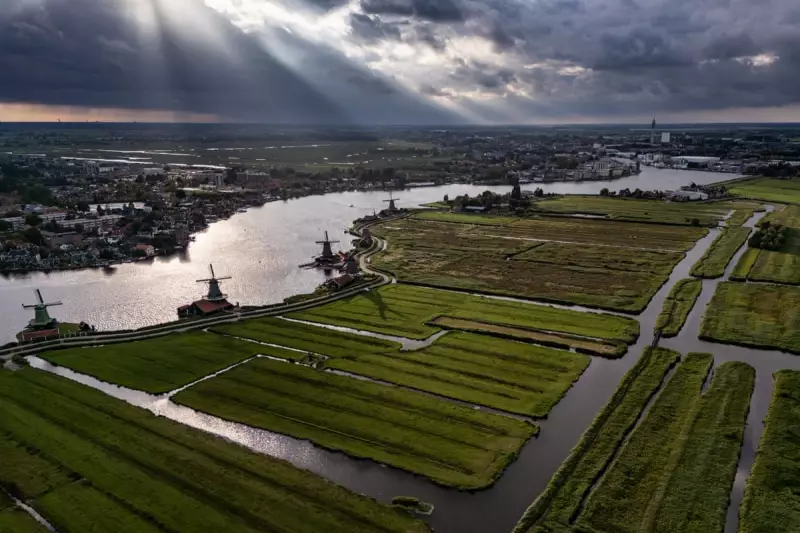
From Claude Monet's 19th century paintings of flooded fields along the River Zaan to today's high-tech floating communities, the Netherlands continues to redefine its relationship with water, offering potentially transformative solutions for coastal communities worldwide facing the escalating climate crisis.