The discovery of a black-headed gull in Geraldton, Western Australia, has put Australian birders in a flap. Normal people might wonder why, considering it is abundant in the northern hemisphere – it is the ubiquitous seagull in London. But twitchers, the bucket listers of birding, are proudly not normal.
As a semi-reformed, semi-retired twitcher, I can attest to this. Flying across the country for a black-headed gull is no biggie. Every year, birding's elite travel not just to every corner of Australia but also to extralimital territories like Christmas, Cocos, the Torres Strait, and Macquarie Islands in search of birds to add to their Australian lists.
The Cocos Booby Frenzy
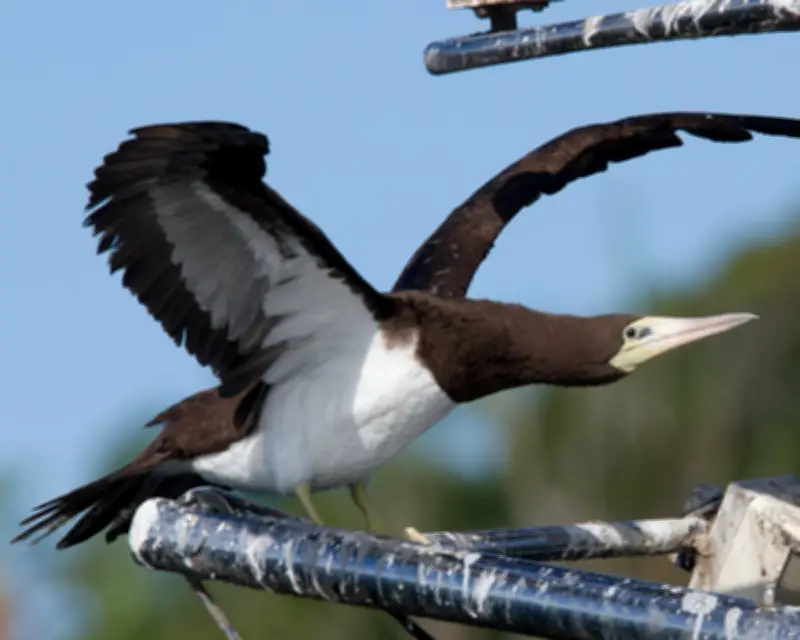
The gull, recorded at least 10 times in Australia according to BirdLife Australia's Rarities Committee, isn't even the biggest twitching frenzy. That honor goes to the first Cocos booby, identified on 26 May. This eastern Pacific seabird has taken up residence on the New South Wales Central Coast. An estimated 200 twitchers have kayaked out on Lake Macquarie to add the booby to their Australian and NSW lists.

Initially, “Coco” was mistaken for a brown booby, common in tropical Australian waters. The Cocos booby was only recently recognized as its own species by scientists, who split it based on genetic and morphological differences that lay observers might consider gene-splitting.
Taxonomy and Twitching
Thanks to these taxonomic vagaries, the number of birds known to breed in Australia that I have yet to see ballooned from four (including the holy grail, the night parrot) to more than a dozen. Big twitches involve vagrants like the gull and the booby – foreign species blown off course by extreme weather or with scrambled internal compasses.
Probably my most extreme twitching adventure was in 2001, when I sailed from Broome to Ashmore Reef – a paradise for seabirds and, at the time, a landing for asylum seekers, before the atoll was excised from the Australian migration zone. Our pleasure cruise was confronted by a listing hulk with about 200 Afghans on board, plus a customs vessel.
We were a boat full of certifiable nutters armed with telephoto lenses. It was during the Tampa election campaign. My journalism instincts aroused – journalists were forbidden access to Ashmore by the Howard government – I asked a few basic questions of the customs officer as our environmental permits were inspected.
This caused a kerfuffle when the story appeared in the Sydney Morning Herald with excellent photographs. “How the fuck was a fucking journalist posing as a fucking birdwatcher allowed out there?!” an immigration official thundered. I was banned from ever returning – not by immigration, but the tour operator.
Extreme Twitching Tales
That was nothing compared to 2007, when I flew from Brisbane to Perth, hired a car, and drove 1,638km to Whim Creek in the Pilbara to twitch a small, furtive waterbird called a red-legged crake. The crake had been blown in by a cyclone and found an oasis of well-watered lawn surrounded by mining camp dongas, under which it took refuge.
There'd only been one red-legged crake in Australia to that point, in 1958 – a bird that jumped on a pearl-lugger then drowned on disembarking. The crake at Whim Creek didn't last long either. I arrived bleary-eyed after a few hours' sleep, only to be told the bird had become a meal for a feral cat a day or two before.
I had to slow down after that. My writerly income couldn't justify the financial expenditure of hardcore twitching, to say nothing of the associated carbon emissions. But I haven't stopped entirely. I've seen plenty of black-headed gulls, but it's not on my Australian list.
What Makes a Twitcher Twitch?
The derivation of the noun: British birder Howard Medhurst, in the 1950s, would chase rarities around the UK riding pillion on a motorcycle. He would arrive shivering with cold, and his friends mistook his frozen tremors for excitement.
The man who brought twitching to Australia, the legendary Mike Carter, held the record for most birds seen within Australia almost until his death aged 89 in 2024. Mike mentored Sean Dooley, author of The Big Twitch and now BirdLife Australia's public affairs manager.

Twitchers are subject to derision in the wider birding community. “When I hear of someone suffering a mental illness that causes them to be riven with anxiety, socially isolated and prone to feelings of paranoia, I think, ‘Yep, sounds like a twitcher to me’,” Dooley wrote.
But twitchers – among our first citizen scientists – have pushed back the frontiers of ornithology, particularly in field identification. They have expanded our understanding of bird distribution, dispersal, and movements in the age of extinction. We can thank them for their extralimital commitment to their hobby.