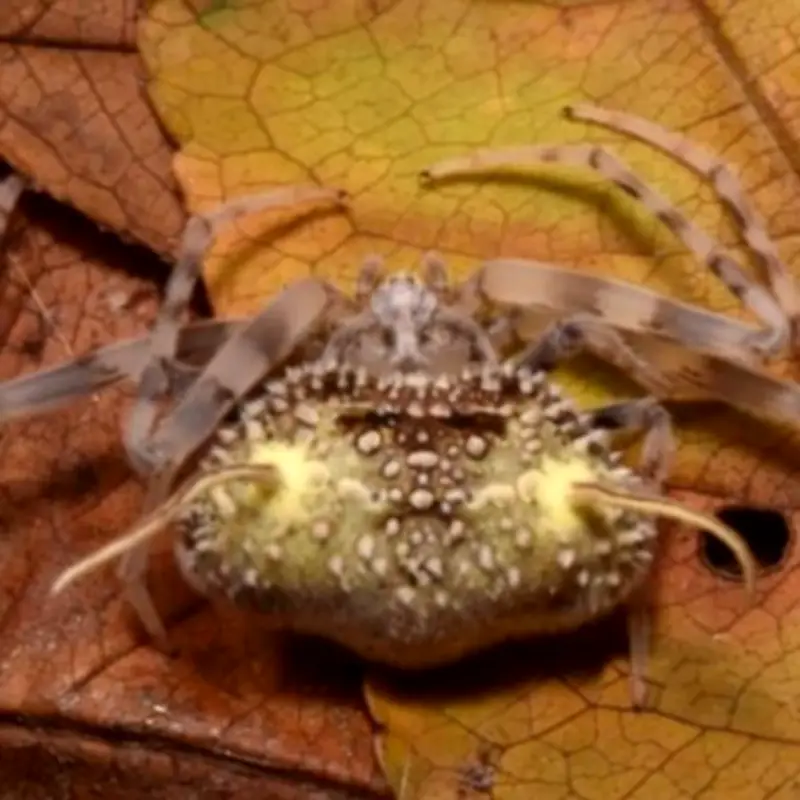
Scientists have discovered a bizarre new spider species in the Amazon rainforest that masterfully mimics a dead, zombie-like fungus to trick predators. The eight-legged creature, named Taczanowskia waska, was found deep in Ecuador's jungle, clinging upside down to a leaf.
Discovery in the Llanganates-Sangay Corridor
Experts from the Leibniz Institute for the Analysis of Biodiversity Change (LIB) made the shock discovery during a night-time trek through the Llanganates-Sangay Corridor, a notorious hotspot for rare wildlife. Initially, researchers thought they had stumbled across an ordinary mushroom, but closer inspection revealed a terrifying, never-before-seen species of spider playing hide-and-seek.
Mimicking a Deadly Parasite
The nightmare-inducing critter is the first spider ever caught mimicking Gibellula, a real-life 'zombie' parasite that infects and kills spiders before bursting out of their bodies. To pull off the look, the sneaky spider has grown strange, elongated lumps on its belly and turned a pasty pale colour to match the fungal growth.

By staying completely still under leaves where the killer fungus grows, the master of disguise easily fools hungry predators into thinking it is a dead, rotten snack. This tactic also allows the arachnid to ambush its own unsuspecting prey.
Role of Citizen Science
The scientific breakthrough actually started on the citizen-science app iNaturalist, after sharp-eyed internet users noticed a photo of what looked like a mushroom was actually a hidden predator. Arachnid expert Nadine Dupérré, from the Museum of Nature Hamburg at the LIB, helped crack the case by comparing the new beast to historical specimens in scientific vaults.
She said: 'Finds like these demonstrate the value of scientific collections. They enable us to classify new species and compare them with historical specimens. Combined with international collaboration and citizen science, this opens up new opportunities for researching biodiversity.'
The discovery highlights the incredible adaptations of wildlife in the Amazon and the importance of preserving these unique ecosystems.