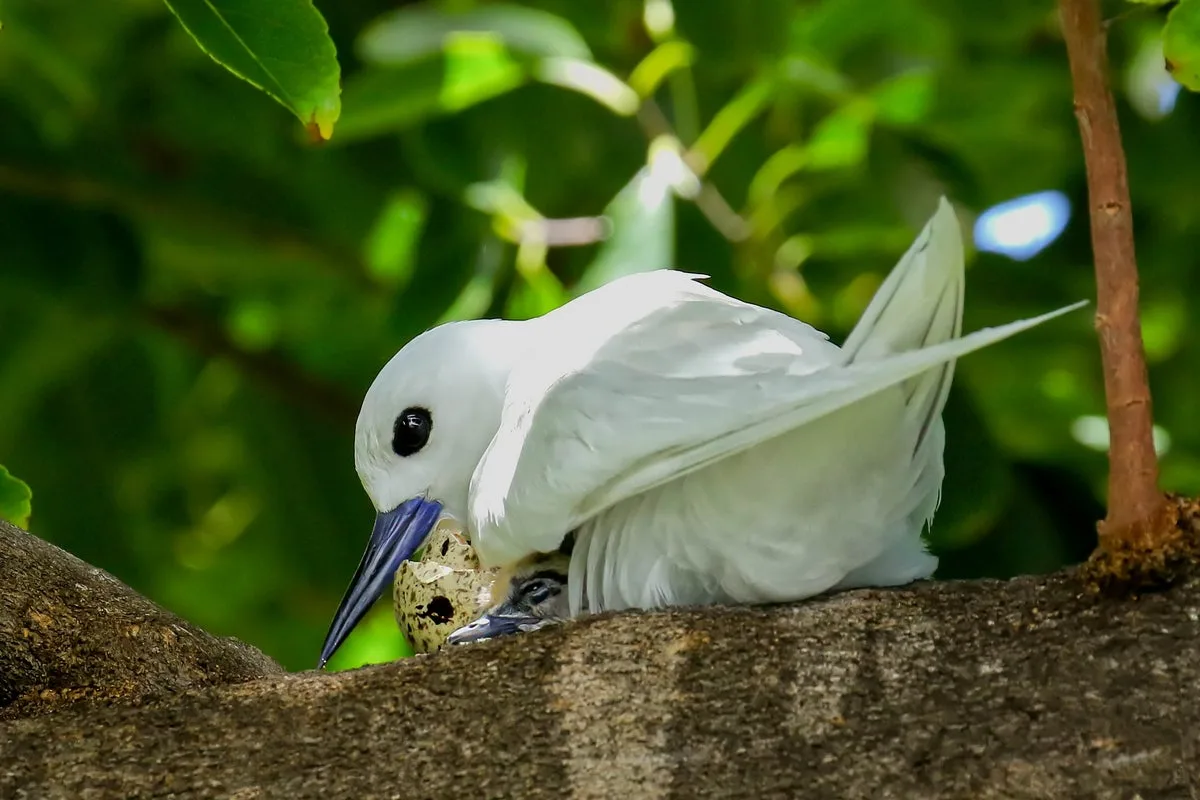
White terns, known in Hawaiian as manu-o-Kū, are thriving in Honolulu, with their numbers increasing by over 50% in the past decade. This seabird, traditionally found on remote atolls, has adapted to life in Hawaii's largest city, defying the decline seen in many other native bird species.
Volunteer group Hui Manu-o-Kū reported 691 eggs and chicks in Honolulu trees as of this week. The birds breed year-round, peaking from winter to early spring, and lay eggs on bare branches without building nests. Their strong claws help chicks hold on during storms.
Scientists are unsure why the birds are flourishing in the urban environment. Possible factors include reduced predators like rats and cats near buildings, and busy roads deterring threats such as barn owls and mongoose. Noise and light pollution do not seem to bother them.

The most recent survey, conducted in 2023, showed Oahu's breeding adult population rose to 3,600 from 2,400 in 2016. The birds were first observed breeding on Oahu in 1961, and Honolulu named them its official bird in 2007.
Traditional navigator Kaʻiulani Murphy notes the birds' presence as a sign of land. She sees parallels between the resilient terns and Native Hawaiians, who survived introduced diseases in the 1800s. “It’s crazy to me that they’re getting to such a big population within Honolulu,” she said.