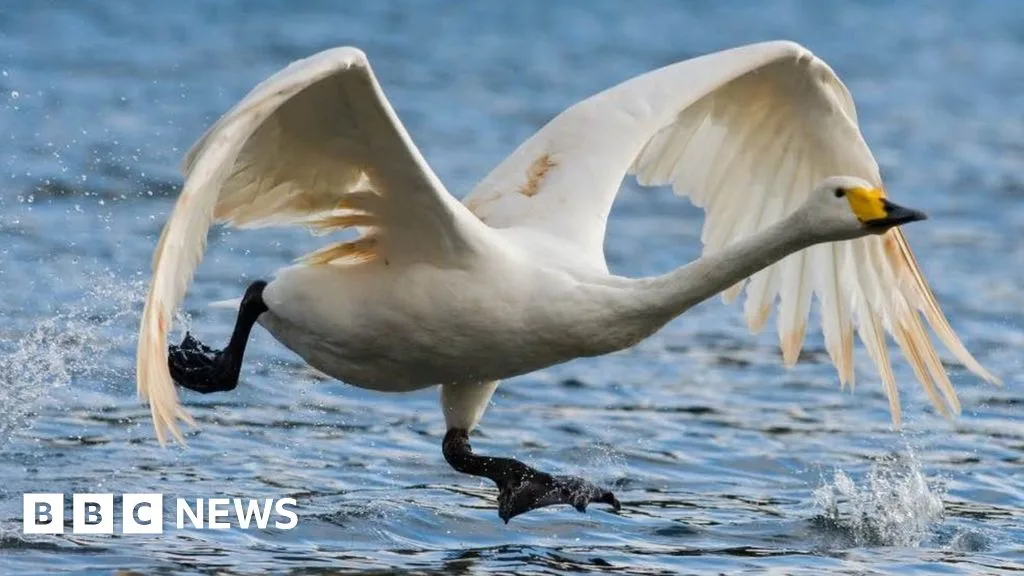
Numbers of whooper swans in the UK are predicted to double by 2030, according to a new study. The increase is attributed to the protection of wetlands where the birds spend the winter.
The whooper swan, known for its trumpet-like call, migrates from Iceland to overwinter across the UK. Researchers from the universities of Exeter and Helsinki analysed 30 years of data on more than 10,000 wild swans and found that survival rates were significantly higher in nature reserves.
“The big message is that nature reserves can operate as very good protectors of wildlife,” said Prof Stuart Bearhop of the University of Exeter. “If we could get 30% of the world protected – and protected in the right way – we are going absolutely in the right direction.”

The study found that nature reserves in low-lying coastal areas were key to the survival of whooper swans. Three reserves – Welney in Norfolk, Martin Mere in Lancashire and Caerlaverock in southwest Scotland – provide special protection for the birds, including fencing out predators and avoiding farming methods that disturb the land.
The findings come as nearly 200 countries have signed up to a plan to protect 30% of lands and seas for nature by 2030, in an effort to halt biodiversity loss. The research is published in the journal Proceedings of the National Academy of Sciences.