A doctor has explained how heart attack symptoms differ between men and women, and how women's warning signs are frequently dismissed by doctors as something less serious, such as anxiety.
Heart Attack Symptoms in Women Often Mistaken for Anxiety
When someone experiences a heart attack, acting quickly is crucial. The condition occurs when blood supply to the heart becomes blocked, and it can prove fatal without immediate treatment. However, one A&E doctor has revealed why heart attacks frequently present differently between men and women, and why female cases are often mistaken for less serious conditions.
Dr Ahmed, who has amassed 585,000 followers on TikTok, regularly shares vital healthcare information on the platform. He recently uploaded a video explaining the differences in heart attack symptoms between the sexes.

"For a man, a heart attack is like a shot to the chest," he said. "For a woman, a heart attack is like death by a thousand cuts."
Describing how heart attacks happen, he explained: "We (men) get blocks in our arteries that are made up of platelets, fat, cholesterol, and calcium, and they break off in big chunks, go downhill, block a major artery, and you have a big heart attack."
"For a woman though, it's a bit different. You see, women's arteries are a bit more flexible, their structure is a bit more different, and they have oestrogen, which is supposed to be cardio-protective. Their plaques are made up of fats, cholesterol, platelets, and a little less calcium than men's. And also they don't break off in big chunks, they break off in micro-erosions constantly, which go down and block very small arteries, arterials, capillaries, that kind of thing."
"Damage builds up over time. A woman might not even know about it until a certain point because the other arteries around it can cope with it, until one day the damage has accumulated enough that she goes like 'oh doctor, I'm having chest pain'."
He explained that at this stage some doctors may perform an ECG, or electrocardiogram — a test which monitors the heart's rate and rhythm — and dismiss the symptoms as something such as anxiety, when it could actually be far more serious, reports the Mirror.
In conclusion, Dr Ahmed stated that men and women require treatment with a "little bit of a different mindset", adding: "It can save lives."
What are the symptoms of a heart attack?
The NHS says symptoms of a heart attack may include:
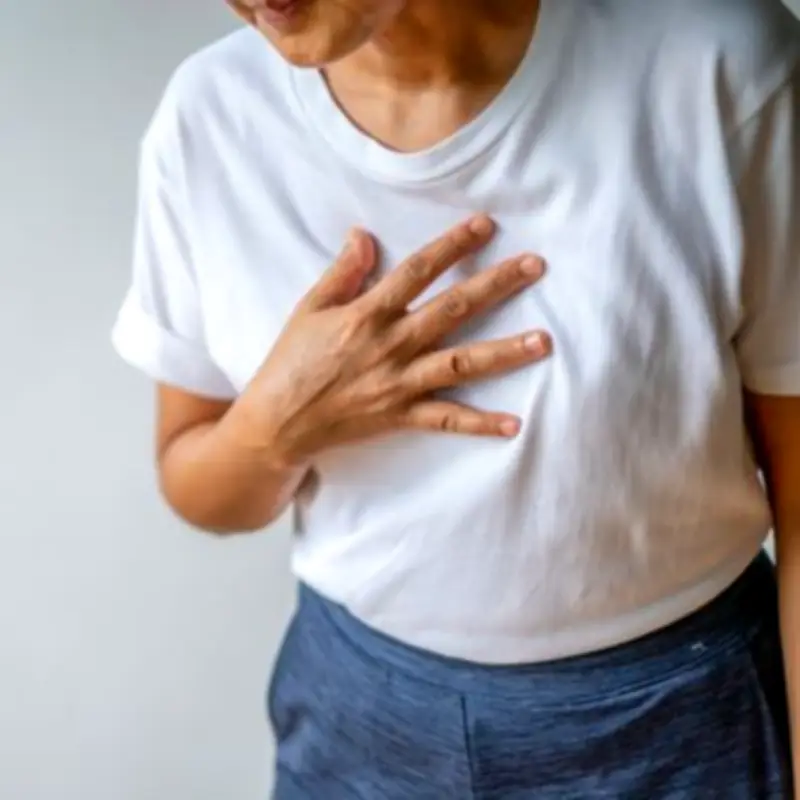
- Chest pain which may feel like crushing or squeezing on your chest. This pain may also spread to your arm, neck and jaw
- Feeling short of breath
- Feeling sick (nausea) or being sick (vomiting)
- Feeling like you have indigestion. You may have a burning feeling in your chest and feel full or bloated
- Sweating
- Skin turning pale, blue, or grey. On black and brown skin this may be easier to see on the palms of the hands
What should you do if you or someone else is suffering a heart attack?
If you or another person is experiencing any of the above symptoms, including gasping for air, choking, being unable to speak, or has lost consciousness, dial 999 straight away, the NHS advises. The health service adds you shouldn't drive yourself to A&E, but instead follow the guidance provided by the 999 operator.
Contact NHS 111 if you or someone else is:
- Suddenly more short of breath than usual
- Has chest pain along with nausea or vomiting
- Has chest pain along with a feeling of the heart racing, going too slowly, skipping a beat, or fluttering
While awaiting an ambulance, the patient suffering a heart attack should sit on the floor with their knees bent and their back supported. Taking 300mg of aspirin may also be beneficial, but it shouldn't be administered if the person is allergic to the medication. If the person has angina they should use their glyceryl trinitrate (GTN) spray.