

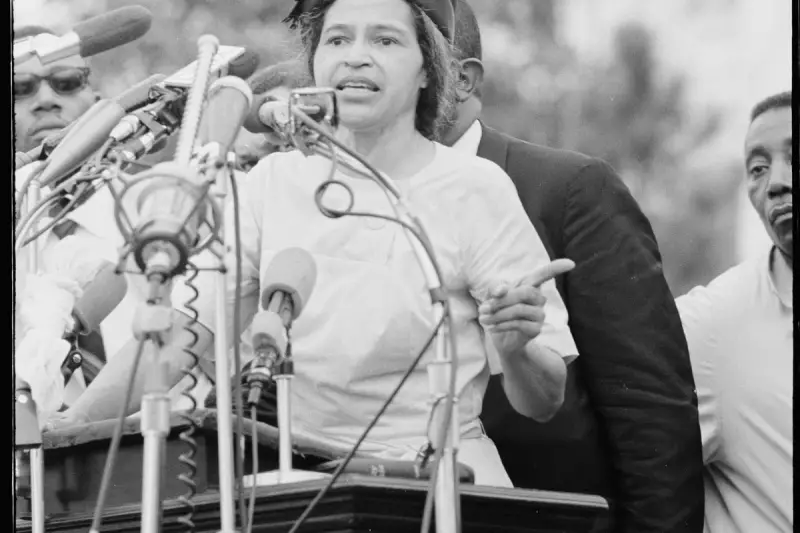
Seven decades after Rosa Parks made history in Montgomery, Alabama, a collection of previously unseen photographs has been unveiled, casting new light on the enduring legacy of the Civil Rights Movement.
Rediscovering a Hidden History
The images, taken by the late photographer Matt Herron, focus on the pivotal 1965 Selma to Montgomery march. This five-day, 54-mile protest was instrumental in building support for the landmark U.S. Voting Rights Act of 1965. While Parks is famously remembered for her 1955 bus boycott defiance, these photos underscore her sustained activism in the decade that followed.
Donna Beisel, director of the Rosa Parks Museum in Montgomery where the photos were released, emphasised their significance. "This is showing who Ms. Parks was, both as a person and as an activist," she said. The photos, discovered on a contact sheet at Stanford University, were never printed in Herron's lifetime, often overlooked for being blurry or featuring lesser-known figures.

Emotional Reunions and Personal Stories
The release of the archive has sparked powerful personal connections. One of Herron's frequent subjects was Doris Wilson, then a 20-year-old from Marion, Alabama. Decades later, Herron expressed a wish to find her again. Though he died in 2020, the photos facilitated a poignant reunion in December 2025.
Wilson, now 80, viewed images of herself she had never seen, including one receiving medical care for blistered feet from Dr. June Finer. Finer, 90, travelled from New York for an emotional embrace. "Are you the one who rubbed my feet?" Wilson asked. Her son, Robert E. Wilson, 62, expressed awe: "I’m so stunned. She always said she was in the march, but I never knew she was strong like that."
Validating the Sacrifices of Everyday People
The collection also validates the stories of local families who supported the march. Cheryl Gardner Davis, who was four in 1965, had searched for years for evidence of the night marchers camped on her family's Lowndes County farm. Finding the photos provided crucial confirmation of the risks they took, including her mother's threatened teaching job and severed utilities.
"It's, in a sense, validation. This actually happened, and people were there," Davis said. This sentiment echoes the core purpose of the archive's return: to centre the often-overlooked contributions of everyday people who empowered the movement's leaders. The photos serve as a vital reminder that history is built on both iconic acts and countless quiet sacrifices.






