

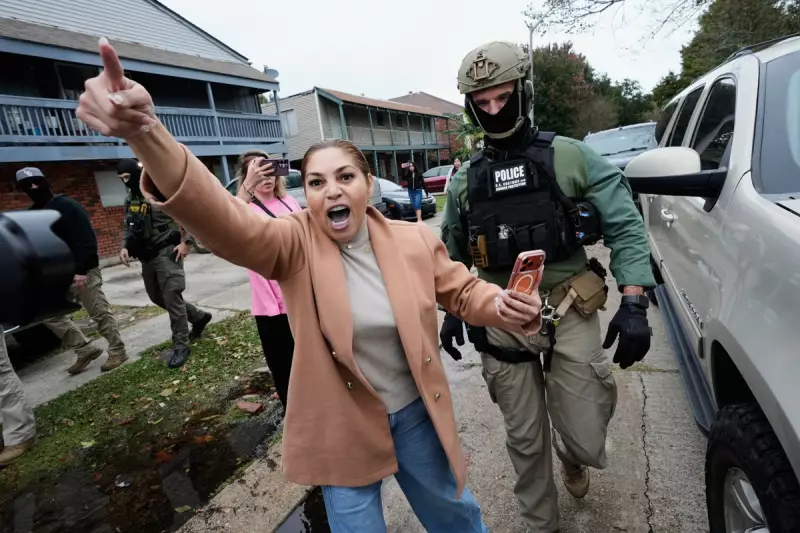
State and federal law enforcement in the United States are conducting extensive online surveillance of critics and protesters opposing a major immigration crackdown in New Orleans, according to confidential records obtained by The Associated Press.
Intelligence Gathering on Public Sentiment
The operation, dubbed "Catahoula Crunch," has seen authorities monitor message boards around the clock. They are tracking public sentiment and compiling regular updates, while watching for any perceived threats to agents. This intelligence activity persists despite officials releasing minimal details about the first arrests made last week.
Internal briefings circulated to law enforcement note that online opinions "remain mixed", with some supporting the operations and others opposing them. Earlier bulletins highlighted groups urging the public to film Immigration and Customs Enforcement (ICE) and Border Patrol agents, and identified locations where immigrants might be found.

Local officials in New Orleans have condemned the lack of transparency, stating they have been kept in the dark about virtually every aspect of the operation. The intelligence reports themselves warn that certain information, including the criminal histories of those detained, "should not be distributed to the media."
Discrepancy Between Rhetoric and Reality
Federal immigration authorities have insisted the sweeps specifically target "criminal illegal aliens." However, the law enforcement records reviewed by AP tell a different story. Of the 38 people arrested in the operation's first two days, criminal histories were detailed for less than a third.
The U.S. Department of Homeland Security (DHS) has publicly detailed only six arrests from the operation, all individuals with criminal records. These include a man convicted of "homicide" and another convicted of sexual assault. DHS, which has several hundred agents deployed in southeast Louisiana, aims to make at least 5,000 arrests in a campaign expected to last up to two months.
New Orleans City Council President J.P. Morrell questioned the operation's stated goals. "If the goal was for them to come here and augment existing law enforcement, to pursue violent criminals or people with extensive criminal histories, why wouldn’t you be more transparent about who you’ve arrested and why?" he asked.
State Senator Royce Duplessis, a Democrat representing New Orleans, was more blunt: "It confirms what we already knew — this was not about public safety, it’s about stoking chaos and fear and terrorizing communities."
Covert Monitoring and Chilling Effect on Speech
The records reveal close cooperation between state and federal agencies, welcomed by Louisiana's Republican Governor, Jeff Landry. Both the FBI and Customs and Border Protection have agents stationed at the Louisiana State Analytical and Fusion Exchange (Fusion Center). This intelligence hub is closely tracking discussions on platforms like Reddit, where locals share information about the raids.
Briefings have flagged social media posts accusing agents of racially profiling Hispanic areas and deviating from the mission of targeting only criminal immigrants. The Fusion Center has also tracked tools used by activists, such as whistle handouts, training on filming federal agents, and hotlines for reporting arrests.
Louisiana State Police, offering "operational support," confirmed their vigilance. "Through the LSP Fusion Center, we actively track developments and facilitate the sharing of information and communication among our partner agencies," said spokesperson Trooper Danny Berrincha.
Activists have denounced the surveillance. Rachel Taber of Union Migrante stated, "They can monitor me all they want. We are not doing anything illegal." Beth Davis of Indivisible NOLA added, "That they feel threatened by a bunch of community organizers that have nothing other than phones and whistles blows my mind."

The internal briefings have identified no direct threats to law enforcement but have sought to debunk rumours, including a false report that a pedestrian was fatally struck by an agent. As the operation continues, the monitoring of online dissent presents profound questions about the balance between security and civil liberties in the United States.





