In a significant victory for consumer rights, a bipartisan group of public health advocates has successfully pressured a US senator to remove contentious language from a food safety bill that would have overridden state-level protections.
Big-Food Influence Operation Exposed
The proposed legislation, the Better Food Disclosure Act drafted by Republican senator Roger Marshall, initially contained a clause that would have nullified state laws requiring truth-in-labeling for toxic food ingredients. This provision was heavily promoted by Americans for Ingredient Transparency (AFIT), a group that presents itself as part of the grassroots Make America Healthy Again (Maha) movement.
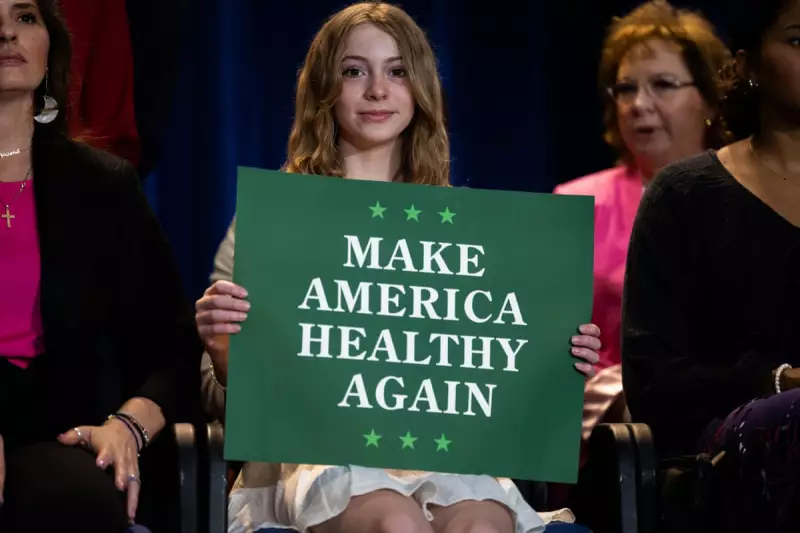
However, critics identified AFIT as an industry-funded influence operation, waging a campaign on behalf of major food corporations like ConAgra, Coca-Cola, PepsiCo, Hormel, and Nestlé. AFIT is headed by a former Trump administration official and industry lobbyist, and its website features footage of children and parents holding Maha signs, claiming its mission is aligned with the health movement.
Bipartisan Backlash Forces Rewrite
Facing intense backlash from Maha leaders, public health nonprofits, and a bipartisan coalition of approximately 120 state legislators, Senator Marshall this week struck the pre-emption language from the bill. The legislation still includes other changes to US Food and Drug Administration (FDA) rules.
Vani Hari, a prominent Maha figure known as the Food Babe who met with Marshall, celebrated the decision. "For far too long the food industry has led the conversation in Washington, and now the table has turned – every day mothers are being heard by their congressmembers," she said. "It’s inspiring to see someone like Senator Marshall stand up to big food, and put the health of families before corporate profits."
The Broader Battle Over State Protections
This attempt to pre-empt food labelling laws is part of a wider effort across multiple industries to dismantle state-level public health protections. Donald Trump’s Environmental Protection Agency recently introduced rules that would pre-empt hundreds of state-level restrictions on toxins like PFAS, lead, and formaldehyde.
State laws have proven highly effective. In recent years, at least 20 states have passed or are proposing laws that ban toxins from propylparaben preservatives to PFAS in food packaging. This year, West Virginia passed a ban on some synthetic food colouring, while Texas began requiring warning labels for 44 synthetic food ingredients.
Scott Faber, a lobbyist with the Environmental Working Group, emphasised the importance of state laws, stating, "People everywhere want their food to be safe, and states are the only check against dangerous food chemicals at the moment. No one, least of all Republicans, thinks the FDA is coming to the rescue."
Despite the setback for industry interests, the fight continues. Marshall's revised bill includes a provision for greater transparency around the FDA's "Generally Regarded As Safe" (GRAS) loophole, while a competing bill from senators Cory Booker and Ed Markey demands industry prove the safety of chemicals introduced via this route.