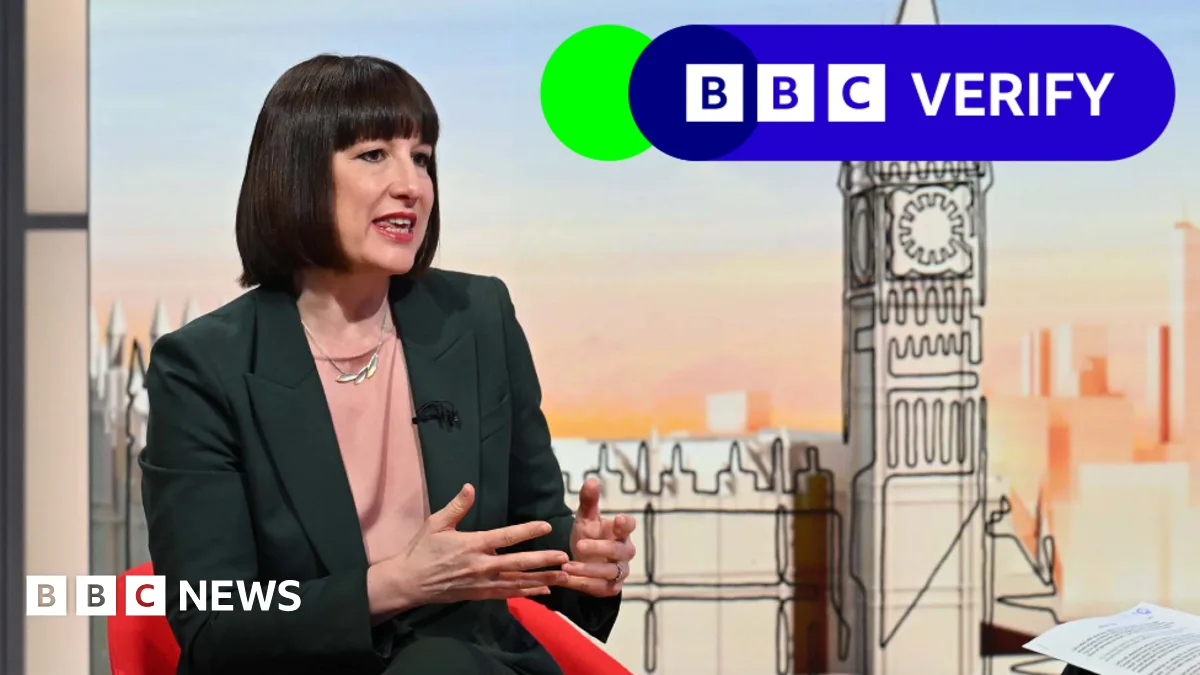
Shadow chancellor Rachel Reeves has asserted that the next government will inherit the worst set of economic circumstances since World War Two. However, economists and think tanks have challenged this claim, noting that other post-war governments faced equally or more severe challenges.
Reeves cited high debt levels, a record tax burden, recession, and falling living standards. She stated that debt as a share of the economy is the highest since 1951. Yet the Office for National Statistics says net debt is at levels last seen in the early 1960s, and economist Ethan Ilzetzki from the London School of Economics described the current debt as "high but nowhere close to where it was in the 1950s."
The shadow chancellor also pointed to the tax burden being the highest for 70 years, at just above 36% of GDP. While historically high, it has only been higher in 1948 and 1949. The Institute for Fiscal Studies acknowledged that the next government faces difficult choices but stopped short of calling it the worst since WWII.

Reeves noted the economy is in recession, with GDP shrinking in the last two quarters of 2023. However, deeper and longer recessions occurred in the mid-1970s, early-1980s, and 2008. Stephen Millard of the National Institute for Economic and Social Research highlighted the 1974 recession, where the economy contracted 3.7% with inflation over 10%, suggesting that government inherited a worse situation.
On living standards, Reeves said this will be the first parliament on record where they have gone backwards. Real household disposable income fell 2.2% in 2022-23, the biggest drop since records began in 1955. Yet current disposable income is more than four times higher than after WWII.
Other indicators paint a mixed picture: inflation at 3.4% is above target but lower than in some previous eras; unemployment is relatively low; and retail sales, while below pre-pandemic levels, are higher than any point before 2018.