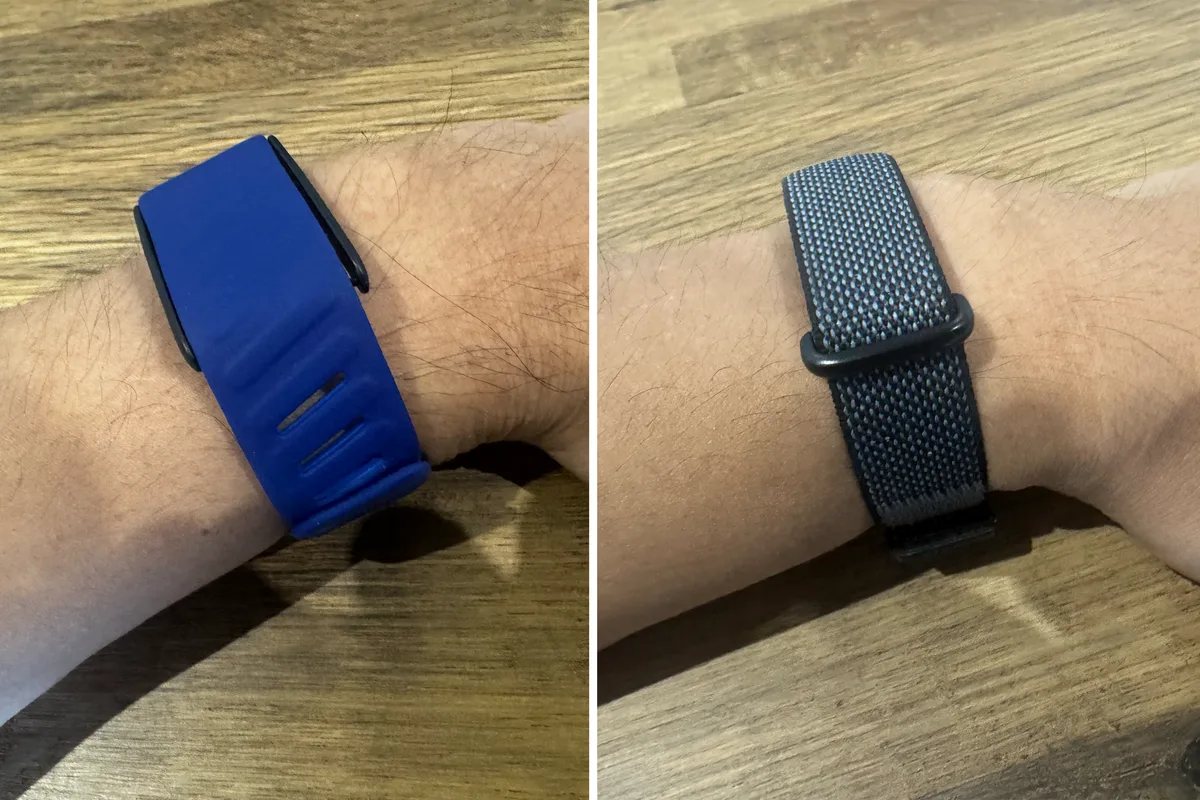
Google has entered the recovery wearable market with the Fitbit Air, an £85 screen-free fitness tracker that directly competes with the Whoop 5.0. Priced at a fraction of Whoop's cost and without a mandatory subscription, the Fitbit Air aims to topple Whoop's dominance in the strain, sleep, and recovery tracking space.
After wearing both devices for nearly three weeks, the Fitbit Air proved to be a solid fitness tracker. It is lighter, more comfortable, and significantly cheaper than the Whoop 5.0, tracking all the same key metrics. Google Health's AI-powered coach was surprisingly helpful, though workout tracking is less athlete-focused and lacks automatic detection for activities like CrossFit.
The Whoop 5.0 remains the more comprehensive recovery wearable, offering superior sleep, recovery, and strain tracking, along with stress monitoring and healthspan features. Its workout detection is more advanced. However, the mandatory subscription makes it far more expensive than the Fitbit Air, which also contextualises data better for easier understanding.

Pricing is a key differentiator. The Fitbit Air costs £84.99, with an optional Google Health Premium subscription at £7.99 per month (three months free included). Whoop requires a membership starting at £169 per year for the entry-level plan, rising to £349 for the top tier. Without a subscription, the Whoop device is unusable, whereas the Fitbit Air works without a paid plan.
Design-wise, the Fitbit Air is smaller and lighter, measuring 34.9mm x 17mm x 8.3mm, compared to the Whoop 5.0's chunkier 34.7mm x 24mm x 10.6mm. The Fitbit Air is so comfortable that testers forgot they were wearing it, making it ideal for overnight sleep tracking. The Whoop, while not heavy, is more noticeable.