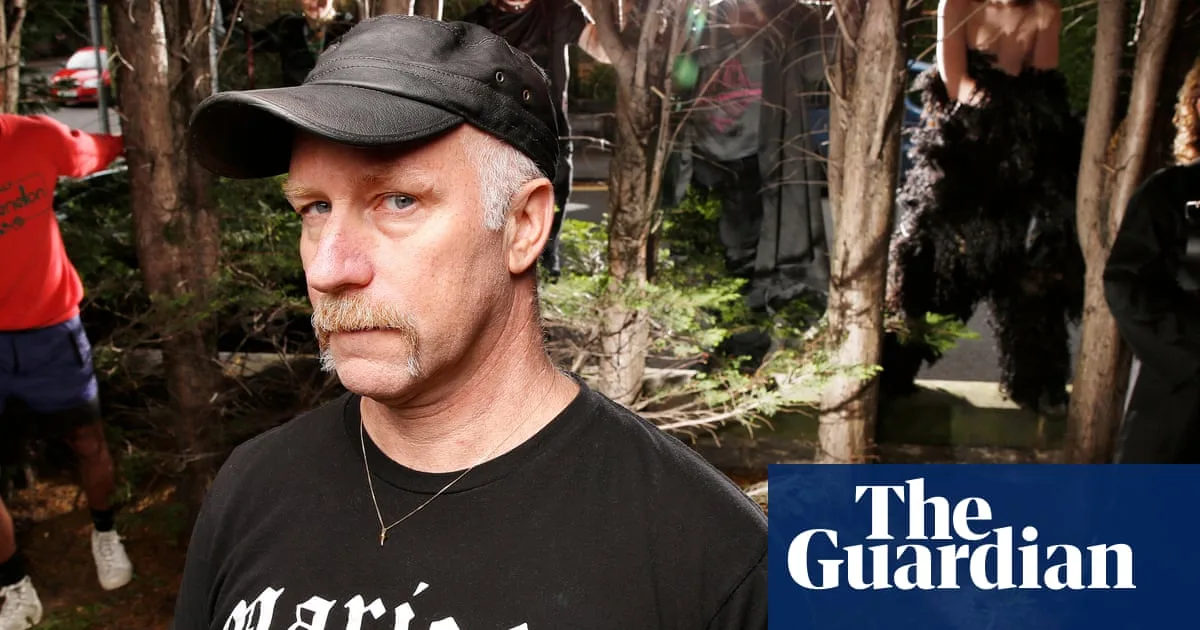
Faith No More Keyboardist Breaks Silence in Explosive Memoir
Roddy Bottum, the keyboardist for alternative metal pioneers Faith No More, has penned a remarkably candid autobiography that deliberately avoids the clichés of rock memoirs. 'The Royal We' focuses not on name-dropping and glossy photos, but on Bottum's sexual awakening, addiction struggles, and his pivotal role as what he claims was 'the only out queer guy in rock' in the early 1990s.
A Life of Secrecy, Shame, and Sexual Awakening
The memoir opens with Bottum's move from Los Angeles to San Francisco, a city he describes as an inspiring contrast to LA's 'sunny superficiality'. It was here that his sexual identity began to form, having sex with men from the age of 13 or 14. He recounts cruising public toilets and parks with unflinching honesty, moving from shame to defiant pride. 'I understand how provocative statements like that are,' Bottum says. 'But I'm not ashamed. With Trump in power, my truth needs to be shouted loud.'
He is intentionally provocative, even hoping to ruin the Thanksgiving dinner of his Christian relatives with the book's content. This drive for authenticity defined his career. He joined Faith No More in 1981, adding keyboards to their dark sound at a time when 'rock bands didn't have keyboards then'.
Touring Toxicity and Coming Out
The band's rise to fame is given less focus than the personal turning points. A disastrous 1992 stadium tour with Guns N' Roses and Metallica proved suffocating. Bottum describes the 'toxic' environment and the 'misogyny and bravado' from the Guns N' Roses camp, highlighted by their song 'One In a Million' with its use of racial and homophobic slurs. 'We didn't want to loan our credibility to this poison,' he states.
This experience catalysed his decision to come out publicly. Against his manager's advice, he gave an interview to The Advocate in 1993, becoming a rare openly gay figure in rock music. He notes that Freddie Mercury had not come out before his death, and contemporaries like Michael Stipe and Rob Halford were not publicly discussing their sexuality. 'It made me angry. I needed to put myself on that page of history.'
Friendship with Cobain, Love, and a Deadly Addiction
Bottum's memoir offers a sympathetic portrait of Courtney Love, a close friend and 'soulmate' with whom he had a brief sexual relationship resulting in a pregnancy and abortion. Through Love, he became a confidant to Kurt Cobain. 'Kurt was like a unicorn,' Bottum recalls. 'He wanted to be gay – Kurt loved the provocation of that.'
The trio were bonded by heroin addiction. Bottum's secret habit culminated in a 1993 overdose in New York where he 'died for a moment, and then came back to life'. In early 1994, as his father was dying of cancer, he, Love, and Cobain planned to enter rehab together in Long Beach. Only Bottum went. After months of treatment, he visited Cobain in Seattle, hoping his sobriety would be a positive influence. He left, and a week later, Cobain died by suicide.
'The first time death happens in a young person's life is so devastating,' Bottum remembers. 'But this was so violent.' His sobriety, however, held firm. 'My sobriety was why I was still here, and he was not.'
Finding a 'Happy Ending' Through Honesty
Bottum's path to self-acceptance was found in his subsequent band, Imperial Teen, a group of 'queer people, singing about man-to-man relationships'. He realises now that this was his happy ending. 'The darkness I'd had to pass through was the shame I'd felt. The heroin was me self-medicating... And when I was able to unveil those secrets, everything changed.'
'The Royal We' closes on this note of hard-won redemption, before Faith No More's later splits and reunions, and before his work scoring films and writing an opera about Sasquatch – a creature he identifies with as a 'big, ugly monster who had a heart of gold'. His memoir stands as a powerful testament to a life spent fighting shame and ultimately finding the courage to be provocatively, unapologetically himself.