The administration of President Donald Trump is taking a hardline stance on the United States' primary food assistance scheme, alleging the programme is plagued by fraud that requires a significant enforcement crackdown.
A Focus on Enforcement Amid Data Gaps
Senior officials within the administration are examining the Supplemental Nutrition Assistance Program (SNAP) through a lens of enforcement. They portray fraud as a substantial and costly issue, carried out by organised criminal networks, individual recipients, and complicit retailers. Jennifer Tiller, a senior advisor to Agriculture Secretary Brooke Rollins, stated in an interview that fraud is committed by "our friends and neighbors" but also by "transnational crime rings."
While some experts concur fraud is a major problem, there is a notable scarcity of publicly available data quantifying its true extent. Sceptics question the scale presented by the administration. Christopher Bosso, a professor at Northeastern University, noted that with annual spending of around $100bn, "you're going to have some leakage."

The Political Battle Over Recipient Data
SNAP provides benefits to approximately 42 million Americans, averaging $190 per person monthly. Under federal law, most households must regularly report income and be recertified. The Trump administration has demanded states hand over detailed data on recipients—including Social Security numbers and immigration status—to root out fraud.
This move has sparked a partisan legal confrontation. States with Republican governors, plus North Carolina, have complied. Most states led by Democrats are resisting in court, arguing the demand violates recipients' privacy.
From the data already received, the USDA claims it found 186,000 deceased individuals (about 1% of participants in those states) and about 500,000 people (roughly 2.7%) receiving benefits in multiple jurisdictions. However, the department has not released detailed reports or broken down these figures by fraud type. It also hasn't clarified how much improperly awarded benefits were actually spent.
In a letter to non-compliant states, the USDA estimated that nationwide fraud and undetected errors could total $9 billion or more annually. Democratic-led states countered that their existing systems catch wrongdoing and accused the USDA of failing to explain its calculations.
Complex Fraud: From Skimmers to Benefit Trafficking
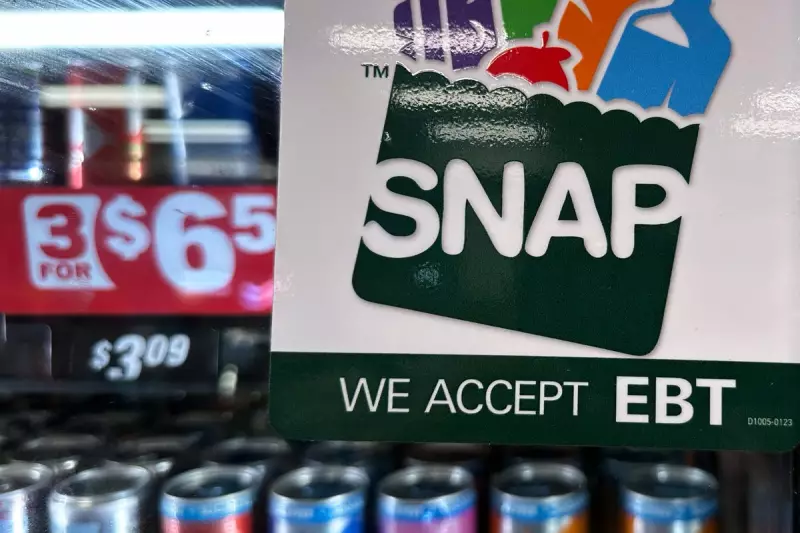
Fraud within SNAP takes multiple forms. Benefits are loaded onto Electronic Benefit Transfer (EBT) cards. Organised crime groups use skimming devices on card readers to clone cards and steal funds, or use stolen identities to apply for benefits for fictitious people.
In one case, a Romanian man illegally in the US pleaded guilty to skimming over 36,000 card numbers in California. Separately, a USDA employee pleaded guilty to taking bribes for providing EBT terminal codes to illegally operated New York delis, through which over $30 million was processed.
Other fraud involves recipients selling benefits for cash or colluding with retailers to purchase ineligible items. Mark Haskins, a former USDA investigations branch chief, believes these smaller-scale frauds may be more costly than those run by criminal organisations. He advocates for a system overhaul, even if it makes access harder for qualified people.
Advocates and Researchers Dispute the Narrative
The USDA's last comprehensive fraud report, published in 2021 and covering 2015-2017, found about 1.6% of benefits were stolen from recipients' accounts. Between October 2022 and December 2024, the government replaced $323 million in stolen benefits—roughly 24 cents per $100 in SNAP spending, though this is considered an undercount.
This data leads many advocates and academics to view fraud as a manageable issue, not the crisis portrayed by the administration. Dartmouth economist Patricia Anderson pointed out that for a family of four, maximum benefits are about $1,000 monthly, questioning the large-scale profitability for fraudsters without significant organised crime involvement.

The human impact is illustrated by participants like Jamal Brown, 41, of Camden, New Jersey. He has witnessed benefit trafficking and had his own benefits stolen by a skimmer. He also faced benefit cuts due to administrative errors, summarising the system's flaws: "It's always something that goes wrong, unfortunately."