The Riviera Retirement of Britain's Most Elusive Heist Figure
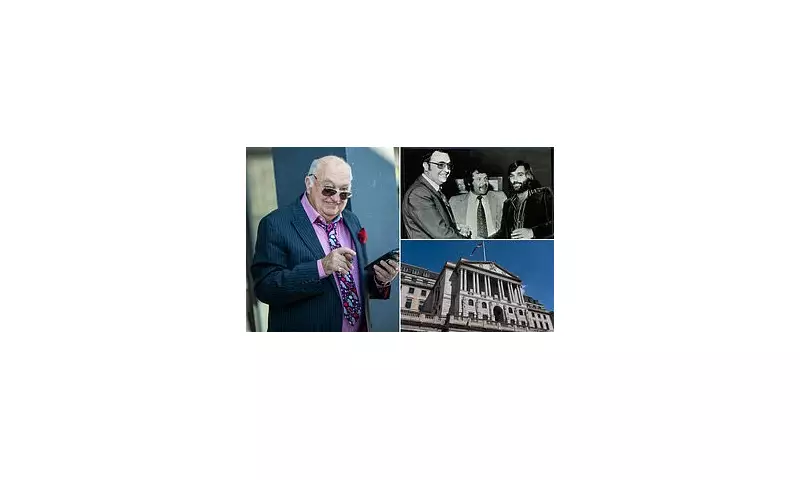
As the Mediterranean sun casts its golden glow across the Turkish coastline, 83-year-old Keith Cheeseman prepares for his evening whisky, the picture of relaxed retirement. Yet behind this tranquil scene lies one of Britain's most extraordinary criminal secrets - his involvement in what remains the world's largest robbery, a £292 million heist that targeted the very heart of the Bank of England without ever crossing its threshold.
The Day That Shook the City of London
On the morning of May 2, 1990, amidst the suited crowds of London's financial district, courier John Goddard carried a briefcase containing 301 bearer bonds worth nearly £292 million - equivalent to £726 million today. The system seemed foolproof: at the time, the Financial Times reported approximately £30 billion in bonds moved daily through City streets, with former soldiers often employed as couriers.
The simplicity of what followed was breathtaking. Entering Nicholas Lane just after 9:30am, Goddard found a knife at his throat wielded by Patrick Thomas, who demanded the briefcase. Within seconds, the world's biggest robbery was complete, though the true drama was only beginning.
The Aftermath: Murder, Mystery and Missing Millions
Within hours, the Bank of England took unprecedented action, effectively reimbursing Sheppards money brokers and making this a direct assault on Britain's central bank. Publicly, authorities downplayed the theft, with newspapers quoting officials who dismissed the robber as an 'opportunist' who would find the bonds useless.
The reality proved dramatically different. The bonds quickly entered London's criminal underworld, appearing in a Lewisham wine bar toilet where Thomas showed the haul to associate Jimmy Tippett Jr. What followed was a trail of violence and intrigue that continues to raise questions 35 years later.
Patrick Thomas died from a gunshot wound to the head within 18 months, officially recorded as suicide but widely believed to be murder. Tippett remains adamant: 'With that robbery and the amount of money involved and the people involved, Pat was silenced.'
The American Connection and FBI Sting
The international dimension emerged when disqualified bonds trader Mark Osborne attempted to sell stolen bonds to undercover FBI agent David Maniquis, posing as Mafia boss Tony Dipino. The Manhattan sting operation in July 1990 led to Osborne's arrest and his subsequent cooperation with authorities.
This cooperation ensnared Keith Cheeseman, whose conversations were secretly recorded by the FBI. Cheeseman's experienced criminal background included a previous six-year prison sentence for fraud during his time as chairman of Dunstable Town football club, where he'd famously brought George Best out of retirement.
The Unsolved Mysteries and IRA Connection
Cheeseman reveals a startling discrepancy that still troubles him: while authorities cited £292 million in stolen bonds, he insists the actual count in the Mayfair townhouse where they were distributed came to £427 million. 'There was £135 million missing somewhere,' Cheeseman states, 'and I never got my whack out of it.'
The documentary explores one compelling theory from solicitor Jeffrey Kershaw, who states unequivocally: 'The IRA was behind it.' Kershaw claims two independent sources confirmed the terrorist group's involvement, potentially explaining why Raymond Ketteridge's 1991 trial was suddenly dropped with prosecutors mysteriously stating it wasn't in the public interest to proceed.
As for Cheeseman, now enjoying his Turkish retirement, he remains cautiously enigmatic. When asked if he knows more about the case than has emerged, he pauses and chuckles: 'I think so.' The world's biggest robbery continues to guard its deepest secrets.