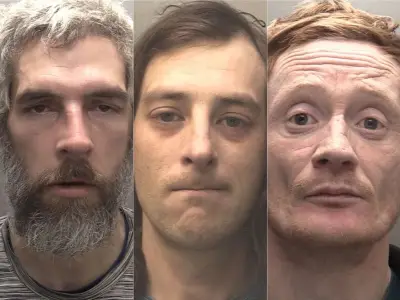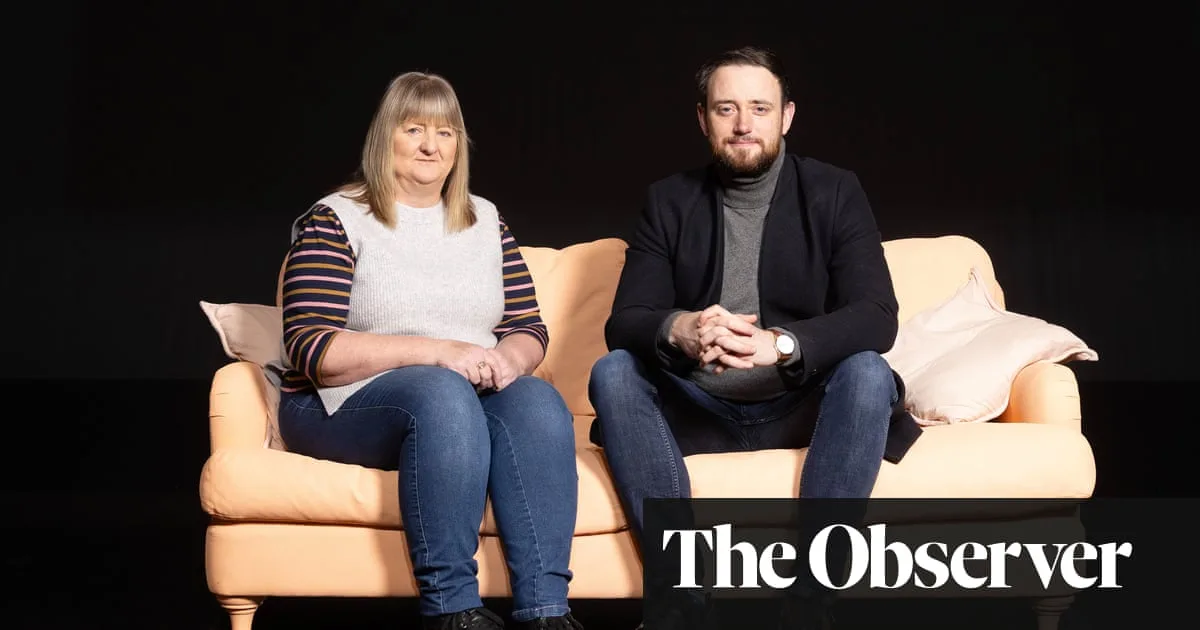
When Jacob Dunne hit James Hodgkinson, he had no idea the punch would kill him. He recounts how his victim’s mother, Joan, helped him, while she reveals why she confronted him.
I was released from prison on New Year’s Eve 2012. I came out with more complex needs than I had before going in: lower self-esteem, fewer aspirations, less optimistic about the future. I was angry at myself and others. I had none of the skills required to communicate, be vulnerable or support myself. I was destined to join the 46% of people in England and Wales who reoffend within their first year post-prison. I was 20 years old with no fixed address, no qualifications or work experience and manslaughter on my criminal record.
It happened in July 2011, when I was 19. It was Saturday night and I was in Nottingham city centre after a day of drugs and drinking celebrating a friend’s birthday. I got a call around 1am from a friend – it was kicking off a few streets away. Turns out, it was my friends who were looking for trouble. I should have established the facts or tried to de-escalate. I didn’t. I arrived, without thinking, and threw a single punch. The person I hit fell to the ground as I ran away. A month later, the police turned up at my mum’s house. I was arrested on suspicion of murder: the man I’d hit had died nine days later.

After serving 14 months, I was out. Not long after, my probation officer got in touch, asking if I’d heard of restorative justice: my victim’s parents wanted to ask me questions. Questions only I had the answers to. They wanted to express the harm I had caused and to see me acknowledge the consequences of my actions.
I learned that restorative justice is a voluntary process and aims to find ways to repair the harm caused and seek a less harmful way forward. The prospect of it floored me. It’s far easier to live in ignorance than to know the damage you’ve done. I needed some time to think, before I realised it was the least I could do for them.
All contact was through a facilitator at first. I was told the questions they wanted me to answer. Mostly, they wanted to know why I’d thrown the punch. I was ashamed of the answers I had to offer. There was no reason. There’s never an excuse to punch someone, but I didn’t even have a poor one to give. I couldn’t even say I was protecting my friends, something I’d believed for a while. I had to be honest: I didn’t ask any questions about what was happening. I was just showing off, trying to impress my mates. That’s the thing about restorative justice: it’s only permitted to proceed once you’ve taken accountability for your actions.
I was surprised when they started to ask questions about me and my background. It didn’t cross my mind that they might be interested in who I was. They wanted to know about my childhood, my family and the community I grew up in. They wanted to get a sense of me: raised in Nottingham by a single mum who did her best by us. How I struggled at school, with ADHD and all sorts of labels, then started getting into trouble as a teenager: fighting first, then selling drugs. About how Mum had battled with alcoholism. She was functioning until I went into custody, then it got out of control and she lost her house and job.
Learning about Joan, her son James and their family was humanising. It cut through the labels we use to define each other. I saw them and they saw me. The ignorance had gone and so had the (relative) bliss. Telling them about myself was one thing. But then they asked me what I wanted to do with my life… I never expected it. After what I’d done, for them to show signs of care and compassion? It blew me away. I started to realise that I too had needs that I’d been neglecting. That if I was to escape the trajectory my life was taking, I needed to show an interest in myself, just like these strangers were taking an interest in me. I could tell it was important to Joan that I’d learn from what they – what we – had been through, and not make the same mistakes again.
I wrote them a letter: I’m always reluctant to say sorry to you, why would you believe me? But I’m going to show you, through my actions.

I committed there and then to changing. I didn’t know what I’d do, but I knew I’d do something. And I did. I spoke to my probation officer and came up with a plan to get back into education. I started college in September 2013, and got A*s in some of my GCSE courses. I’d never been made to believe I could amount to anything. All of a sudden