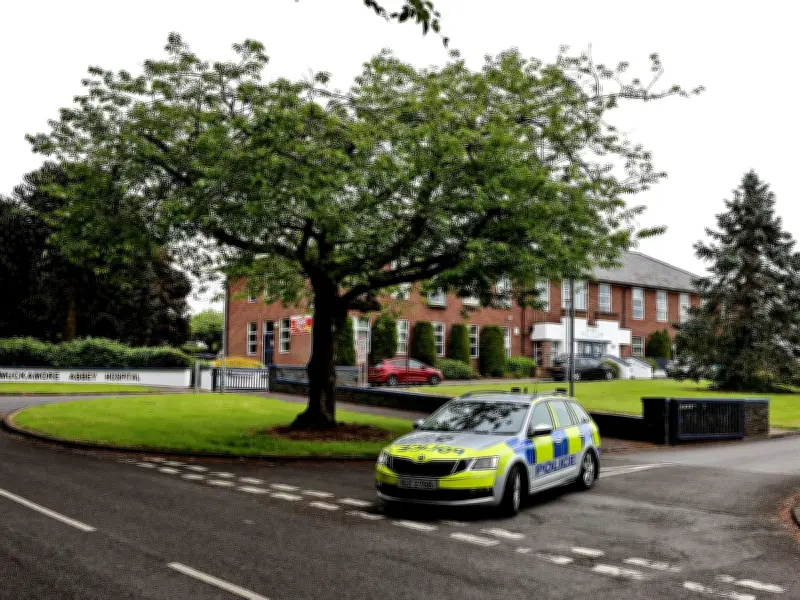
An inquiry into a hospital where vulnerable patients suffered unexplained injuries including bruises, black eyes, and broken bones has revealed that staff "systematically bullied" those in their care. The long-awaited investigation into abuse at Muckamore Abbey Hospital reported "profound and deeply troubling" failures in patient care.
Inquiry Findings
Restrictive practices were used inappropriately, and "as needed" medication was overused, leaving some patients "zombified," the inquiry report stated. Inquiry chairman Tom Kark KC told relatives at a Belfast hearing that the mistreatment of their loved ones by some staff at Muckamore had become "normalised."
Muckamore Abbey Hospital, near Antrim in Northern Ireland, has been the focus of the UK's largest-ever police investigation into alleged abuse of vulnerable adults. Police have reported 124 individuals to Northern Ireland's Public Prosecution Service, with several prosecutions ongoing alongside the public inquiry.

Families Speak Out
"The people who lived at Muckamore Abbey Hospital deserved better, and their families deserved better," said Mr. Kark. He noted that "unexplained marks and injuries" on patients included "bruises, grip marks, black eyes, and broken bones." These injuries, he said, were "neither isolated nor incidental. They were the visible marks of a systemic failure."
Glynn Brown, father of non-verbal patient Aaron Brown, was told an alleged assault on his son was a "one-off incident." He responded: "The one-off incident that involved my son has now proved to be there were hundreds of incidents, there were red flags everywhere, but everybody was wearing blinkers, nobody wanted to see. There's nobody as blind as those that don't want to see – that's an old quote."
Solicitor Claire McKeegan, representing several families, said the inquiry findings "confirm years of systemic abuse and failure." She added: "For years these families were told they were exaggerating, or they were simply not listened to at all. Today the inquiry has confirmed what they always knew — that their loved ones were abused on a staggering scale, that the failure was systemic, that the warning signs were there to be seen, and that those with the power to stop it did not."
Trust Apologises
The report made clear that patients were abused at Muckamore. "It is important to state that bold and simple fact," it stated. "The abuse did not involve every patient nor every member of staff, nor a majority of the staff. But many patients had their lives made miserable by systematic bullying by certain members of staff whose job it was to look after them."
The inquiry suggested the Belfast Health and Social Care Trust had adopted an adversarial approach during its investigations and expressed "serious concern" about whether it could reform independently. Chief executive Jennifer Wels "sincerely and wholeheartedly" apologised to families, saying: "I am sorry to say that your loved ones were treated by many staff in the most uncivilised way by people who were there to care, who not only should have known better but more importantly should have behaved better." She acknowledged the trust had "lost trust" and was determined to rebuild "damaged relationships."
In response to claims the trust was adversarial, she said: "I'm deeply sorry that proper legal process has been interpreted as something which is adversarial." Over 119 staff were reviewed through disciplinary processes, with 115 concluded. Nineteen staff were dismissed, nine received final warnings, 11 formal warnings, and one verbal warning.
Systemic Failures
The inquiry found that a 2001 policy shift to move patients with learning disabilities and autism from hospital to community care was not matched with investment, leading to significant resettlement delays, heightened distress, and readmissions. Staffing was "insufficient" at all levels, leading to unsafe wards and inappropriate restrictive practices. Some patients were left "zombified" by overuse of "as needed" medication, used as a restraint tool. Seclusion was misused as punishment for "bad behaviour."

The inquiry found a "profound catalogue of failures" at the trust, including ineffective external inspections and serious governance failures that eroded oversight over many years. Systems and structures were "wholly inadequate" to manage the scale of abuse uncovered through CCTV footage in 2017.
Mr. Kark praised residents and families for being "central to uncovering the truth." He said: "While the publication of this report cannot undo the harm suffered, it is my hope that it will serve as a turning point. The responsibility to act on the recommendations now lies with those who lead, manage, and deliver health and social care services across Northern Ireland. There should be no delay, no dilution, and no side-stepping in the delivery of the recommendations."
Stormont's Health Minister Mike Nesbitt said he was "truly sorry" that vulnerable patients and their families had been "let down." He added: "A system which should have ensured the most vulnerable were protected, nurtured, and cared for, failed in that core duty. They were let down, and for that I am truly sorry."