In Argentina's Tucumán province, the families of Eduardo Ramos and Alicia Cerrotta have finally laid their loved ones to rest, half a century after they were kidnapped by the military following the 1976 coup. Two urns were placed in a mausoleum under a grey sky. 'We finally know where they are,' a relative whispered, closing a wound.
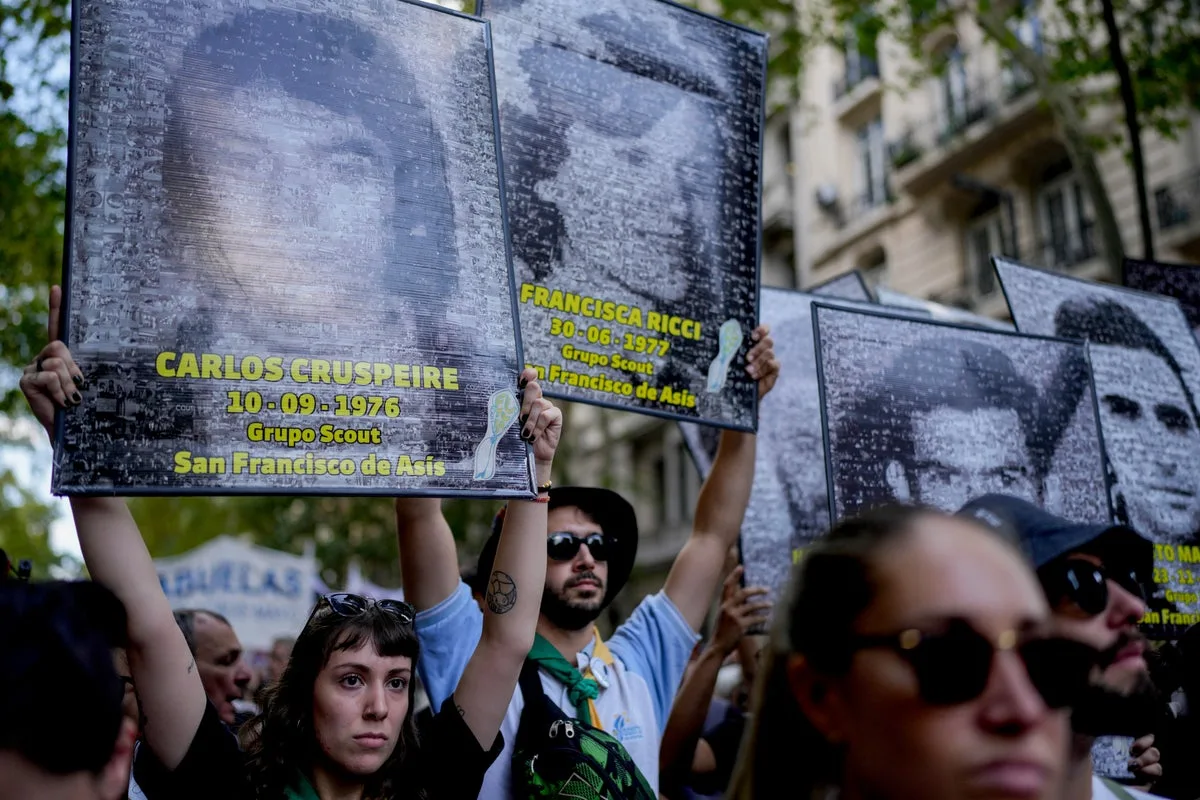
Eduardo, a 21-year-old journalist and poet, and his wife Alicia, a 27-year-old psychologist, were among an estimated 30,000 people who disappeared during the dictatorship, according to human rights organisations. Official figures put the number at around 8,000. The couple's remains were discovered in 2011 in the Pozo de Vargas, a deep well that had been turned into a mass grave by the military.
The exhumation and identification process took years. In early March, authorities handed over their incomplete remains to the family. 'When I saw the urns, I realised that for us this means a final farewell,' said Ana Ramos, Eduardo's sister, who was 13 when she last saw him and is now 63. 'It’s the most liberating thing that has happened to us.'

The search for victims' remains has been hindered by the military's refusal to provide information and recent budget cuts to human rights programmes ordered by President Javier Milei. 'Fifty years after the coup, “where are they?” remains a very relevant question,' said Sol Hourcade, a lawyer representing plaintiffs in crimes against humanity trials.
The Pozo de Vargas, located beside a railway station, is considered the largest clandestine mass grave of Argentina's last dictatorship, with the remains of 149 people recovered. 'The well began as a myth and today it is concrete, material evidence of what state terrorism was,' said Ruy Zurita of the Tucumán Archaeology, Memory and Identity Collective, which discovered the site in 2002.