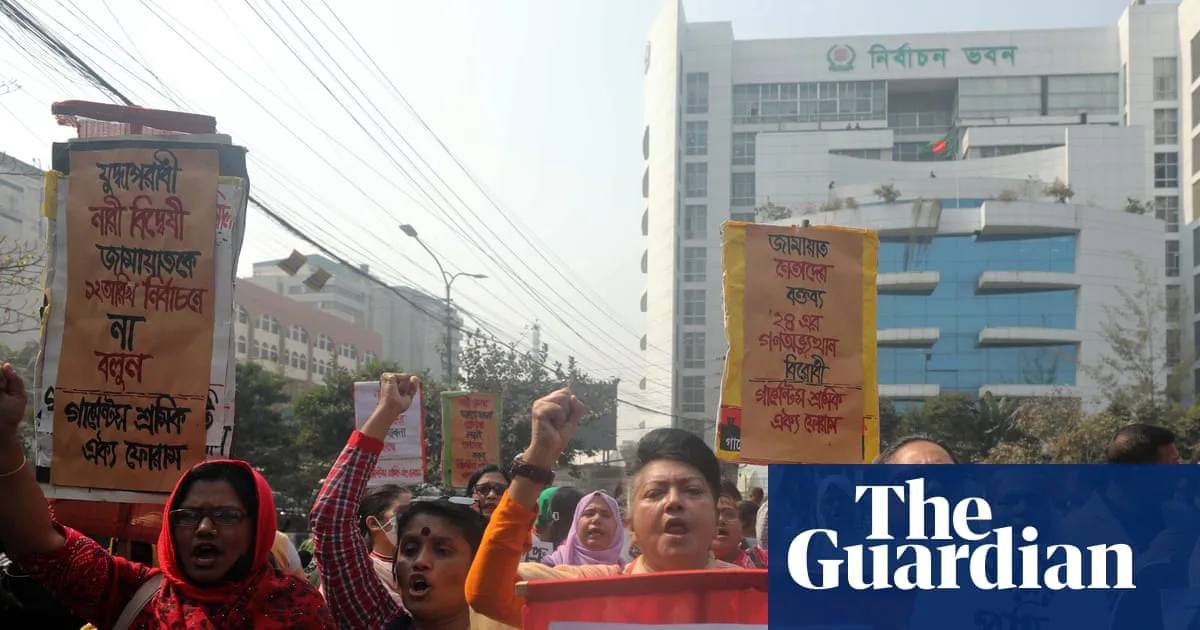
As Bangladesh prepares for its first free and fair elections in 17 years, women’s rights activists are voicing alarm over the resurgence of the Islamist party Jamaat e-Islami, which could secure an unprecedented share of the vote. The party, which was banned and persecuted under former Prime Minister Sheikh Hasina, has mobilised vigorously since her ousting in a student-led uprising in August 2024.
Women who were at the forefront of the revolution now fear that regressive Islamist politics will erode their hard-won freedoms. “This was meant to be an election representing change and reform. Instead, we are seeing women being systematically erased and their rights threatened,” said Sabiha Sharmin, 25, a participant in a midnight march in Dhaka. “We worry this election will throw the country back 100 years.”
Jamaat e-Islami, which advocates for sharia law, is not fielding any female candidates. Party leader Shafiqur Rahman has made controversial statements, including that a woman cannot lead the party as it is un-Islamic, and comments denying marital rape. The party has proposed reducing women’s working hours from eight to five, with the government subsidising the lost income, sparking outrage among women who make up 44% of the workforce.

Critics say conservative Islamist attitudes are already seeping into society, with reports of girls being prevented from playing football in rural areas and women facing harassment for not covering their hair. “Women’s sovereignty, our freedoms, our independence: all are at stake in this election,” said Zayba Tahzeeb, a 21-year-old physics student who attended the march.
Despite limited polling suggesting the Bangladesh Nationalist Party (BNP) will win, Jamaat e-Islami is expected to secure a historic vote share and become a significant political force. “Whether it’s as a sizeable opposition or a government in power, the future of Bangladesh’s politics looks like a heavily Islamist party will be at its centre,” said Thomas Kean of the Crisis Group.