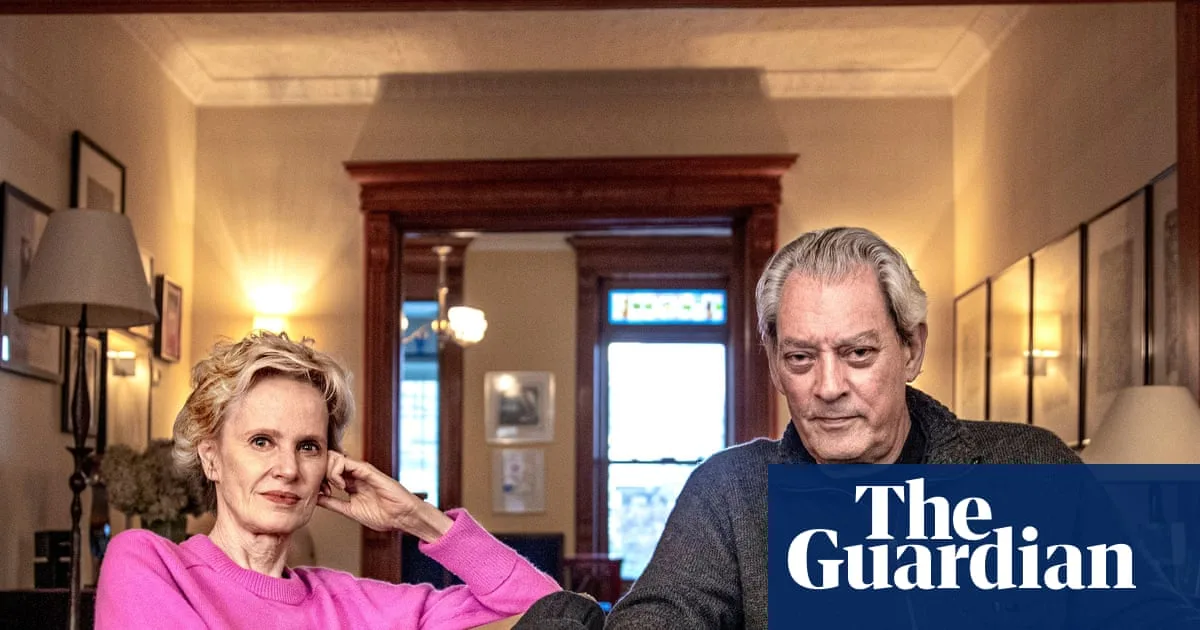
Novelist and essayist Siri Hustvedt reflects on the loss of her husband, Paul Auster, in her new memoir Ghost Stories. The couple were married for more than 40 years before Auster died of cancer in 2024. Hustvedt describes the shift from 'we' to 'I' as a disorienting experience, where time feels 'deranged beyond recognition'.
Hustvedt recalls meeting Auster at a poetry reading when she was a PhD student. He was a 'beautiful man in a black leather jacket', separated from his first wife and yet to publish anything of substance. Their connection was immediate, bound by a shared devotion to literature. They married the following year, with a poet friend toasting them as 'two people so good-looking I'd like to slice their faces with a razor'.
The memoir is fragmented, with short paragraphs that mirror the concussive nature of grief. Hustvedt mourns not just her husband but the 'AND' that defined their partnership. She writes of haptic memories—Auster's furnace-hot legs warming her cold feet—and the tripwires of everyday life: the smell of his cigars, his handwriting on postcards, his name on a chequebook.

Hustvedt also addresses the challenge of being seen as 'Paul's beautiful wife'—a label she resented. She notes that while Auster was celebrated as a literary superstar, she was the one who systematically engaged with thinkers like Lacan and Bakhtin. Her academic identity as a lecturer in psychiatry at a New York medical college surfaces in her descriptions of houses as 'zones of gestural repetition' and citations of phenomenologist Maurice Merleau-Ponty.
Despite the pain, Hustvedt finds moments of absurdist humour. Auster wanted to die telling a joke, and she is alive to the irony of her ailment—though the memoir ultimately searches for solace in philosophy and literature. Ghost Stories is a hunt for a lost partner and a lost conjunction, preserving the enduring bond of a literary marriage.