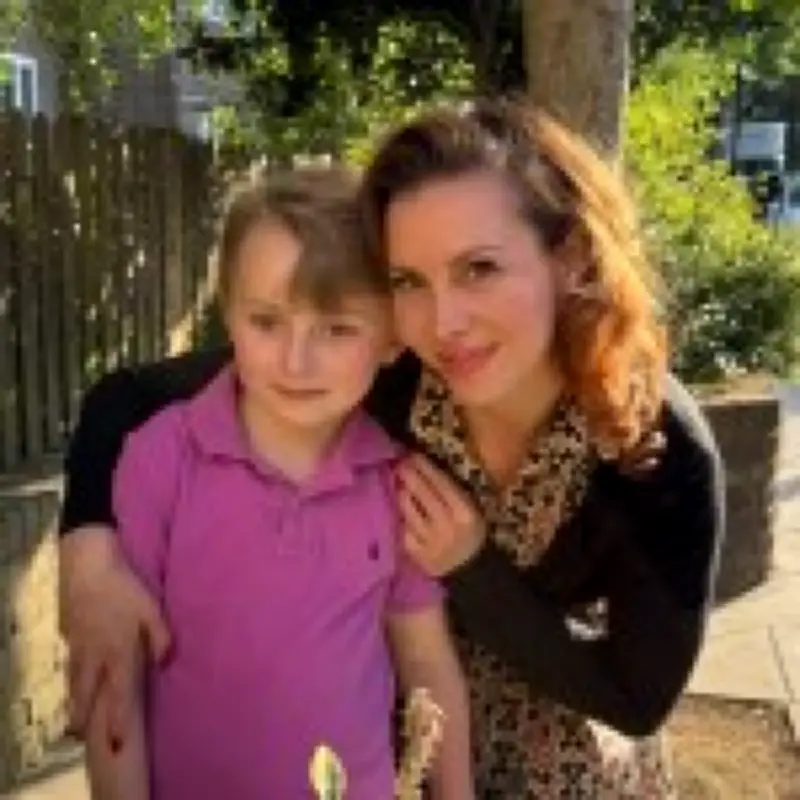
Walking home from school recently, my six-year-old son, Felix, started begging for a Magnum ice cream. He was looking longingly in the shop window, practically drooling, but as he had already eaten his after-school snack of a cereal bar and fruit, my mind was made up. 'No,' I said firmly. And that was that.
Many parents might fear that such a steely response could result in a meltdown complete with crying, flailing, and stomping feet. While that would have been true a few years ago, nowadays my son knows the drill. When I tell him no, I do not hear another peep from him because, no matter what anyone says, saying no to your child is a good thing.
In fact, that is exactly why I do not practice gentle parenting. I find it completely toxic and believe it sets children up for failure, especially when they encounter the word no in the real world.

What is gentle parenting?
Gentle parenting is not a new technique; its core principles were established in the 1930s, but it has evolved over the last 20 years into the approach we know today. Essentially, this parenting style requires parents to be calm and careful with their words and accepting of different behaviors or emotions. This expectation does not change even if your child has just thrown a tantrum because they cannot watch another episode of Peppa Pig.
With more than 220,000 videos tagged on TikTok alone, it is clear that many parents have adopted this trend, and for a while, I was one of them.
My brief experiment with gentle parenting
When Felix was three, I decided to give gentle parenting a try. I had read a few articles and thought it sounded like a calm, zen atmosphere that would make the day flow smoothly. Not to spoil the ending, but I lasted about half a day.
My great experiment unraveled when he refused to put on his shoes and wanted to leave the house carrying a ton of toys. In theory, it was simple: I just had to get down to his level and calmly explain why he needed to wear shoes and why bringing all his toys was impractical, while validating his feelings. But as I did this, he tried to gouge my eyes out.
After ten attempts, I tossed the toys in the corner, shoved his shoes on, and bolted out the door. He was still wailing as if the world was ending while I scurried past my neighbor, feeling embarrassed and hoping they would not notice. Yet as soon as we started walking, he began to relax in his pushchair and enjoy the sun. Apparently, you are meant to breathe through the fury. I could not think of anything worse.
Establishing firm boundaries
From that moment, I made a firm decision: in our household, there are rules, boundaries, consequences, respect, and good manners. Some would call that authoritative, but I believe it gives him the values he needs for life.
Despite my disdain for gentle parenting, I have continued to encounter it in the wild, and it does not look any better from the outside. I have watched in horror as a mother, after her child smacked the birthday boy in the face at a party, cuddled her child and cooed, 'Let us talk about big feelings,' instead of reprimanding him. I have seen mothers promise a new toy when their child smashed one in a rage, or quickly hand over a phone with Roblox to stop hysterics.
I even had a father say, 'We have our own protocol for dealing with things,' when I asked him to stop his child from hitting my son. Felix has Glanzmann's, a severe bleeding disorder, and I was worried the boy could cause a bleed. That man's protocol was to do nothing—zero reprimanding, zero consequences.
Preparing children for the real world
I do not understand how a parent can turn a blind eye to such bad behavior. I understand that we want our children to learn healthy ways to respond to stress, to be resilient, and to treat others with kindness. But it is also our job to prepare them for the real world. Coping with life requires toughness and understanding. They will all grow up and face challenges, failures, and rejections in jobs or relationships, so why not start teaching them young?
Yes, it is embarrassing when a no elicits a tantrum, and we may feel we are not doing things right in that moment, but I am certain your children will thank you one day. I can show Felix plenty of love, empathy, and cuddles while still saying no. And no, I do not think that makes me a bad mother.

So, unlike celebrities like Meghan Markle, who do not believe in saying no to children and instead say 'not yet,' I will keep using that word without hesitation. Just try to stop me.