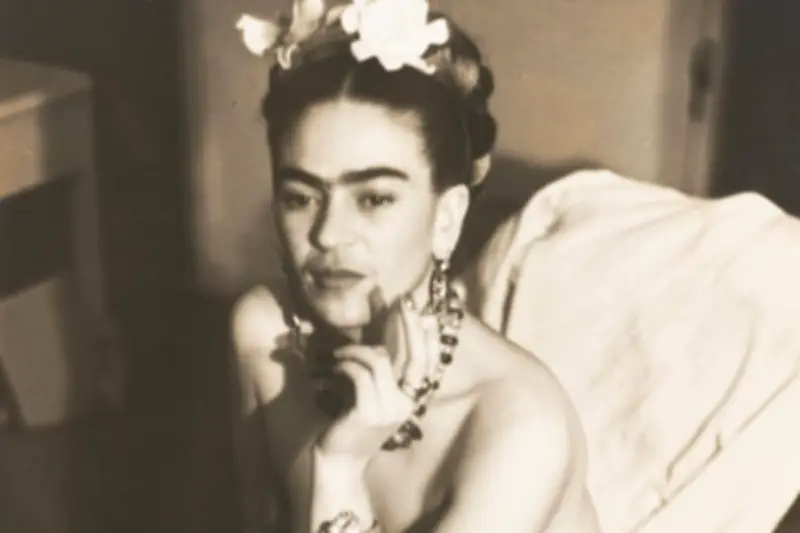
A new exhibition at the Tate Modern will examine the “extreme commodification” of Frida Kahlo. Titled Frida: The Making of an Icon, it explores the “extraordinary story” of how the Mexican painter became “one of the most influential artists of all time, a cultural phenomenon, and an internationally recognised commercial icon,” according to the gallery.
Fridamania and Hyper-Commercialisation
The exhibition delves into the concept of “Fridamania” and how Kahlo has grown into a global brand decades after her death. Curator Bea Garcia-Velasco said the exhibition would be the “first to really historically and critically think about the Frida phenomenon.” She noted, “We can’t really shy away from the truth that her image has been hyper commercialised, and it’s been used for many different products. We’ve shown a lot of them here, including dolls of her, and we are also showing folk or devotional objects that include Frida as a saint or ancestor that people venerate.”
Garcia-Velasco added, “For us, it’s important to complicate this idea of the extreme commodification of Frida, which can take away from her work, and there’s also something to be said of this idea of democratic ownership and how everyone has been able to tap into Frida for different reasons – for political reasons, for cultural reasons, for personal reasons.”

Exhibition Highlights: Over 200 Commercial Objects and Iconic Works
Opening on Thursday, the exhibition features more than 200 commercial objects that encompass Kahlo’s art, image, style, and persona. It also showcases over 30 of her most iconic works, along with her garments, jewellery, photographs, and memorabilia. These are complemented by more than 200 works by her contemporaries and later generations of artists she inspired.
Garcia-Velasco said she found it “personally really moving” to see different generations of artists tap into Kahlo’s legacy, calling her a “powerful icon of female resilience and strength and talent.”
Throughout her life, Kahlo produced around 200 pieces, 55 of which are self-portrait paintings. Several are exhibited at the Tate, including her first ever self-portrait, Self-Portrait (in a Velvet Dress) from 1926, as well as The Frame (1938), Memory (The Heart) (1937), and Untitled (Self-portrait with thorn necklace and hummingbird) (1940).
Record Auction and Rarity of Her Work
Last year, Kahlo’s self-portrait El sueno (La cama) became the most expensive work by a female artist ever sold at auction, fetching £41.8 million. Speaking about the strong collector interest, Garcia-Velasco said, “Frida didn’t paint that much. I mean, I think it’s over 200 works that exist today, so her works are rare. I think her work also speaks to very personal subject matter. She was really a pioneer in opening herself up and exposing issues that were previously regarded taboo.”
She added, “There is a lot of interest from very different communities, and she really became a global icon, which I think has also fed into the value of her work.”
Chicano Movement and Kahlo’s Legacy
The curator noted that Kahlo’s work remained relatively unknown until decades after her death in 1954, and she had “lived slightly under the shadow” of her husband, artist Diego Rivera. “For us it’s really been important to critically think about how she’s become what she has today and locating the Chicano movement as being really fundamental into her ascendance was important,” Garcia-Velasco said. The Chicano movement of the 1960s and 1970s was a civil rights campaign by Mexican Americans, with activists identifying with Kahlo and playing a crucial role in resurrecting her legacy.
Garcia-Velasco also highlighted Kahlo’s “very challenging life story” and how she spoke about suffering, disability, and reproductive issues. “Her self-portraits are particularly enigmatic and almost feel like you’re meeting an old friend and she’s telling you her secrets. I think the power of her work and the persona she constructed for herself… it speaks to many different people.”
Frida: The Making of an Icon opens at the Tate Modern on Thursday, June 25 and runs until January 3.