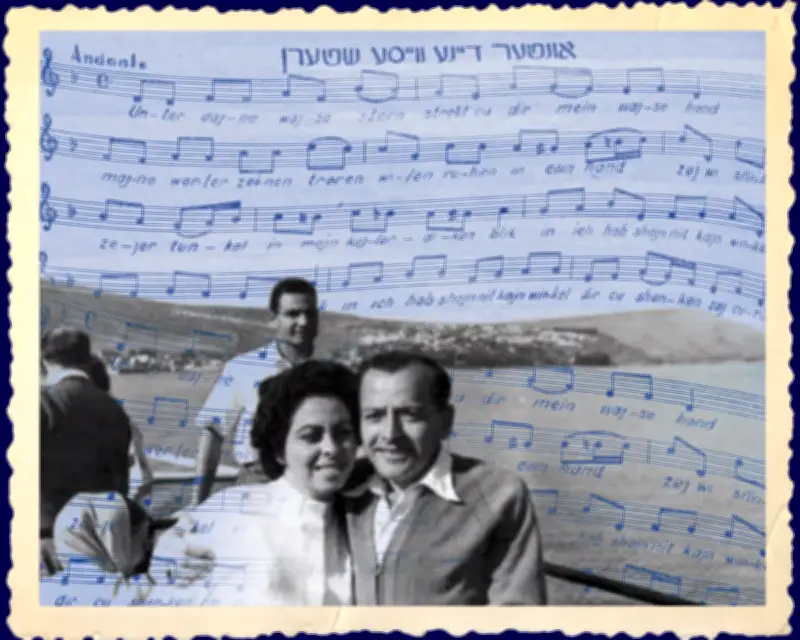
A priceless book of Yiddish songs from the Holocaust, hidden in a Sydney cupboard for decades, has been rescued and translated for the first time into English. The collection, titled Mima'amakim (Out of the Depths), contains 20 songs written by concentration camp prisoners, ghetto inhabitants, and partisan fighters between 1939 and 1944. It narrowly avoided being thrown into the recycling bin after its owner, Olga R, died in 2013 at age 98. Her family, who did not speak Yiddish, noticed the unusual cover and sent a photo to Dr Joseph Toltz, a Jewish music academic at the University of Sydney.
The Discovery
Toltz forwarded the image to the United States Holocaust Memorial Museum in Washington DC, where its rarity was immediately recognized. Only five known copies survive from an original print run of 500. Over 13 years, Toltz and Associate Professor Anna Boucher completed the first English translation and tracked down descendants of the contributors across the Jewish diaspora.
Origins of the Songbook
The songbook originated in postwar Bucharest, Romania, a transit hub for Jewish refugees. Yehuda Eismann, a survivor, established an office to document Nazi war crimes, transcribing nearly 1,000 survival stories in the Bucharest Protocols. Olga R worked as one of his secretaries. As refugees passed through, Eismann discovered they carried songs created in forced labor camps and ghettos. He gathered 20 works, categorizing them into Despair, Hope, and Battle and Victory. When he left for Palestine in October 1945, he gave a copy to Olga.

Survival Stories
One contributor, Ayzik Flaysher, composed Der Driter Pogrom at age 13 after witnessing his family's murder in Ukraine. He survived two years in a forest pit, emerging only at night, and later walked to Bucharest. His son recalled that he sang every morning, saying he preferred to sing rather than cry and die. Another contributor, Alexander Tamir, submitted Ponar as an 11-year-old in the Vilna ghetto; it became a renowned Holocaust remembrance hymn.
Unique Characteristics
The songs feature raw trauma and dark gallows humor, mocking camp guards set to upbeat marches or mourning set to tango rhythms. Unlike polished later anthologies, Mima'amakim preserves unedited emotional resilience. The researchers note that music helped prisoners build emotional strength, a lesson relevant to contemporary refugees. The findings have been shared with the Refugee Advice and Casework Service.
Contemporary Relevance
Boucher suggests the Jewish community in Sydney, still reeling from the Bondi Beach massacre, may find healing in these songs. A live performance is planned at the Bondi Pavilion later this year. The book, Out of the Depths: The First Collection of Holocaust Songs, is published by Manchester University Press.