Road safety campaigners have expressed their disappointment at Liverpool Council’s decision to scrap elements of a major active travel scheme in favour of retaining parking spaces. After it was announced that a cycle lane and other upgrades were planned along an 8km stretch to the southern end of the city, people living around the Childwall Triangle expressed concern and doubt at the scheme.
As a result, the city council has announced a series of amendments to the changes, including rowing back on segregated bike routes and a reduction of spaces around L14. This comes after the local authority backed a series of asks by road campaigners to make streets safer for cyclists and pedestrians.
In an open letter to Liverpool Council, Better Streets for Liverpool urged leaders to think again about their decision to row back on protected routes. The city’s Green Party said removing key elements of the lanes “undermines the whole route.”

The proposed route connects the city centre with Childwall, as well as large residential areas and key leisure, employment and education destinations along the corridor, such as Wavertree Sports Park, the University of Liverpool and Liverpool Hope University. It would connect existing cycle provision at either end – on Lime Street in the city centre and the Liverpool Loop Line in Childwall.
A consultation in the Spring generated nearly 500 responses with many sharing concerns around the proposed loss of parking, greenspaces, and the potential for increased congestion in some areas. In response to the feedback, Liverpool Council has adjusted plans for the scheme, including a pledge to protect trees around the Childwall Triangle and the introduction of more pedestrian crossing points.
The local authority will also investigate possible 20mph speed limits in certain areas, in light of points brought up by respondents. Around Childwall Triangle, no changes will be made to the existing traffic flow, with no loss of parking spaces.
A segregated cycle lane on Woolton Road between Taggart Avenue and Childwall Park Avenue will be removed, as well as a section on Grant Avenue. The Prince Alfred Road segregated cycle lane will be removed and will remain two-way to all vehicles.
A segregated cycle lane section of the scheme between Lime Street and Leece Street will also be taken out, starting and ending at the Leece Street and Renshaw Street junction. Following strong support for the other sections of the scheme these will progress as proposed and the scheme will now run from Leece Street and Renshaw Street to Woolton Road and Taggart Avenue.
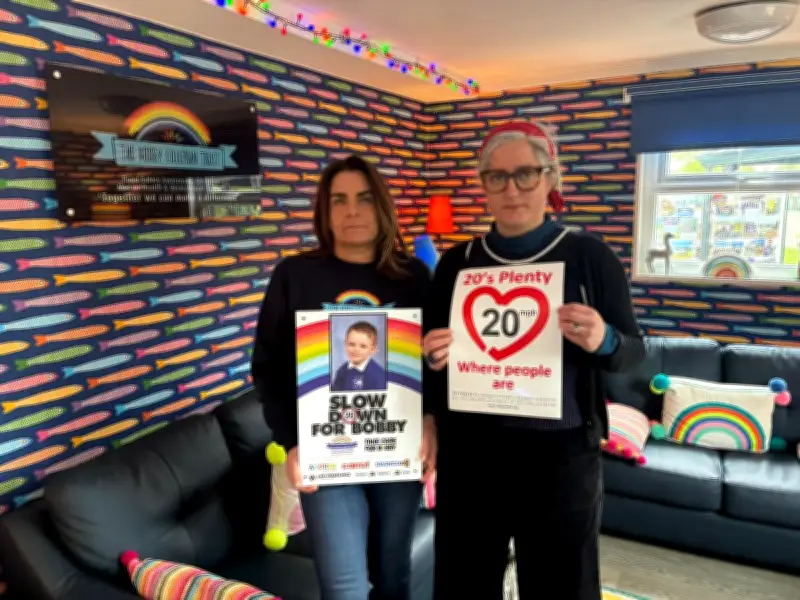
Reacting to the move, Better Streets for Liverpool penned an open letter on behalf of a number of groups, including the Bobby Colleran Trust and the Merseyside Cycling Campaign. Chair Rebecca Sharkey said they were now registering their “deep disappointment and concern” despite an apparent backing from councillors in April towards their goals of safer streets.
She wrote: “Protected, continuous cycle routes change behaviour and deliver safer streets. Partial or disconnected provision leaves people exposed at precisely the points where collision risk is highest. After years of planning and millions invested in active travel regionally, scrapping or truncating critical sections undermines public trust and the very objectives the council – as well as the combined authority – has publicly endorsed.
“We are keen to work constructively with the council to establish a safe, connected route that serves residents, women, children, students and commuters and delivers on the city’s active travel promises.”
The city’s Green Party issued its own statement, setting out its disbelief at the decision by the local authority. A spokesperson said: “Given the council’s commitment, we were shocked to see the results of the consultation into the proposed safer cycling route from Childwall to the city centre.
“Outside Liverpool Lime Street, a protected cycle lane currently runs to the junction by the Vines pub and the Adelphi – and then it stops. For years, cyclists have been forced to leave the safety of that lane and battle their way across a four‑lane, five‑arm junction mixing with cars and buses up Renshaw Street to head out of the city.”

The group added: “Removing these sections does more than make individual stretches unsafe – it undermines the whole route. Cyclists need a continuous protected corridor. A route that is three‑quarters protected does not inspire three‑quarters of the confidence – it offers almost none.”
A Liverpool Council spokesperson said: “We received more than 500 responses for a consultation over proposals for a new active travel scheme for Childwall. Many respondents shared concerns around the proposed loss of green spaces and the potential for increased congestion in some areas.
“In response we have adjusted plans for the scheme, including a pledge to protect trees around the Childwall Triangle and the introduction of more pedestrian crossing points. We will continue to engage and gather feedback from local residents and other interested parties as design work on the scheme develops.”