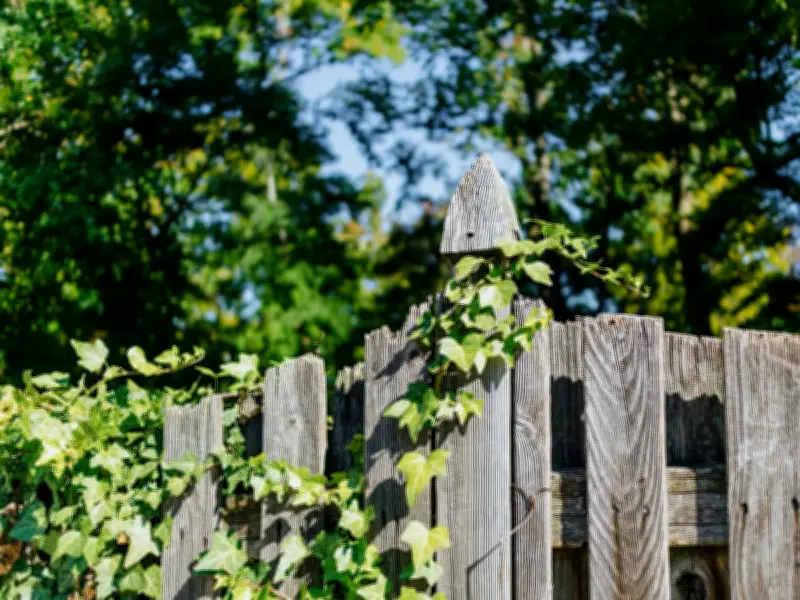
The Royal Horticultural Society (RHS) has outlined three effective methods to permanently remove English ivy and prevent it from regrowing. Ivy, while visually appealing and valuable for wildlife, can quickly become unmanageable and cause structural damage to fences, walls, and buildings by working into cracks and joints. It can also spread into gutters, windows, and roofs, complicating maintenance.
Method 1: Regular Stem Cutting
Using secateurs or loppers, cut back ivy from gutters, windows, chimneys, and roofs. Depending on the plant's size, this may need to be done several times a year, though once annually is usually sufficient. For mature plants, caution is required when pruning, as it may loosen masonry.
Method 2: Partial Plant Removal
This approach is ideal for ivy that has spread over large areas where full removal is too challenging. The RHS advises: "Start with the outermost stems, which will be most strongly attached to the wall or fence, and use secateurs or loppers to cut and peel stems away. Work slowly and carefully to minimise dislodging loose masonry."

Method 3: Complete Removal of All Ivy Stems
For total elimination, the RHS recommends: "Where you wish to remove ivy entirely, begin by cutting and carefully peeling off the outermost stems. Work steadily inwards towards the larger, central stems." These inner stems are less strongly attached but thicker and woodier, potentially requiring a saw to remove in pieces. After all stems are removed, use a sharp spade to extract the stump and as many substantial roots as possible. This will "stop the ivy regrowing." If the stump cannot be removed, regularly cut any new growth back to ground level to weaken the plant, though it may take a long time to kill it.
Other garden plants like Japanese knotweed can also cause structural damage, but that requires professional assistance due to its severity.