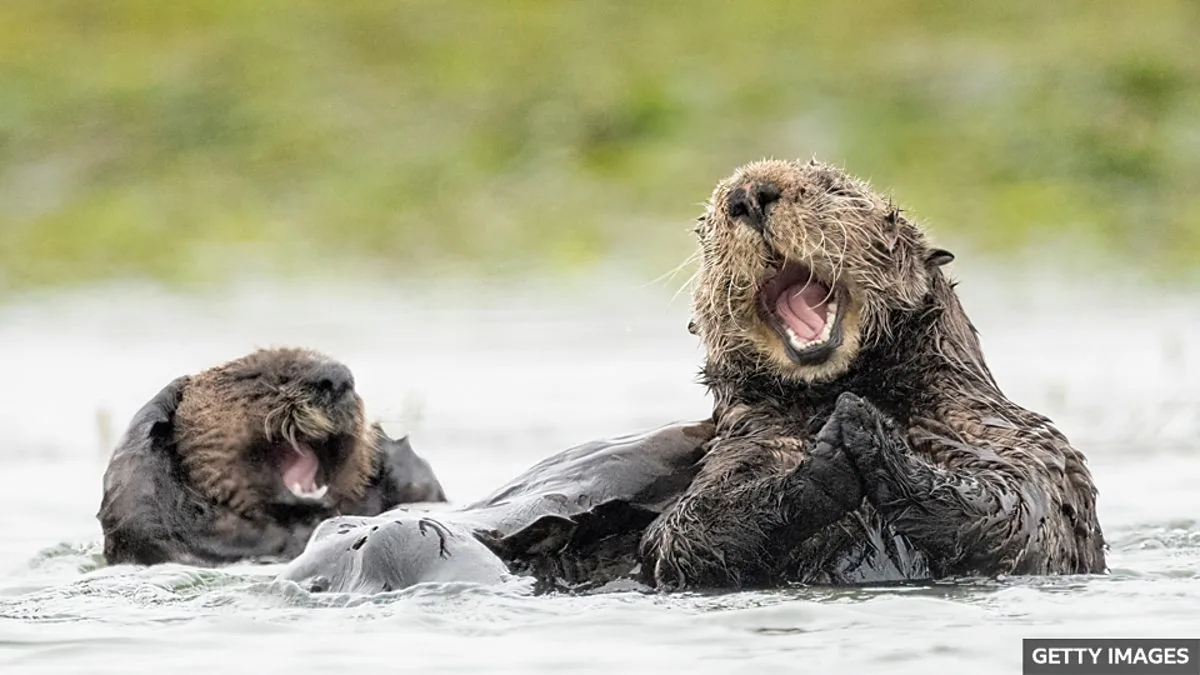
Laughter is often seen as a uniquely human trait, but scientists are finding evidence that animals may also engage in playful teasing and laughter-like behaviours. From dogs playing practical jokes to rats giggling when tickled, research suggests humour could be more widespread in the animal kingdom than previously thought.
Biologist Charles Darwin observed dogs allowing people to approach their toy before playfully running away, interpreting this as a canine version of a practical joke. Marc Bekoff, a biology professor at the University of Colorado, noted that dogs often tease each other by approaching slowly and then quickly dashing off. He concluded that dogs simply want to have fun and may use such antics to cope with stress.
A 2024 study led by Isabelle Laumer documented 18 distinct teasing behaviours among four ape species. Young apes were seen sneaking up behind adults, poking them to provoke a reaction, then waiting to observe the response—behaviour mirroring that of human children. This suggests a sense of humour may have emerged early in our evolutionary history.

Laughter-like sounds have also been recorded in other animals. Dogs produce a breathy snort during play, while dolphins emit joyful noises when play-fighting. Jeffrey Burgdorf, a professor at Northwestern University, found that rats make a high-pitched squeak similar to a giggle when tickled.
However, questions remain about whether these behaviours truly indicate humour or are simply attention-seeking. Laumer notes that in humans, humour acts as an ice-breaker, removing social barriers and strengthening relationships. Whether the same applies to apes or other animals is still unknown, but the possibility is intriguing.