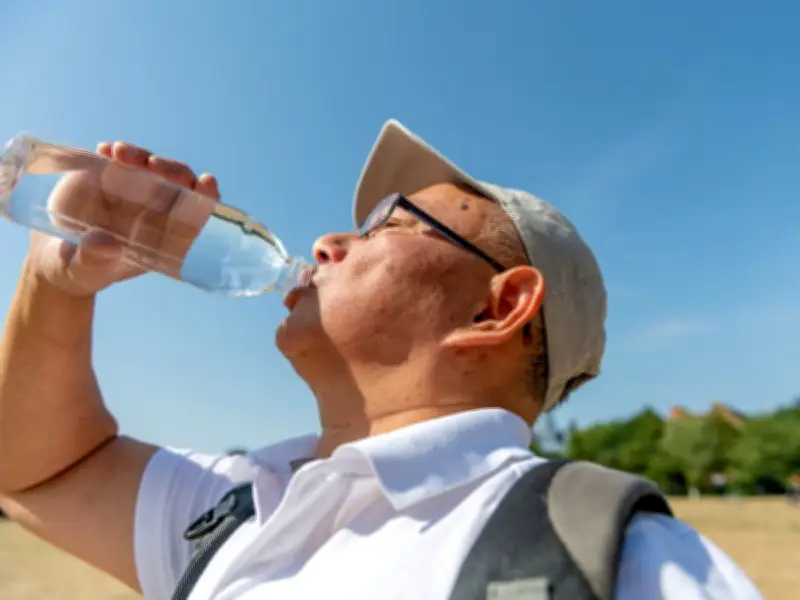
The Met Office has issued a rare red warning for extreme heat from 9am on Wednesday until 9pm on Thursday, as temperatures could reach 38C to 40C in parts of England and Wales, surpassing the June record set in 1976 by several degrees. The UK Health Security Agency (UKHSA) has also issued red and amber heat health alerts across all of England, in effect from 1am Wednesday to 11pm Thursday.
NHS '30 Minute Rule' for Heatstroke
As the heatwave poses a danger to life, the NHS has emphasised a crucial '30 minute rule' for heat exhaustion and heatstroke. Heat exhaustion is generally not dangerous if you can cool down within 30 minutes, but if it develops into heatstroke, it must be treated as a medical emergency. Symptoms of heatstroke include a high body temperature, hot red skin, rapid heartbeat, headache, nausea, confusion, and loss of consciousness.
If you or someone nearby displays these symptoms and remains unwell after 30 minutes of resting in a cool spot, cooling down, and drinking fluids, you must seek urgent medical assistance and dial 999. While waiting for help, the person should be wrapped in a cool, damp sheet, fanned, or sponged down with cold water.

Health Warnings and Precautions
The Met Office has cautioned that this exceptional period of hot and humid weather is anticipated to have widespread adverse health effects, potentially leading to serious illness or danger to life. The scorching temperatures will be compounded by high humidity and 'tropical nights', with overnight temperatures remaining above 20°C, making it difficult for people to recover from the heat.
Dr Agostinho Sousa, Head of Extreme Events and Health Protection at UKHSA, said: "Very hot weather is forecast across large parts of England in the coming days and we are urging health and social care services across the country to ensure they are prepared. It is vitally important that people understand the risk posed by high temperatures like these, and take steps to keep themselves and their friends, families and neighbours safe."
Heatstroke can be avoided by drinking plenty of cold fluids, staying out of direct sunlight between 11am and 3pm, avoiding excessive alcohol consumption, and refraining from strenuous exercise. It is also recommended to wear loose-fitting, light-coloured clothing, and keep windows and curtains shut if the temperature outside is higher than inside your home.
Impact on Population
A red heat health alert indicates a risk to life for even the healthy population. Dr Sousa added: "Simple actions like staying hydrated, avoiding the sun during the hottest part of the day, and keeping your home cool can make a big difference. It's also important to look out for others, especially elderly relatives, neighbours, and those with underlying health conditions, to make sure they are aware of the forecast and following the necessary advice."